In Guantánamo, government officials have been touting the province's export achievements for the first half of 2026. However, there's a glaring omission: the same products being shipped abroad are notably absent from Cuban shelves.
According to the Provincial Government's Directorate of Foreign Trade and Foreign Investment, as reported by the state-run newspaper Venceremos, Guantánamo exported 1,090 tons of goods—surpassing their plan by one ton—and generated $174 million in revenue, exceeding the projected $169.6 million.
A key export is charcoal, which saw a 5% increase in its market value. The state media describes it as a product in "constant demand for better prices in the international market."
What Venceremos fails to mention is that this very charcoal, predominantly sent to Europe and Canada, is hard to find in Cuba's informal markets, where a sack can cost between 1,200 and 5,000 Cuban pesos. This is in a country where the average monthly salary is roughly 4,000 pesos, and millions rely on charcoal for cooking due to the crumbling electrical infrastructure.
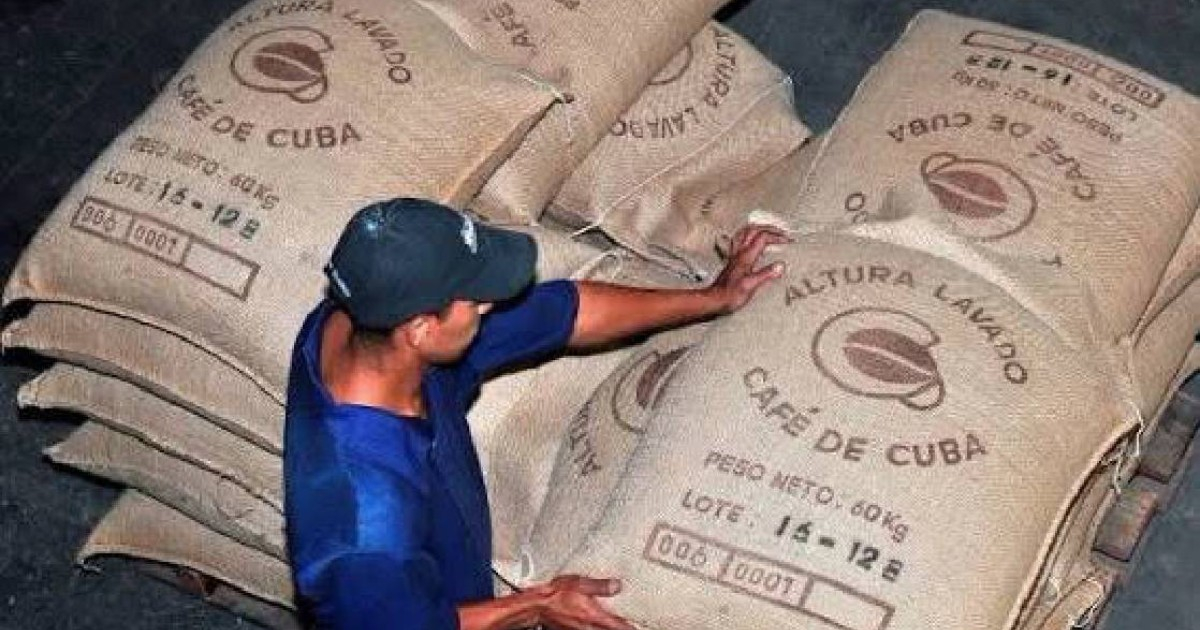
The situation is similar with coffee. While Cuba requires 24,000 tons annually to meet domestic consumption needs, production has plummeted from over 60,000 tons in the 1950s to just 11,500 tons in 2021. Yet, the regime focuses on exporting the highest quality beans for foreign currency.
The official report does admit one shortcoming: "bee honey, a leading export product from the province, has not met its collection targets."
To explain the shortfall in medical services exports, the article resorts to the regime's usual narrative: blaming "the harassment of the Health System imposed by the persecution and strangulation inflicted by the American administration."
Meanwhile, Transtur is highlighted as another success story, fulfilling export commitments and recording domestic sales in foreign currency through Cimex and TRD Caribe chains, amounting to $515,000.
The government also announces the addition of 17 new companies to the export circuit, bringing the total to 34 entities in the province producing for both domestic and international markets.
For the latter half of 2026, the export plan includes adding products such as marine fry, long coconut fiber, habanero chili peppers, ginger, coconut oil, salt, hardwood, chocolate tablets, blue crab, and fruit pulps.
The provincial optimism starkly contrasts with the national outlook. In the first half of 2025, the national export plan was only 62% fulfilled, with revenue 7% lower than the previous year. The CEPAL has projected Cuba to have worse export prospects than Haiti.
Cuba's fiscal deficit for 2026 is estimated at 74,500 million Cuban pesos, equivalent to approximately $3,100 million. This financial strain highlights the regime's desperation to secure foreign currency through exports, even if it means sacrificing domestic supply.
Guantánamo Export Challenges and Economic Impact
Why are charcoal and coffee scarce in Cuba despite being significant exports?
Charcoal and coffee are prioritized for export to generate foreign currency, which results in shortages in the domestic market where these products are in high demand.
How does the Cuban government justify the shortfall in medical services exports?
The government blames the shortfall on the "harassment" of the Cuban health system by the United States, citing it as a barrier to fulfilling their export potential in medical services.