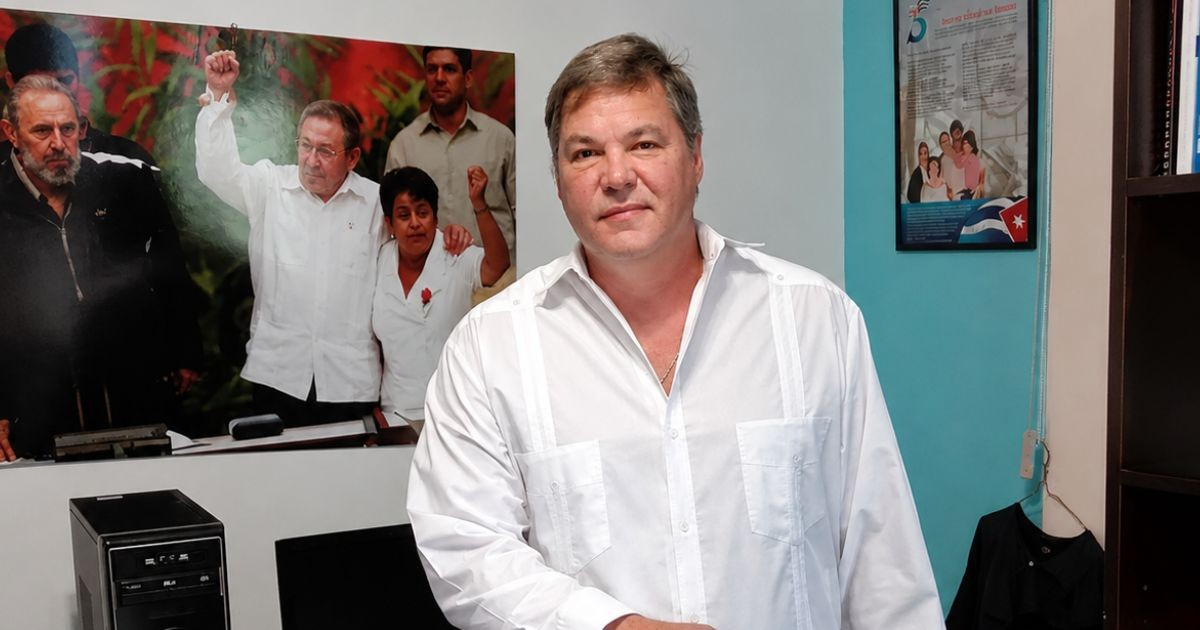
Ramón Labañino Salazar, a former spy and one of the so-called "Five Heroes" celebrated by the Cuban regime, sparked a wave of mockery and criticism on social media after he posted on Facebook that "the people hold power in Cuba."
In his post, Labañino also stated, "the market does not dictate and cannot dictate the nation's destiny, but rather the Party and Socialist Planning," a contradiction promptly pointed out by users: if the people have the power, why is the Party the one deciding the country's course?
The most pointed and referenced response came from user Daniel De Jesús Pascual, who remarked, "Tell that to GAESA."
This comment directly targets the Grupo de Administración Empresarial S.A., a military-run conglomerate established by Raúl Castro in the 1990s, which controls between 40% and 70% of Cuba's GDP and 95% of the nation's foreign currency transactions.
The conglomerate functions as a private corporation without citizen or state oversight: Cubans are not shareholders, do not receive dividends, and cannot audit the books.
Dozens of comments deemed Labañino's post a "meme," "joke," and "parody."
Yanelis Pérez Torres commented, "This is the best joke I've read in the last 47 years."
Others highlighted the internal contradiction within the text itself.
RM Adrián replied, "The people hold the power, and yet the party decides the nation's destiny. Get it together, Five Hero."
Circe Gallardo questioned, "How do you say the people hold the power and then claim that the party dictates the nation's fate?"
Colette Galvez Miranda was more direct: "A people suffering from blackouts, hunger, and hardships cannot say they hold the power."
Meanwhile, Jany Mansito pointed out another harsh reality: "So, the USD is at 700 because the people want it?"
Andres Rego Egues addressed the repression: "The people can't even speak because you'll end up with 15."
Several commentators also recalled that Labañino's daughter studied in Spain while the Cuban population lacks similar opportunities.
Barbara Prol Romero directly questioned, "Was it the Party that sent your daughter to study in Spain?"
Ernesto Gomila used irony to capture the general sentiment: "You are definitely a better comedian than a spy."
Labañino was released in December 2014 following the thawing agreement between the Obama and Raúl Castro administrations, after serving part of a sentence for conspiracy to commit espionage in the United States.
Upon his return to Cuba, the regime declared him a Hero of the Republic and appointed him Vice President of the National Association of Economists and Accountants of Cuba.
This is not the first instance where his posts have incited backlash.
In January 2022, Labañino called for "ideas to lower prices" in Cuba on social media, which also ignited widespread criticism.
Furthermore, in March of this year, he posted the phrase "In Cuba, we Cubans are in charge," maintaining his usual stance.
Ariel Miranda Cuellar summed up the collective reaction to the new post: "You tried to make the meme of the day and ended up with the blunder of the year."
Understanding GAESA's Influence in Cuba
What is GAESA and why is it significant in Cuba?
GAESA, or Grupo de Administración Empresarial S.A., is a military-run conglomerate in Cuba that controls a significant portion of the country's economy, including 40% to 70% of the GDP and 95% of foreign currency transactions. Its influence is significant because it operates without public or state oversight, making it a central figure in the Cuban economy.
How do Cubans perceive the power dynamics in their country?
Many Cubans view the power dynamics in their country as contradictory, with the government claiming that the people hold power, while in reality, decisions are made by the Communist Party and military entities like GAESA. This perception leads to skepticism and criticism of official statements suggesting otherwise.
Why was Ramón Labañino criticized for his social media posts?
Ramón Labañino faced criticism because his statements on social media were seen as disconnected from the reality experienced by many Cubans. His claims about the power of the people contradicted the evident control exercised by the Party and military entities, leading to widespread ridicule and questioning of his credibility.