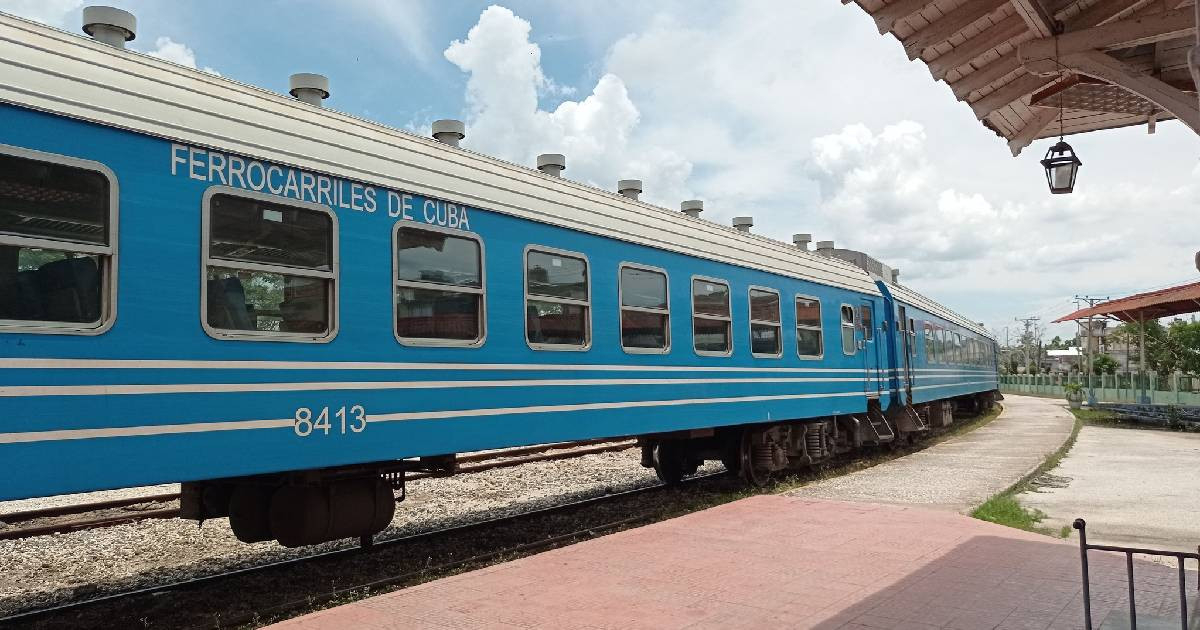
Jorge Oliva Yero, head of National Passenger Trains, revealed on Tuesday a plan to launch special train services this summer aimed at slightly increasing travel opportunities for the Cuban public amidst an unprecedented rail crisis.
This announcement comes at a time when regular train operations have been drastically reduced to just one departure every 16 days per destination, a direct consequence of a crippling fuel shortage impacting the entire system.
Oliva Yero blamed the situation on what he called an "energy blockade" and its severe effects on railway services.
According to the director, while the special trains are primarily designed to meet the needs of state organizations, they will also extend benefits to the general public.
Who Will Benefit from the Special Train Services?
The priority groups identified for these services include: teachers and students from Eastern provinces working or studying in Havana, traveling at the end of June and early July, with returns scheduled for late August and early September; construction workers from regions between Matanzas and Guantánamo who will be transported back to their home provinces; and patients along with family members of hospitalized individuals who need to travel.
Oliva Yero noted that although these services are primarily for institutional demands, the trains will return with nearly 80% of their capacity filled by regular passengers, thereby "allowing a modest increase in summer travel options."
The Current Crisis in Cuban Railways
The context for this announcement is a complete collapse of the rail system. Since June 18, the Ministry of Transportation has implemented a new system that abolishes the free sale of tickets and transfers seat allocation control to provincial commissions. These commissions decide travel eligibility based on priority criteria like medical appointments, hospital discharges, the death of a family member, or returning to one's place of origin.
Operating in emergency mode since February 2026, the system struggles with only 63% of the planned railcars available, alongside a critical shortage of locomotives and spare parts. In May, a journey from Holguín to Havana took a staggering 27 hours due to deteriorating infrastructure.
Recent Accidents and Long-Term Decline
Adding to technical woes, recent accidents have plagued the system. On June 3, Train Number 13, traveling from Santiago de Cuba to Havana, derailed in Omaja, Las Tunas, with approximately 900 passengers on board, fortunately causing no injuries. Just three days later, another passenger train was stranded mid-route.
The decline in Cuba's railway system is deep-rooted: passenger numbers have plummeted from 33 million in 1992 to just 7.8 million in 2016, and the deterioration continues unabated.
National Trains has announced that detailed schedules for these special services will be released in upcoming communications "to allow the public to manage their ticket reservations according to available capacity."
Key Questions about Cuban Railways and Special Train Services
What are the reasons behind the current Cuban railway crisis?
The crisis is primarily due to a severe fuel shortage described as an "energy blockade," leading to drastically reduced train operations. Additionally, there is a lack of locomotives and spare parts, resulting in a significant decline in service quality.
Who are the primary beneficiaries of the special summer train services?
The services primarily target teachers and students from Eastern provinces in Havana, construction workers from Matanzas to Guantánamo, and patients with their families needing to travel for medical reasons.
How has the passenger count changed in the Cuban railway system over the years?
The number of passengers transported has dramatically decreased from 33 million in 1992 to 7.8 million in 2016, with no signs of recovery in sight.