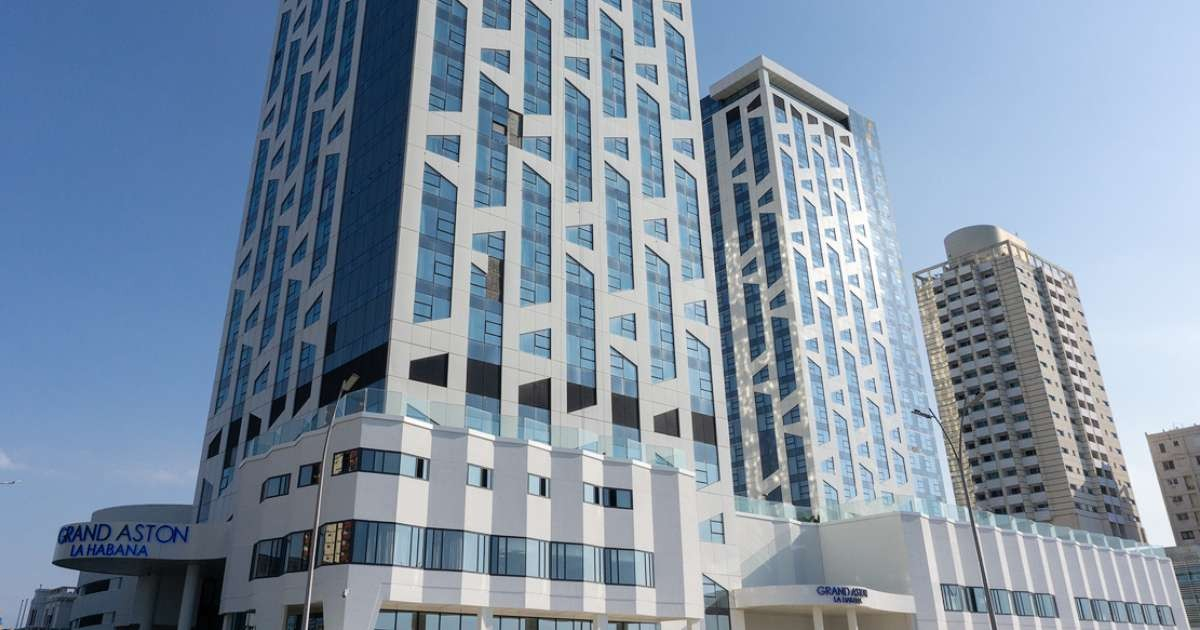
The Grand Aston Havana Hotel, a notable landmark in Cuba's capital, has temporarily closed its doors due to a fuel shortage. This information was confirmed to CubaNet by a hotel employee who chose to remain anonymous to avoid potential repercussions.
The source described red tape blocking access to the building and the evacuation of guests who were staying there. "Red ribbons are outside. Guests have been evacuated, and management has stated that the closure is temporary until the situation improves," the source explained.
Visitors arriving at the hotel on Tuesday to inquire about its services were met with a consistent response: "We are closed due to a lack of fuel."
The staff member also highlighted that the Grand Aston is not among the facilities prioritized by the Ministry of Tourism to receive electric generator supplies. "Other hotels are operating with generators, but the Aston hasn't been prioritized," she noted.
Located across from Havana's famous Malecón in El Vedado, the Grand Aston opened in March 2022 with 600 rooms and was heralded by state media as a milestone in Cuban tourism. Official outlets like Cubadebate once touted it as "a new hotel, with three event halls" and "an infinity pool that seemingly merges with the sea."
Challenges and Operational Shifts
This closure follows a series of setbacks the hotel has faced in recent months. By May 2026, social media was abuzz with images showing the Grand Aston’s exterior completely deserted, devoid of taxis or visitors. Earlier, in December 2025, the hotel faced criticism for massive food wastage amid a nationwide food crisis.
Operationally, Archipelago International, the Indonesian group managing the Grand Aston along with five other Aston-branded hotels in Cuba, announced their withdrawal on May 30, 2026. The company exited to avoid secondary sanctions under Executive Order 14404, signed by Donald Trump on May 1, 2026, targeting foreign firms engaging with GAESA, the Cuban military conglomerate overseeing the island’s tourism sector. The deadline to divest was June 5.
Impact on Cuban Tourism
Archipelago’s departure adds to the exodus of other chains like Meliá, Iberostar, and Blue Diamond Resorts, which also left Cuba following U.S. sanctions. Additionally, Visa and Mastercard ceased transactions on the island starting June 6 after severing ties with Fincimex, a GAESA-linked entity.
As a result, nearly 100 tourist facilities are now without international operators. The broader outlook for Cuban tourism is dire. Only 30,883 tourists visited Cuba in May 2026, marking the lowest monthly figure in years, with a cumulative drop of 58.4% in the first five months of the year. Hotel occupancy rates remain below 10%, prompting the government to implement a "tourism compaction" strategy since February, leading to the closure of dozens of hotels nationwide.
The Spanish chain Barceló, still operating in Cuba, has announced its plans to leave: "We do not wish to take any risks," the company stated, forecasting its exit from Cuba by 2027.
Understanding the Cuban Tourism Crisis
Why did the Grand Aston Havana Hotel close temporarily?
The hotel closed temporarily due to a shortage of fuel, which has affected its operations.
What was the impact of Executive Order 14404 on Cuban tourism?
Executive Order 14404 imposed secondary sanctions on foreign companies doing business with GAESA, leading to several international hotel chains withdrawing from Cuba.
How has the tourism industry in Cuba been affected overall?
Cuban tourism has seen a steep decline, with tourist arrivals dropping significantly and hotel occupancy rates falling below 10%, resulting in numerous hotel closures.