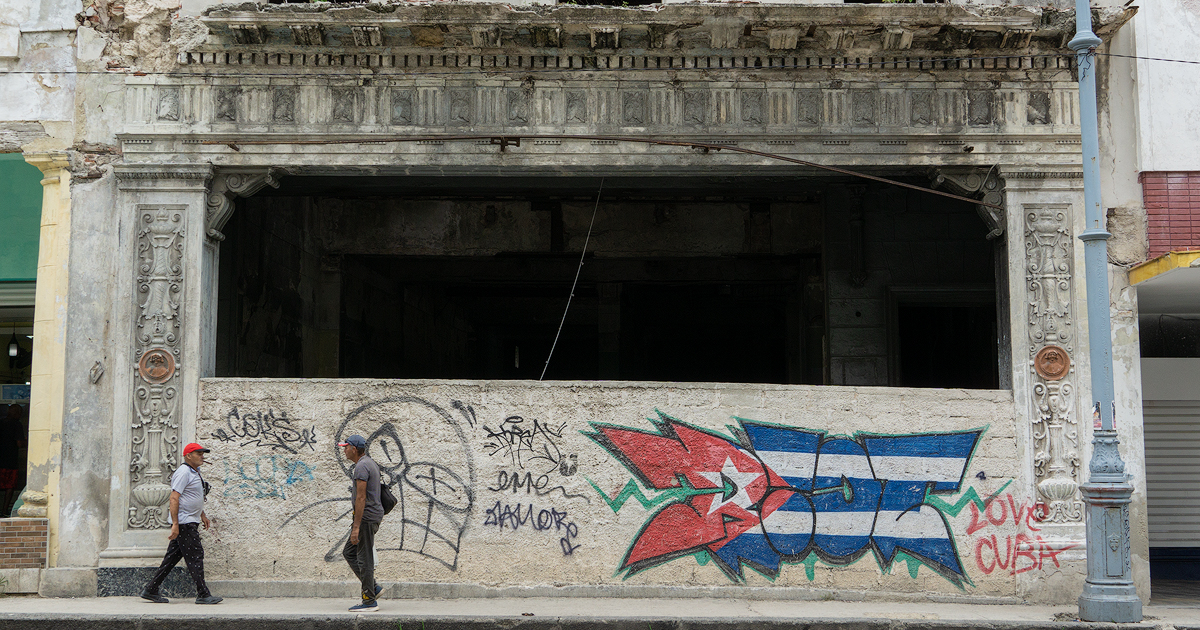
The Cuban regime's recent move to present a resolution on Puerto Rico's self-determination and independence to the UN Decolonization Committee, with Venezuela as a co-sponsor, highlights a profound ethical contradiction. While Puerto Rico's right to self-determination is legitimate, it's hypocritical for governments like Cuba and Venezuela, which suppress their own citizens' freedoms, to claim to defend such rights.
At least in Puerto Rico, there has been room for debate and repeated voting. In 1967, the Commonwealth status achieved 60.4%, statehood 39%, and independence a mere 0.6%. Fast forward to 1993: Commonwealth 48.6%, statehood 46.3%, and independence 4.4%. The 1998 ballot, though controversial, resulted in 50.3% for "none of the above," 46.5% for statehood, 2.5% for independence, and 0.3% for free association. In 2012, 54% rejected maintaining the territorial status; in the subsequent question, statehood garnered 61.2%, free association 33.3%, and independence 5.5%, despite numerous blank votes.
In 2017, statehood reached a high of 97.1%, compared to 1.5% for free association/independence and 1.4% for the current status, albeit with a participation rate of just 23.2%. By 2020, the "yes" to statehood received 52.52%, while "no" got 47.48%. The 2024 official results were: statehood 58.61%, sovereignty in free association 29.57%, and independence 11.82%.
Ongoing Debate in Puerto Rico
Surveys reveal a dynamic debate, not a narrative that countries like Cuba or Venezuela can dictate. The most comprehensive survey including the current status, conducted in October 2024, found 38% support for statehood, 34% for maintaining the current status, 12% for free association, and 8% for independence. No subsequent public island-wide survey has measured all three options simultaneously.
Hypocritical Advocacy by Authoritarian Regimes
Cuba, Venezuela, and Nicaragua should stop using Puerto Rico as a propaganda platform. These countries must first honor the 30 articles of the Universal Declaration of Human Rights, enable the separation of powers, ensure independent judiciary systems, uphold political pluralism, and conduct genuine elections.
Article 21 is clear: the authority of government should be based on the will of the people. These nations should urgently call for free and fair elections, allowing Cubans, Venezuelans, and Nicaraguans to determine their present and future. Only then can they justifiably discuss the self-determination of others without causing outrage.
One might wonder how the communists in Cuba would react if the Cuban people were presented with a ballot offering these choices: * Independence with multiparty democracy * Commonwealth status with the United States * Annexation to the United States * Continuation of the communist dictatorship.
I am quite certain the last option would be the least popular.
Understanding Puerto Rico's Political Options
What are the main political options for Puerto Rico's status?
Puerto Rico's primary political status options include statehood, maintaining the Commonwealth status, free association, and independence.
How often has Puerto Rico voted on its political status?
Puerto Rico has held several referendums on its political status over the decades, including votes in 1967, 1993, 1998, 2012, 2017, 2020, and 2024.