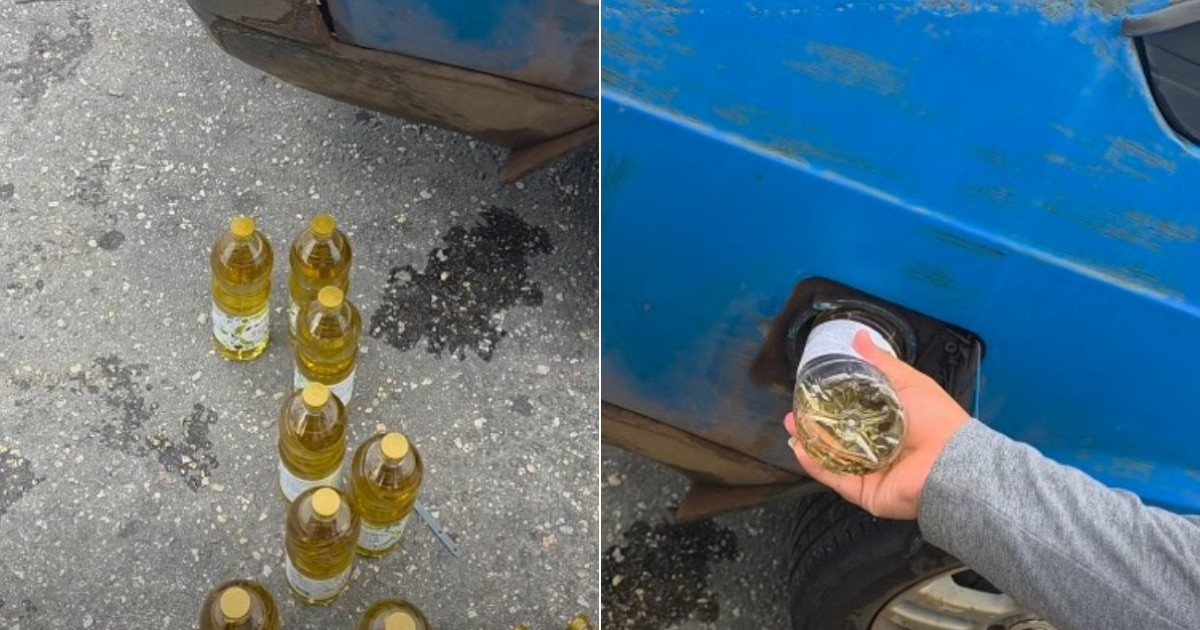
A Facebook video shared by Bryan Anniel Prado Diaz reveals a Cuban man pouring cooking oil into a gasoline car's tank. He exposes that what was sold to him on the black market as fuel was actually repackaged oil.
The footage went viral, amassing over a million views, and highlights the ongoing energy crisis plaguing the island.
In the video, the creator states, "We're adding oil to the car, just a bit to get it going again." His companion clarifies, "It's supposed to be gasoline. It's a gasoline car," while displaying an unopened bottle of Sublime brand soybean oil. "See, it's oil. Don't tell me later it's repackaged gasoline," he emphasizes.
Desperate Measures Amidst Fuel Shortages
This case illustrates a growing trend in Cuba: the desperate use of vegetable oil as a fuel substitute. In June, black market gasoline prices ranged from 3,500 to 8,000 Cuban pesos (CUP), with reports of 16,000 CUP being paid for just three liters.
Meanwhile, sunflower oil costs around 1,500 CUP per liter on the informal market, making it a seemingly cheaper alternative to diesel. However, technically, vegetable oil is not a suitable diesel replacement. Its high viscosity leads to poor fuel atomization, incomplete combustion, carbon deposits on injectors, and accelerated engine wear, exacerbating the already dire condition of Cuba's vehicle fleet.
A String of Similar Incidents
This video joins a series of similar accounts circulating in recent months. On April 9, a truck traveling from Camagüey to Havana used 30 bottles of cooking oil mixed with petroleum for the journey. By late May, Cubans resorted to filling a bus's tank with sunflower oil when diesel was unobtainable.
The Structural Crisis and Its Roots
The underlying crisis is structural, with direct culprits. Since December 2025, Cuba halted oil imports from Venezuela and Mexico, enduring months without external supplies. The 100,000-ton Russian oil shipment received in March 2026 depleted swiftly.
The regime admitted the catastrophe: the energy minister acknowledged the nation was "without fuel," and Miguel Díaz-Canel conceded in April that "there's almost no fuel."
Instead of easing the situation, the regime chose to liberalize prices in dollarized stations from May 15, setting special B100 gasoline at $2.60 USD per liter, a price unreachable for most Cubans who earn in pesos, with an average state salary under 5,000 CUP monthly.
This move fueled speculation and paved the way for scams like the one highlighted in the viral video. Cuba has faced seven total collapses of the National Electric System in 18 months, including a nationwide blackout on March 16, with fuel lines exceeding 15 hours at service stations.
A Cuban commentator on social media summed up the grim outlook: "Soon oil will cost 10,000 pesos; just wait until there's none left."
The Energy Crisis and Its Impacts in Cuba
Why are Cubans using cooking oil as fuel?
Cubans are resorting to cooking oil as a substitute for fuel due to the severe fuel shortages and high black market prices, making it a seemingly cheaper option despite its technical drawbacks.
What are the consequences of using cooking oil in vehicles?
Using cooking oil in vehicles can lead to poor fuel atomization, incomplete combustion, carbon build-up on injectors, and accelerated engine wear, further degrading Cuba's already struggling vehicle fleet.
What are the main causes of the energy crisis in Cuba?
The energy crisis in Cuba stems from the cessation of oil imports from Venezuela and Mexico since December 2025, coupled with the depletion of Russian oil reserves and the liberalization of fuel prices by the regime.