Economist Pedro Monreal took to social media on Tuesday to clarify the confusion stemming from the recent announcement of the Cuba Transformation project. He outlined three crucial aspects regarding the initiative’s true scope on his account.
Monreal shared that the proposal will be released soon, emphasizing that it is not specifically aimed at the current Cuban government. More importantly, he highlighted that the project's overarching framework is a model of a market-social economy coupled with a democratic rule of law.
The clarification was essential after Monday's announcement caused some misunderstandings. Omar Everleny Pérez Villanueva, a participant in Cuba Transformation, is also part of the advisory group convened by Díaz-Canel on June 17 to address the economic crisis. This overlap led to assumptions that both projects were connected.
Nevertheless, the distinction between the two is significant. While the advisory group operates within the socialist confines of the regime, Cuba Transformation proposes a structural overhaul towards a political and economic system that is fundamentally different from the current one.
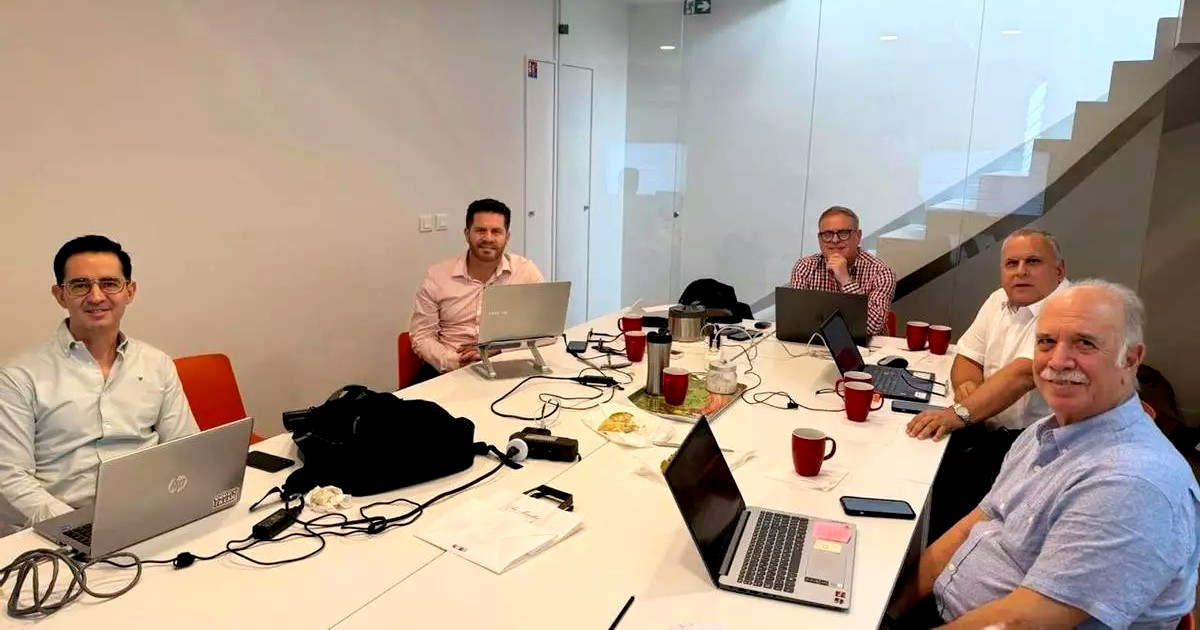
The project consists of five Cuban economists—Mauricio De Miranda Parrondo, Pedro Monreal González, Ricardo Torres Pérez, Pavel Vidal Alejandro, and Pérez Villanueva—who have been collaborating since March 2026 with support from the Cuba Study Group and the Observatory on the Cuban Economy.
In a Substack post from Monday, Monreal explicitly stated: "Although we are aware of the recent economic measures announced by the Cuban government, our proposal is not a direct evaluation of those actions nor directly derived from them."
Phases of Transformation
The group's plan envisions transformation in three stages: stabilization and emergency measures; productive and institutional recovery; and the construction of a medium and long-term development strategy.
Currently, their efforts are focused on the initial phase due to the urgent need to address macroeconomic imbalances and the most pressing issues faced by the population.
A Crisis Context
The initiative emerges amid Cuba's most severe economic crisis in decades. Since 2019, the GDP has shrunk by over 23%, with further declines projected between 7.2% and 15% by 2026, as the nation grapples with prolonged blackouts, severe shortages, and a massive wave of emigration.
The regime's response involved the approval of 176 measures in the National Assembly, including the authorization of private banking, the transformation of state enterprises, and opening up to foreign investment. Monreal had criticized these reforms as "belated pragmatism" and a "worn-out ploy," cautioning that "the numbers don't add up."
It was Díaz-Canel's unprecedented invitation to critical economists—bypassing the Prime Minister and the Minister of Economy—that sparked confusion regarding the independent nature of Cuba Transformation.
Monreal emphasized that the group aims to provide "technical arguments to facilitate dialogue, understanding, and negotiation about Cuba's economic future," rather than presenting a "definitive and closed response." The full proposal is expected to be published soon.
Understanding Cuba Transformation's Economic Proposal
What is the main goal of the Cuba Transformation project?
The main goal is to propose a shift towards a market-social economy and establish a democratic rule of law in Cuba, distinct from the current socialist framework.
Who are the key figures involved in the Cuba Transformation initiative?
The initiative involves five economists: Mauricio De Miranda Parrondo, Pedro Monreal González, Ricardo Torres Pérez, Pavel Vidal Alejandro, and Omar Everleny Pérez Villanueva.
How does Cuba Transformation differ from Díaz-Canel's advisory group?
While Díaz-Canel's advisory group functions within the socialist regime's framework, Cuba Transformation advocates for a structural change towards a fundamentally different political and economic system.