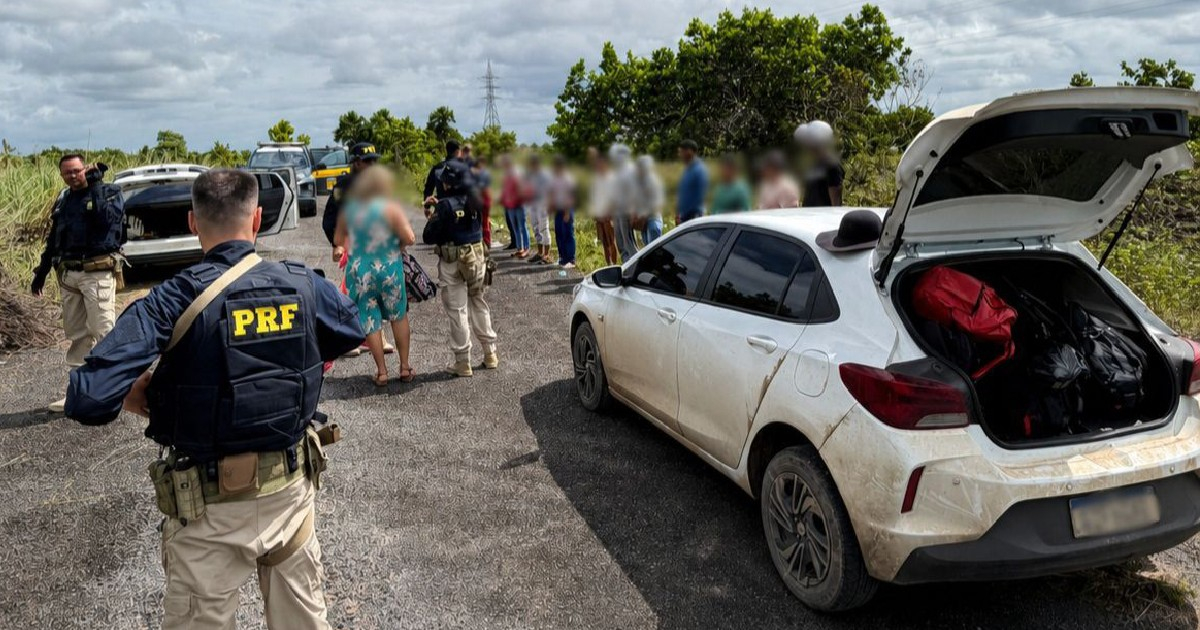
In 2025, Cubans overtook Venezuelans for the first time in a decade, becoming the largest group seeking asylum in Brazil. This trend, which continued into 2026, highlights the relentless nature of the migration wave from the island, reaching record numbers in the perilous journey to the South American nation, especially since the U.S. tightened its policies against illegal immigration.
The International Migrations Observatory (OBMigra), in partnership with Brazil's Ministry of Justice, released statistics indicating that out of 75,599 asylum requests in Brazil during 2025, Cubans accounted for 41,919, or 55.4% of the total. Venezuelans fell to second place with 21,233 applications (28.1%), followed by Colombians with 1,432.
The increase is significant: in 2024, Cubans filed 22,288 applications, meaning the number nearly doubled in a year with an 88.1% rise.
Increasing Trend in 2026
The upward trend continues into 2026. From January to April, 13,414 Cubans applied for asylum in Brazil, making up 58% of all requests during this period, according to OBMigra.
Roraima, a northern state, has seen the highest influx. In the first four months of 2026, over 7,600 Cuban applications were recorded from this border region, now a major entry point.
Pathway to Brazil
The most common route for Cuban migrants starts with a flight from Havana to Georgetown, Guyana — the only country in the region not requiring visas from Cubans. They then travel overland to Lethem at the border, where smugglers ferry them across the Tacutu River into Roraima state, continuing by road to Boa Vista or other southern areas to seek asylum.
Migrants pay traffickers between $300 and $2,800 for the journey through irregular and risky routes, according to recent reports in the Brazilian press. However, BBC News Brazil, quoted by O Globo, revealed that "many Cubans are led to believe they must undertake this journey through illegal traffickers, paying sums exceeding $10,000 (51,400 reais) from the moment they leave Cuba."
Along the way, migrants face dangers, inhumane and unsafe transport conditions, lack of food and medicine, debt, and exploitation.
Legal and Operational Challenges
Brazilian law allows foreigners to apply for refugee status at "any immigration authority at the border," implying that migrants, including Cubans, don't need to resort to human trafficking networks to enter Brazil.
In response to the increasing irregular flow, Brazilian authorities have launched continuous operations at their northern border. The Federal Highway Police initiated Operation Conexão Norte to dismantle migrant smuggling networks. Between June 8 and 14, they rescued 189 Cuban migrants and arrested seven suspected traffickers in Roraima.
Underlying Causes of Cuban Exodus
The Cuban exodus is driven by two main factors: the internal collapse of Cuba and the closure of the route to the United States.
Cuba's economy contracted by around 5% in 2025, with an accumulated loss of over 15% since 2020. Chronic power outages, food and medicine shortages, rampant inflation, and repressive actions against civil society have forced thousands of families to seek a way out through migration.
Simultaneously, the Trump administration reduced irregular Cuban encounters at the U.S. border by 99%, redirecting the migration flow towards South America. Brazil, allowing asylum applications at the border without requiring a visa, became the most accessible alternative.
Challenges in Achieving Refugee Status
However, arriving in Brazil does not guarantee legal refugee status. The National Committee for Refugees (Conare) approved only two Cuban applications between January and June 2025, rejected nine, and archived nearly 11,000 cases. In the first four months of 2026, no Cubans received formal refugee status, and the process can take over five years.
"The key to being granted asylum is to provide verifiable evidence of past or potential persecution," explained Alexei Padilla Herrera, a migration consultant and professor at Diáspora Consultoría, based in Brazil.
Currently, about 84,000 Cubans reside in Brazil, according to the Ministry of Justice, a number expected to rise as long as the Cuban regime fails to provide the island's population with basic living conditions and human rights guarantees.
Key Questions About Cuban Migration to Brazil
What are the main reasons behind the Cuban exodus to Brazil?
The Cuban exodus is mainly driven by Cuba's internal collapse, including economic contraction, shortages, and repression, as well as the closure of the route to the United States.
How do Cubans typically reach Brazil?
Cubans usually fly from Havana to Georgetown, Guyana, then travel overland to Lethem at the border, where they cross the Tacutu River into Roraima state, continuing by road to seek asylum in Brazil.
What challenges do Cuban migrants face on their journey to Brazil?
Cuban migrants face dangers, inhumane and unsafe transport conditions, lack of food and medicine, debt, and exploitation during their journey to Brazil.