The Chinese Ministry of Commerce announced on Monday the immediate implementation of retaliatory measures against U.S. companies. These actions include adding 10 American firms to its list controlling the export of dual-use products and banning 46 defense and tech companies from participating in China's government procurement tenders.
As reported by ABC News, this move follows closely behind the Pentagon's decision to expand its list of companies linked to the Chinese military apparatus, which on June 8 added 65 new entities—including Alibaba, Baidu, BYD, Tencent, and Unitree—bringing the total to 188 designated brands.
U.S. Companies Targeted by the Blacklist
The American businesses now on the export control list include Aveox, Red Cat Holdings, Teal Drones, IMSAR, Jaia Robotics, Ball Aerospace & Technologies, Oshkosh Defense, L3Harris Maritime Services, MP Materials, and USA Rare Earth.
This is not an arbitrary selection; these companies are involved in industries such as drones, robotics, aerospace technology, maritime services, and most critically, rare earth extraction and processing.
The measure prohibits Chinese operators from exporting dual-use products to these firms, demands an immediate halt to ongoing operations, and also prevents third countries from transferring Chinese-origin goods to these entities.
China's Ministry of Commerce justified the decision by stating it was necessary to "safeguard national security and interests."
The Ban on Defense Giants
Separately, China's Ministry of Finance has barred government entities from purchasing products from 46 American companies, which include various units of Lockheed Martin, Raytheon, General Dynamics, and Boeing Defense, according to La Vanguardia.
Although the direct economic impact is limited due to these firms' minimal exposure to the Chinese market, joint ventures with local partners already operating in China are exempt from this ban.
George Chen, a partner for Greater China at advisory firm The Asia Group, described the retaliation as "an unsurprising and proportionate response," though he noted its effects would be "quite symbolic," given that the affected companies "are not conducting business in China."
The Strategic Impact of Rare Earths
The most sensitive element of the retaliation is the inclusion of MP Materials and USA Rare Earth, which are Washington's key initiatives to reduce dependence on China for critical minerals.
MP Materials operates the only active rare earth mine in the U.S. at Mountain Pass, California, with a Department of Defense contract ensuring a minimum price of $110 per kilogram of neodymium and praseodymium for a decade.
China dominates approximately 70% of global rare earth mining and 90% of refining capacity, making its position a structural bottleneck for defense, electric vehicles, and advanced electronics.
This measure comes shortly after G7 leaders committed on June 17 in Paris to reduce their reliance on sole suppliers of rare earths to less than 60% by 2030.
The Breakdown of Beijing's Spirit
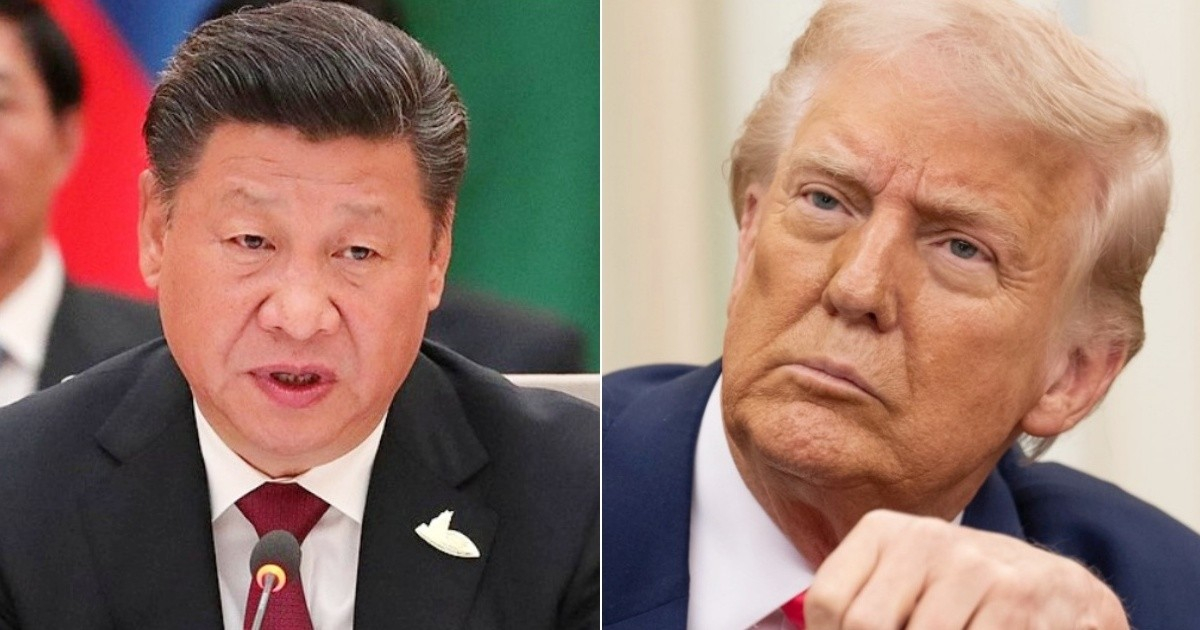
The tension is particularly striking as it follows just a month after Trump's state visit to Beijing in May 2026, where Xi Jinping and the U.S. President agreed to build a "constructive strategic stability relationship."
Following the Pentagon's list expansion, a Chinese government spokesperson warned that the measures went "against the spirit of detente from the recent Beijing summit" and promised a "strong response" if they were not withdrawn.
The Chinese Ministry of Commerce also accused Washington of "abusing state power to coerce Chinese companies."
A New Kind of Trade War
This isn't China's first use of export controls as a pressure tool; in April 2025, it placed 12 American companies on a similar list in retaliation for Trump's tariffs.
What distinguishes the current escalation is its precision: it doesn't halt bilateral trade but targets sectors Washington views as strategic to national security, introducing regulatory risk for international investors and suppliers.
As analyzed by digital business portal Negocios.com, "five-year industrial planning becomes nearly impossible when a political decision can disrupt an entire supply chain within 24 hours," highlighting the new climate of rivalry between the world's two largest economies.
Understanding China's Retaliatory Blacklist
Why did China add U.S. companies to its export control list?
China added U.S. companies to its export control list as a retaliatory measure against the Pentagon's expansion of its blacklist of Chinese military-linked companies.
What industries are affected by China's new blacklist?
Industries affected include drones, robotics, aerospace technology, maritime services, and rare earth extraction and processing.
How does the blacklist impact U.S. companies?
The blacklist prevents U.S. companies from exporting dual-use products to China and halts ongoing operations, impacting their ability to do business with Chinese entities.