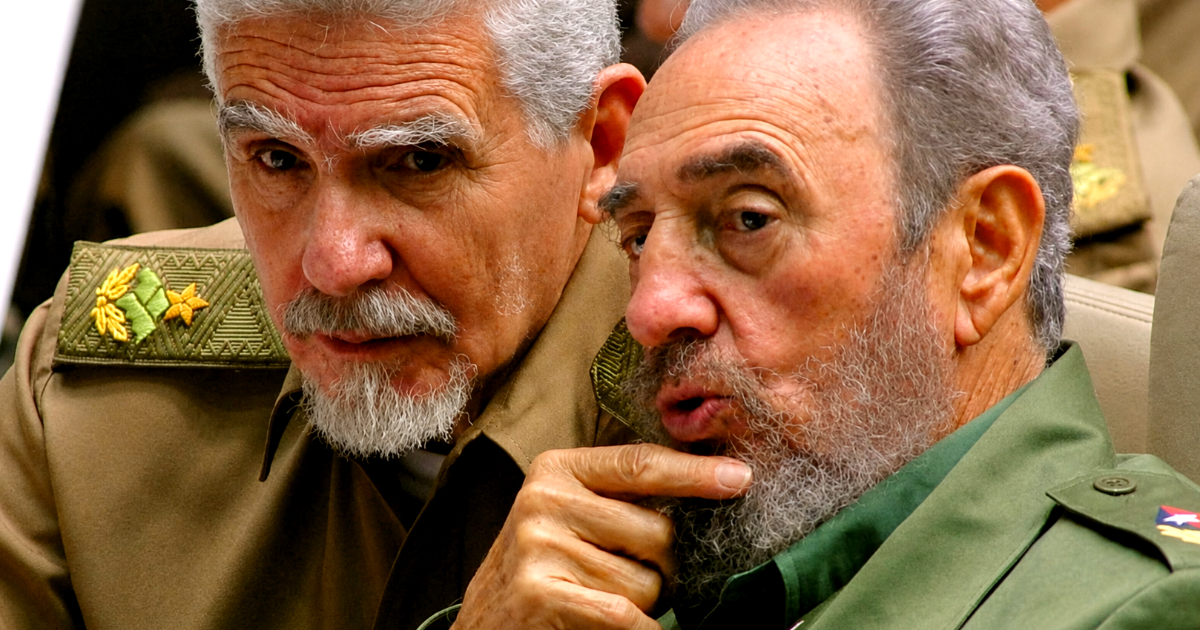
The passing of Ramiro Valdés Menéndez at the age of 94 marks the end of a formidable figure in Cuba's modern history, a man both feared and pivotal in the island's political landscape.
As a commander of the so-called Cuban Revolution, Valdés held numerous powerful positions, including Minister of the Interior and Vice President of the Council of State, maintaining close ties with Fidel and Raúl Castro for over six decades. His legacy is intricately tied to the oppressive political control and intelligence apparatus that has sustained the Cuban regime since 1959.
Controversial Legacy: Hero to Some, Oppressor to Others
While official narratives hail him as a hero of the Moncada assault and a fighter in the Sierra Maestra, to many dissidents, former political prisoners, and exiles, his name is synonymous with the establishment of the State Security and the relentless persecution of dissent, transforming the revolution into a perpetual surveillance system.
The Architect of Political Control
Few Cuban leaders wielded as much power for as long as Valdés. While Fidel Castro was the face of the revolution and Raúl Castro its military strategist, Valdés was the chief architect of the state's political security mechanisms, directly accountable for the regime's brutal repression.
His influence began immediately after the revolutionary triumph, as he took part in shaping the intelligence and counterintelligence services, which later evolved into the Ministry of the Interior (MININT) and State Security (DSE). Historical studies credit him with founding the institutions responsible for domestic surveillance, opposition infiltration, and political control in Cuban society.
A Legacy of Fear and Control
Unlike other historical figures tied to specific events, Valdés is most closely associated with the institutional development of the repression machinery. He was not merely a bureaucrat; he was a key designer of the oppressive system. His role has often been compared to that of Lavrenti Beria and Félix Dzerzhinski, architects of the Soviet secret police.
During the 1960s, as the new regime solidified its power, armed opposition was crushed in the Escambray, thousands were imprisoned for political reasons, and surveillance mechanisms began to infiltrate nearly all aspects of Cuban life. Former political prisoners and exile groups assert that Valdés played a central role in this process.
His name repeatedly surfaces in testimonies and exile memoirs linked to dark chapters of revolutionary history, including the crackdown on the Escambray insurgents, the expansion of the political prison system, and the establishment of labor camps known as UMAP.
Transformation and New Frontiers
In later years, Valdés reemerged in leadership roles within strategic technology companies like Copextel and as Minister of Informatics and Communications. Analysts suggest his role was to adapt the same surveillance and control strategies to the digital age, overseeing the expansion of telecommunications and state-controlled internet access as part of a new phase of the regime's political project.
His influence extended beyond Cuba, notably to Venezuela, where he was identified by opposition leaders and investigative journalists as a key Cuban operative in the Chávez regime's state apparatus. Reports placed him in strategic projects involving telecommunications, energy, and infrastructure, symbolizing the export of Cuba's intelligence model to South America.
His reputation in exile circles was so tarnished that he earned monikers like the "Butcher of Artemisa" and "Blood Pond," used by former political prisoners and anti-Castro sectors to describe someone they saw as a principal enforcer of revolutionary repression.
Valdés's influence and involvement in the machinery of control and repression left an indelible mark on Cuba and beyond, with his death closing a chapter on one of the most enduring architects of Latin America's longest-standing authoritarian regime.
Understanding Ramiro Valdés's Impact on Cuba
What roles did Ramiro Valdés play in the Cuban government?
Ramiro Valdés served as Minister of the Interior, Vice President of the Council of State, and held various strategic positions, contributing significantly to Cuba's intelligence and security apparatus.
How did Valdés influence Cuba's state security?
He was a pivotal figure in establishing and expanding the intelligence and counterintelligence services, which became the backbone of Cuba's political control and repression strategy.
What was Valdés's role in Venezuela?
Valdés was identified as a key figure in transferring Cuban intelligence and control techniques to the Venezuelan state under the Chávez regime, particularly in areas like telecommunications and infrastructure.