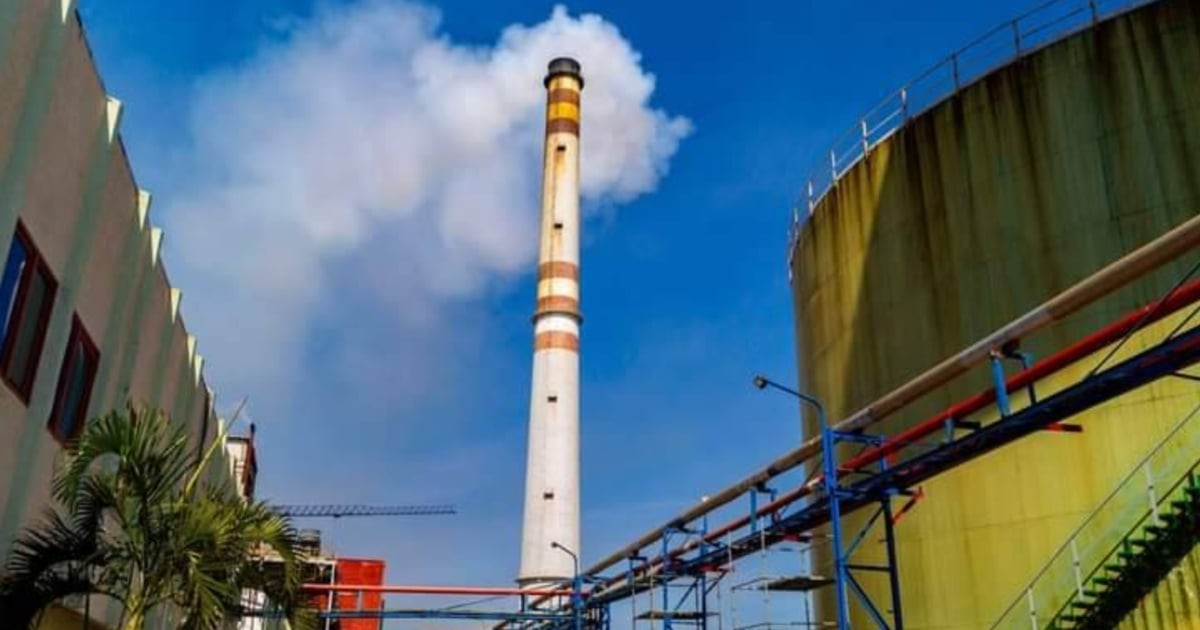
The Antonio Guiteras thermoelectric plant, situated in Matanzas, began a hydraulic test on Sunday as a preliminary step to potentially rejoining Cuba's National Electric System (SEN), as announced by the plant on its social media channels.
"If the test is successful, we will start the ignition process. Once parameters are met, the unit will be synchronized with the national grid," the plant shared on Facebook.
This announcement comes a mere nine days after its last reconnection on June 12, when Guiteras re-entered the SEN following the inspection of 544 welding seams, the repair of 172, and the replacement of five boiler girders.
During that occasion, the plant could only contribute around 100 MW during the nighttime peak, significantly below its maximum capacity of 300 MW.
Ongoing Repairs and Persistent Challenges
The state-run Canal Caribe reported on Saturday that final repairs on the boiler were progressing, with expectations of the plant's return "this Sunday." Nevertheless, later reports suggested Tuesday as a possible synchronization date, underscoring the uncertainty surrounding each restart attempt.
Throughout 2026, the plant has experienced a series of failures, tallying between 12 and 13 exits from the SEN, with more than half resulting from boiler malfunctions.
In May and June alone, Guiteras left the grid on May 14, disconnected again on May 24 due to an economizer leak, reconnected on May 28, and then exited just two days later. On June 6, it stopped once more because of boiler leaks before reconnecting on June 12.
Structural Deterioration and Its Impact
The underlying structural issues are severe and have built up over time. The plant has not undergone comprehensive maintenance since 2010, and the brief shutdown in January 2026 was inadequate to prepare it for the high-demand summer season. In 2025, boiler leaks accounted for nearly 70% of its downtime, as acknowledged by the plant's staff.
The significance of Guiteras in Cuba's electrical system means that every outage has immediate effects on millions of residents.
The plant contributes between 20% and 25% of the nation's thermal power generation, and its absence exacerbates a deficit that ranged from 1,720 MW to over 2,000 MW during peak hours in June 2026.
Effect on Cuban Citizens
The repercussions for the population are direct: Matanzas experienced power cuts of up to 85 consecutive hours between June 14 and 17, while in Santiago de Cuba, power outages were organized into nine blocks, offering only one to two hours of electricity per zone per day.
On May 16, a staggering 51% of the country was simultaneously left without power.
Each new announcement of Guiteras' reconnection is met with skepticism: the last time the plant resumed operations after a similar hydraulic test, it remained connected for less than a week before failing in the same critical area.
Understanding the Challenges of Cuba's Electric Grid
What role does the Guiteras plant play in Cuba's energy supply?
Guiteras contributes between 20% and 25% of Cuba's thermal power generation, making it critical to the nation's energy supply.
Why has the Guiteras plant been experiencing frequent outages?
The frequent outages are mainly due to severe structural deterioration and boiler malfunctions, compounded by inadequate maintenance.
How do the power outages affect Cuban citizens?
Power outages lead to significant disruptions, with areas like Matanzas experiencing extended power cuts and Santiago de Cuba facing limited electricity access.