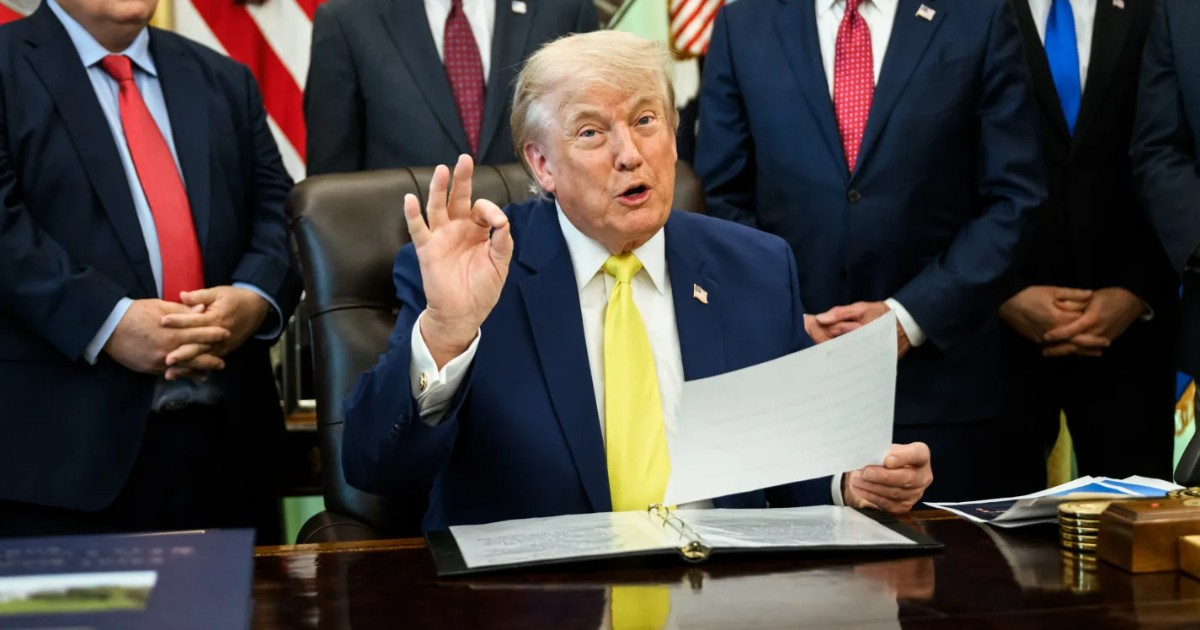
In a bold statement on Sunday, President Donald Trump issued a fresh warning to Iran via his social media platform, Truth Social. He demanded that Tehran immediately rein in its armed proxies in Lebanon or face more severe military repercussions than those carried out just last week.
"Iran must immediately restrain its well-funded PROXIES in Lebanon from causing further trouble. If they fail to do so, we will strike Iran very hard again, just like last week, but even harder!" Trump posted on Truth Social.
This threat comes amid heightened tensions, coinciding with Vice President JD Vance's journey to Switzerland to lead the initial round of technical negotiations with Iranian delegates at the Bürgenstock complex.
Escalating Military Actions
The explicit threat refers to the U.S. Central Command's (CENTCOM) airstrikes on June 11 against Iranian targets, including surveillance, communication, and air defense facilities. These strikes were a response to the downing of an Apache helicopter over the Strait of Hormuz on June 9.
On the same day, Iran retaliated by attacking 18 sites linked to U.S. bases in Bahrain and Kuwait, marking one of the most intense escalations between the two nations in decades.
Reasons Behind the Tensions
The immediate trigger for Trump's renewed warning appears to be Iran's closure of the Strait of Hormuz on Saturday. This action was in response to Israeli assaults in southern Lebanon, which resulted in at least seven fatalities, including two children, in areas like Nabatiyeh.
This closure came shortly after Trump lifted the maritime blockade on Iran and reopened the strait as part of a provisional agreement announced on June 14.
Additionally, the talks between Iran and the U.S. in Doha were abruptly halted on Saturday due to complications directly related to the conflict in Lebanon, where Hezbollah—identified as the primary armed group supported by Tehran—remains active.
Challenges in Nuclear Negotiations
Lebanon has emerged as a significant hurdle in cementing the nuclear deal between Washington and Tehran. A memorandum of understanding signed from June 16 to 18 opened a 60-day window to negotiate a final agreement, with Iran agreeing to maintain the current state of its nuclear program and the U.S. refraining from imposing new sanctions.
The primary technical point of contention is the duration of the uranium enrichment moratorium: Washington is demanding 20 years, while Tehran suggests a period between five and 15 years.
Before heading to Switzerland, Vance outlined the focus areas for the Bürgenstock meeting: "I can only be there for one or two days. I hope we can make progress on the nuclear issue and the ceasefire in Lebanon. Those are the two main topics we need to concentrate on."
Trump's threat, made public on Sunday as Vance traveled to Switzerland for the first technical round, underscores the ongoing tension between diplomatic efforts and military pressure that characterizes the U.S. administration's policy towards Iran. The CIA director warned on June 16 that the process could fail if Tehran does not adhere to the agreements.
Key Questions on U.S.-Iran Tensions
What triggered Trump's recent threat against Iran?
The immediate trigger was Iran's closure of the Strait of Hormuz in response to Israeli attacks in southern Lebanon.
What are the main points of contention in the nuclear negotiations?
The primary issue is the duration of the uranium enrichment moratorium, with Washington seeking 20 years and Tehran proposing between five and 15 years.
How has Iran retaliated to U.S. military actions?
Iran attacked 18 sites linked to U.S. bases in Bahrain and Kuwait following U.S. airstrikes on Iranian targets.