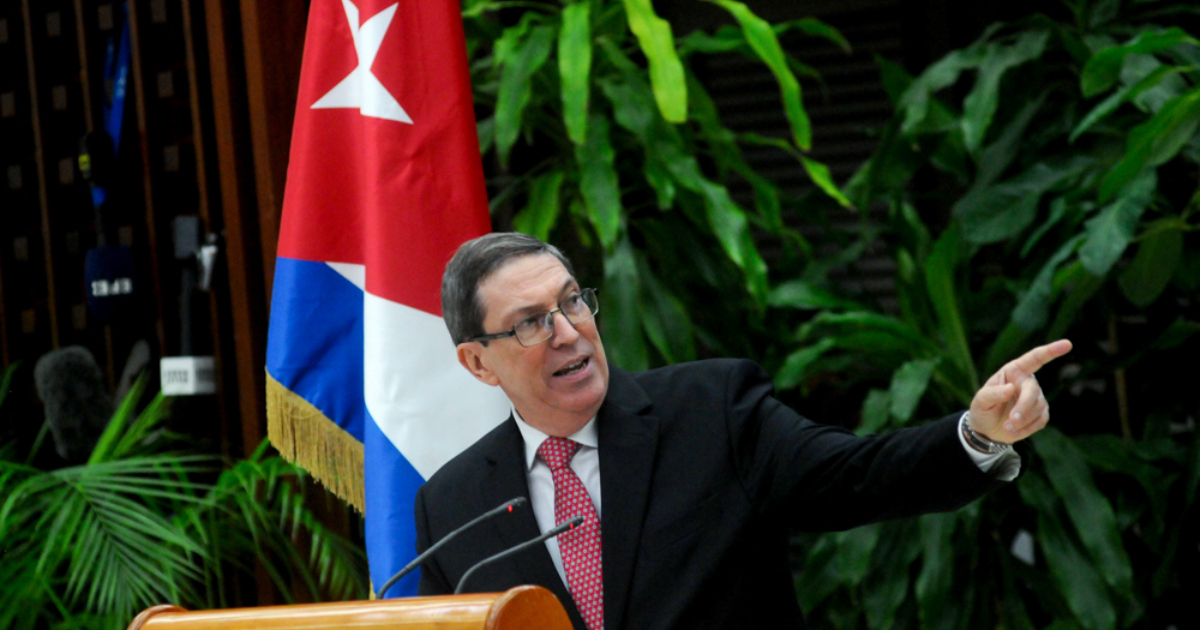
Cuba's Foreign Minister, Bruno Rodríguez Parrilla, invoked the rhetoric of sovereignty on Saturday to dismiss any opinions from Washington regarding Havana's domestic decisions.
Rodríguez's statement was posted on his social media account a day after Cuba's own government acknowledged the partial failure of its economic model during a session of the National Assembly.
"The U.S. government, the executor of collective punishment against the Cuban people, lacks the political, legal, or moral authority to judge the steps we are taking," the Foreign Minister asserted.
He further rejected Washington's right to comment on the island's internal reforms.
"Their opinion on how to overcome longstanding deficiencies and adapt our indigenous socialist model to new national and international realities is irrelevant," Rodríguez added.
The message concluded with a firm declaration: "Cuba lies outside U.S. borders. Cuba has won, defends, and will always defend its sovereignty with great effort and full determination, rejecting any foreign interference in its internal affairs just as resolutely."
Economic Reforms and Washington's Reaction
On Thursday, the National Assembly of People's Power convened an extraordinary session where Prime Minister Manuel Marrero Cruz introduced 176 economic reform measures across 23 strategic areas. These include the authorization of private banking, private currency exchanges, increased openness to foreign investment, and the removal of the cap on micro, small, and medium-sized enterprises employing up to 100 workers.
Marrero himself acknowledged contradictions within the new measures to the legislators, marking what is presented as the most significant attempt at structural reform since the Special Period.
The U.S. responded swiftly, labeling the reforms as "superficial smoke signals."
Consistent Confrontation with Washington
Rodríguez's rhetoric has followed a consistent pattern throughout 2026. In January, he stated that the Cuban people are prepared to "lay down their lives" to defend sovereignty against threats from Trump. In March, he declared Cuba's openness to "serious and responsible dialogue" with the United States, provided there is no interference in its internal affairs. By May, he was denouncing a potential military aggression at the U.N. and warning that sanctions had reduced Cuba's energy imports by 80% to 90%.
This pattern is clear: whenever the internal crisis intensifies, Rodríguez amplifies the narrative of confrontation with Washington, shifting the focus to the embargo and sovereignty at times when the government itself implicitly admits its economic model is failing.
Cuban Sovereignty and Economic Reforms: Key Questions Answered
What did Bruno Rodríguez say about U.S. opinions on Cuba?
Bruno Rodríguez stated that the U.S. lacks the political, legal, or moral authority to judge Cuba's internal decisions. He dismissed Washington's opinions as irrelevant.
What economic reforms were introduced by Cuba's government?
The Cuban government introduced 176 economic reform measures, including allowing private banking, private currency exchanges, more foreign investment, and removing the worker cap for small enterprises.
How did the U.S. respond to Cuba's economic reforms?
The United States responded by describing the reforms as "superficial smoke signals," indicating skepticism about their effectiveness.