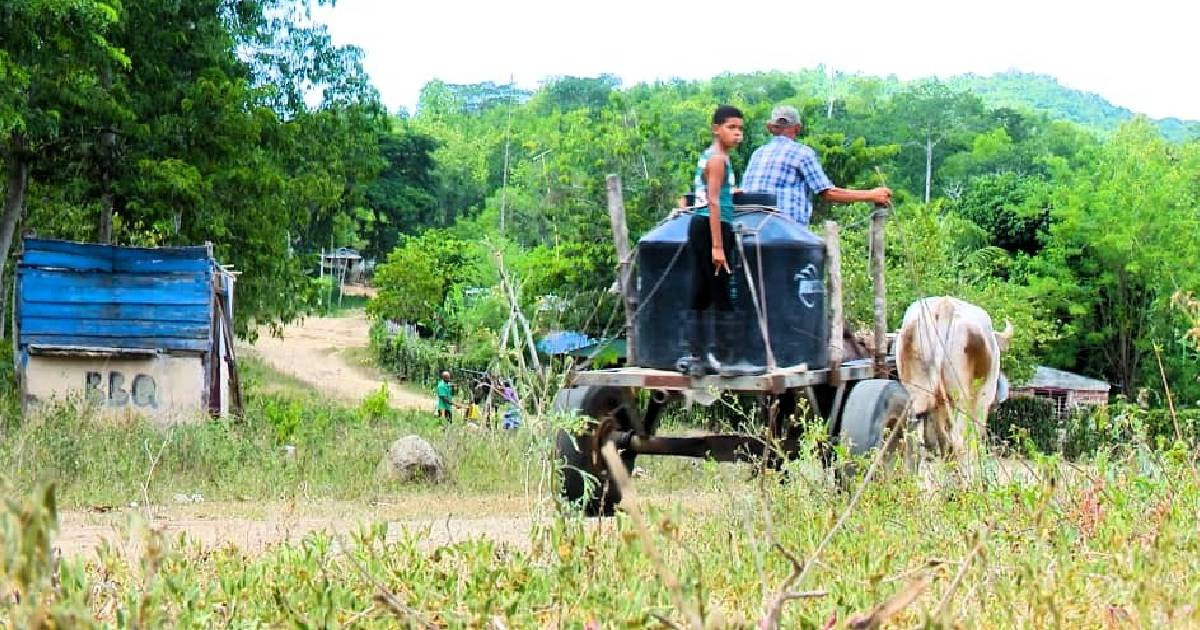
Guantánamo province is grappling with a severe water supply crisis, causing distribution cycles to stretch up to 25 days for areas connected to the network. This alarming situation was highlighted by the official newspaper Venceremos, describing the issue as "tense."
Lexis Suárez Ramírez, the provincial director of Water and Sewer Services, pointed out four primary reasons contributing to the service's decline: power outages, fuel shortages, high turbidity in water sources, and breakdowns at pumping stations.
Suárez Ramírez stated, "In most municipalities, the limited hours of electrical service are insufficient to ensure water reaches the entire population."
South Guantánamo Faces the Worst Conditions
The southern area of the capital city suffers the most, with around 60,000 residents relying on the Guanta pump station, which has experienced electrical interruptions and blockages due to aquatic plants proliferating in the canal.
Cleaning the canal, although necessary, led to additional blockages when detached algae clogged internal networks, requiring specialized intervention.
Challenges Across the Province
High turbidity also disrupts pumping in the municipalities of Yateras and Manuel Tames, as well as in parts of the city such as Cecilia, Arroyo Hondo, and Paraguay. In these areas, the Bano pump, crucial for supplying northern highland neighborhoods, is halted.
The lack of fuel exacerbates the situation, leaving about a hundred communities that typically receive water via tanker trucks waiting over a month due to the inability to dispatch these vehicles.
Repair Delays and Chemical Shortages
Pumping equipment at stations El Jamal in Baracoa and Boquerón in Manuel Tames are under repair at national workshops with no confirmed return date, according to sources.
Suárez Ramírez also warned of unstable chemical supplies for water treatment, necessitating prioritization of pumps serving larger populations. As a precaution, citizens are advised to boil water or use sodium hypochlorite and filters in their homes.
A Long-Standing Crisis
This situation is not unprecedented. In May, Guantánamo prepared to distribute water using horse-drawn carts due to potential fuel depletion.
In November 2025, following Hurricane Melissa, over 180,000 residents suffered from pumping failures, experiencing cycles of 15 to 20 days.
The crisis reflects a national water supply collapse, considering that 87% of Cuban aqueducts rely on the National Electrical System for water pumping, making every blackout a simultaneous water outage.
Currently, the hydraulic system operates with only 37% of required fuel, and nearly 2.7 million Cubans lack regular access to potable water.
As a potential medium-term solution, authorities plan to import solar pumps for wells and pumping stations capable of handling up to 10 liters per second, although no dates or funding have been secured.
Understanding Guantánamo's Water Crisis
What are the main reasons for the water crisis in Guantánamo?
The crisis is primarily due to power outages, fuel shortages, high turbidity in water sources, and breakdowns at pumping stations.
How are residents coping with the lack of water?
Residents are advised to boil water, use sodium hypochlorite, and install filters in their homes to ensure safe water consumption.
What measures are being considered to address the crisis?
Authorities are considering importing solar pumps for wells and stations, but no concrete dates or funding have been confirmed.