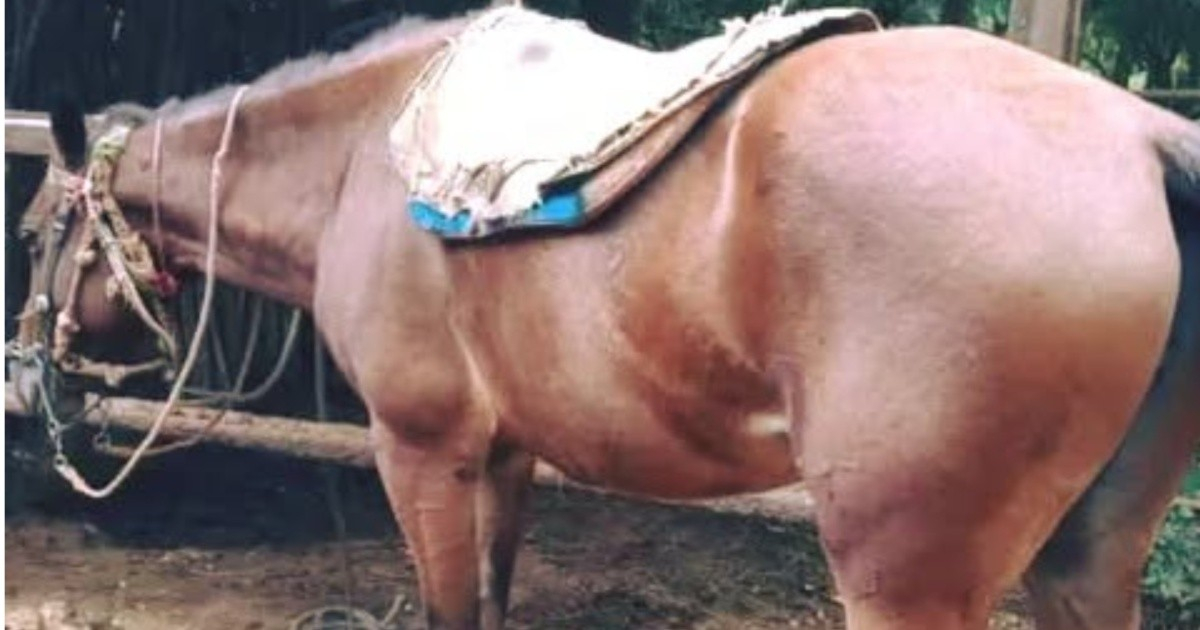
A family in Ciego de Ávila has issued an urgent plea on social media following the theft of a mare and a horse in the small community of Crucero de Quesada. Located about eight kilometers east of the city of Ciego de Ávila along the Central Highway, the family is offering a reward of $1,000 for any information leading to the safe return of the animals.
The victim, Chacorta Humberley Hernandez, took to the Facebook page "El Mas Puro Rodeo Cubano" to share details of the theft, which happened overnight in this area of the Avila province. Hernandez expressed the deep personal loss, stating, "Last night in Crucero de Quesada, we had a mare and a horse stolen. This isn't just a material loss... the mare belonged to my grandfather, who recently passed away, and it's the only thing I have left of him. It holds immense sentimental value for me."
In the appeal, the owner provided a WhatsApp number (+1 813 562 3975) for any leads on the animals' whereabouts, emphasizing that "no detail is too small, anything you've seen might help."
The Stark Reality of Horse Theft in Cuba
Comments on the post highlight a grim reality: in Cuba, stolen horses are seldom found alive. A user named Onilda Caro shared her own ordeal, "I had a horse and a colt stolen Wednesday night, and they were killed the next day. Despite not being a very good horse, it was valued at 500,000 Cuban pesos, and I am still speechless about the colt, which was beautiful."
Other commenters noted the swiftness with which thieves operate to avoid detection. Sinesio Aguilar warned, "The person who takes them is doing so to slaughter and sell," while Ana Galan mentioned that after a theft, the animals are "almost always already sold to those who butcher them, or the thieves themselves kill them due to the hunger crisis."
A Widespread Issue in Ciego de Ávila
Crucero de Quesada is no stranger to such crimes. Back in April 2026, travelers publicly reported frequent thefts at this crossroads and criticized the police response. Livestock theft is a systemic problem in the province. According to the Revolutionary National Police, there were 1,689 cases of major livestock theft in Ciego de Ávila in 2021, more than double the 824 cases reported in 2020.
In August 2025, a similar incident shocked the Cuban equestrian community when "Carola," the mare of national barrel racing champion Leidy Laura Rodríguez, was stolen and slaughtered in Sagua la Grande, Villa Clara.
The impunity surrounding these crimes was underscored in October 2024, when residents of Santiago de Cuba captured a horse thief on their own, only for the police to release him hours later.
Anyone with information about the stolen mare or horse from Crucero de Quesada is urged to respond to the Facebook post or contact via WhatsApp at +1 813 562 3975.
Understanding the Impact of Horse Theft in Cuba
Why is the theft of horses a significant issue in Cuba?
Horse theft in Cuba is a major concern due to the economic and sentimental value of the animals, compounded by the lack of effective law enforcement and the rapid activities of thieves who typically slaughter the animals quickly to avoid capture.
What actions can be taken to prevent horse theft in regions like Ciego de Ávila?
Preventive measures could include increased surveillance, community alerts, stronger police presence, and harsher penalties for those caught stealing to deter potential thieves.