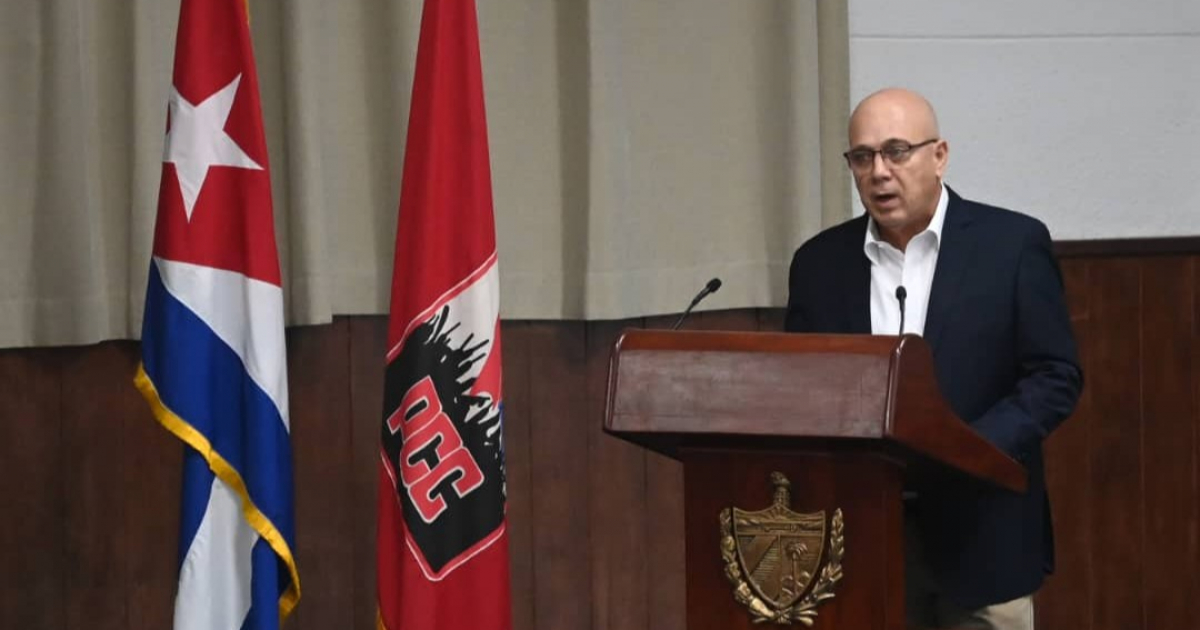
Roberto Morales Ojeda, the Secretary of Organization for the Central Committee of the Communist Party of Cuba and a member of the Political Bureau, took to his social media account on X this past Saturday with a bold proclamation: "Cuba is rising up: A time for profound changes with social justice and sovereignty." This statement came amidst a day marked by widespread protests, tire burnings, and power outages across the island.
The post also echoed a quote from Miguel Díaz-Canel during the extraordinary plenary session of the PCC on June 17: "To those who wish to build with Cuba, here is your home and the door is open. For this nation, at this hour, no Cuban is expendable."
Propaganda Versus Reality
The message is part of the regime's propaganda effort to present the newly approved economic package of 176 measures—sanctioned in an extraordinary session of the National Assembly on June 18—as a sovereign transformation rather than a response to years of accumulated crisis and protest pressure.
Díaz-Canel preemptively addressed such perceptions by stating to the Assembly, "We are not doing this because of Yankee pressures," although he admitted in the same speech that "there are obstacles not coming from outside nor from the blockade," acknowledging internal bureaucracy and administrative delays.
Major Economic Shifts
The measures involve the authorization of private banking for the first time in decades, private exchange houses, the removal of the 100-worker cap for micro, small, and medium enterprises, allowing investments from Cubans abroad, reducing ministries from 27 to between 20 and 21, and a gradual introduction of a value-added tax.
Economist Pedro Monreal described the package as "belated pragmatism," while Elías Amor criticized the lack of clear solutions for inflation and fiscal deficit.
Unrest and Discontent
The official optimism starkly contrasts with the reality on the ground. The same Saturday saw pots-and-pans protests and tire burning in San Miguel del Padrón and La Güinera, with additional demonstrations in Carlos III and Santos Suárez. Internet outages were reported in conflict zones across Havana.
Additionally, the Cuban Electrical Union reported a meager availability of 1,016 MW against a demand of 2,650 MW, resulting in 1,620 MW being affected.
Historic Levels of Protest
According to the Cuban Conflict Observatory, May 2026 saw 1,311 protests, marking the highest monthly record, following 1,245 in March and 1,133 in April.
The slogan "Cuba is rising up" is not new in the regime's propaganda toolkit: it was previously used in the aftermath of Hurricane Melissa in October 2025, and Morales Ojeda himself employed similar rhetoric in April 2026, stating, "Whoever rises with Cuba today rises for all time."
Morales Ojeda was sanctioned by the United States on May 18, 2026, along with ten other senior officials and three entities, under Executive Order 14404 signed by Donald Trump on May 1, due to their links to repression in Cuba.
The independent outlet Árbol Invertido depicted the island's atmosphere thusly: "Fire has become the language of protests in Cuba, a new language for the Cubans, sending signals amidst the unbearable night and blackouts. From the depths of a country sunk in misery, these are luminous signals spreading a loud and clear message: the desire for freedom and rejection of the communist regime."
Understanding Cuba's Current Crisis
What are the new economic measures introduced in Cuba?
The measures include the introduction of private banking, private exchange houses, removal of the 100-worker cap for small enterprises, opening to investments from Cubans abroad, reduction of ministries, and a gradual introduction of a value-added tax.
Why are there protests and blackouts in Cuba?
Protests are fueled by the economic crisis, government repression, and lack of basic services. Blackouts stem from insufficient energy supply, with the electrical grid unable to meet the demand.
How has the international community responded to Cuba's situation?
The international community, notably the United States, has imposed sanctions on Cuban officials linked to repression. Human rights organizations continue to call for democratic reforms and the protection of civil liberties in Cuba.