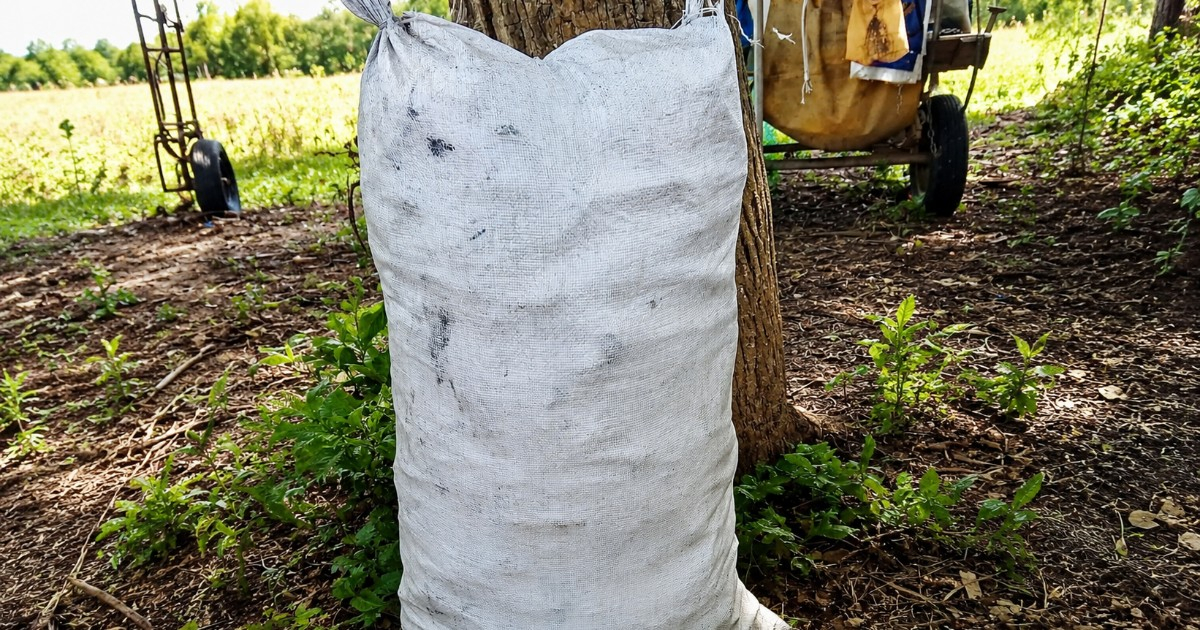
Early on Saturday morning, Cuban activist Yamilka Lafita, who is better known online as Lara Crofs, ventured out to assist a friend in purchasing marabú charcoal at a sales spot known as Barreras. What she encountered was a stark indication of the economic crisis impacting countless families across the island.
"The price of a sack of charcoal has surged to 3,200 CUP. The increase was so significant that we could only afford half of what we needed," she shared on Facebook, sparking an outpouring of reactions from Cubans in various provinces.
The discussion revealed that 3,200 pesos is actually among the lower prices for charcoal currently in Cuba. Reports from Santa Clara indicated sacks being sold for as much as 5,000 pesos.
In Holguín, the price stands at 3,500. In other regions, it ranges between 4,000 and 4,500. In Santiago de Cuba, a sack is equivalent to five cans, each priced between 800 and 1,000 pesos, totaling 5,000 pesos.
"I bought a sack yesterday for 4,500, that's cheap," commented one user, dripping with irony.
The Rapid Escalation of Charcoal Prices
The dramatic rise in charcoal prices is stunning when considering recent trends. In December 2024, a sack was sold on the informal market for between 900 and 1,400 pesos. By March 2025, prices had already reached 3,000 pesos in some urban areas. In just the first half of 2026, prices have more than doubled in several locations.
This spike is particularly devastating as marabú charcoal has become the de facto cooking fuel for millions of Cubans amid energy shortages and gas scarcity.
"In my home, we use a sack weekly for cooking, and given the poor quality of wood available, finding marabú charcoal is a luxury," one commenter noted. Another added that gathering sticks and cooking with wood is starting to seem more economical.
The Stark Reality of Wages vs. Living Costs
The disparity between living costs and official wages is staggering. According to the National Office of Statistics and Information (ONEI), the average monthly salary in Cuba hovers around 6,930 pesos.
Purchasing just one sack of charcoal can consume nearly half of this monthly income, and in cities like Santa Clara or Santiago, where sacks reach 5,000 pesos, it can exceed the entire salary.
This situation unfolds as Cuba exports marabú charcoal worth tens of millions of dollars annually—$61.8 million in 2023—ranking as the ninth-largest global exporter of the product.
Meanwhile, in Guáimaro, Camagüey, local authorities penalize those attempting to produce charcoal manually, worsening domestic shortages.
Government Policies and Their Impact
This week, Díaz-Canel admitted that price caps had failed and only led to more shortages, announcing the abandonment of such policies.
The author of the social media post was unequivocal in identifying the root cause. "The issue is not the charcoal, nor the dollar, nor the chicken. The true problem has a name: the Cuban dictatorship and its rulers. They are solely responsible for a crisis that turns each day into a struggle for survival."
The Economic Impact of Charcoal Prices in Cuba
Why are charcoal prices rising in Cuba?
Charcoal prices in Cuba are increasing due to economic instability and energy shortages, forcing many to rely on charcoal as their primary cooking fuel.
How does the rise in charcoal prices affect Cuban families?
The rise in charcoal prices significantly strains Cuban families' finances, as a single sack can cost nearly half the average monthly salary, exacerbating economic hardships.
What role does the Cuban government play in the charcoal crisis?
The Cuban government is criticized for failing policies that exacerbate shortages and for its role in exporting charcoal while domestic scarcity persists.