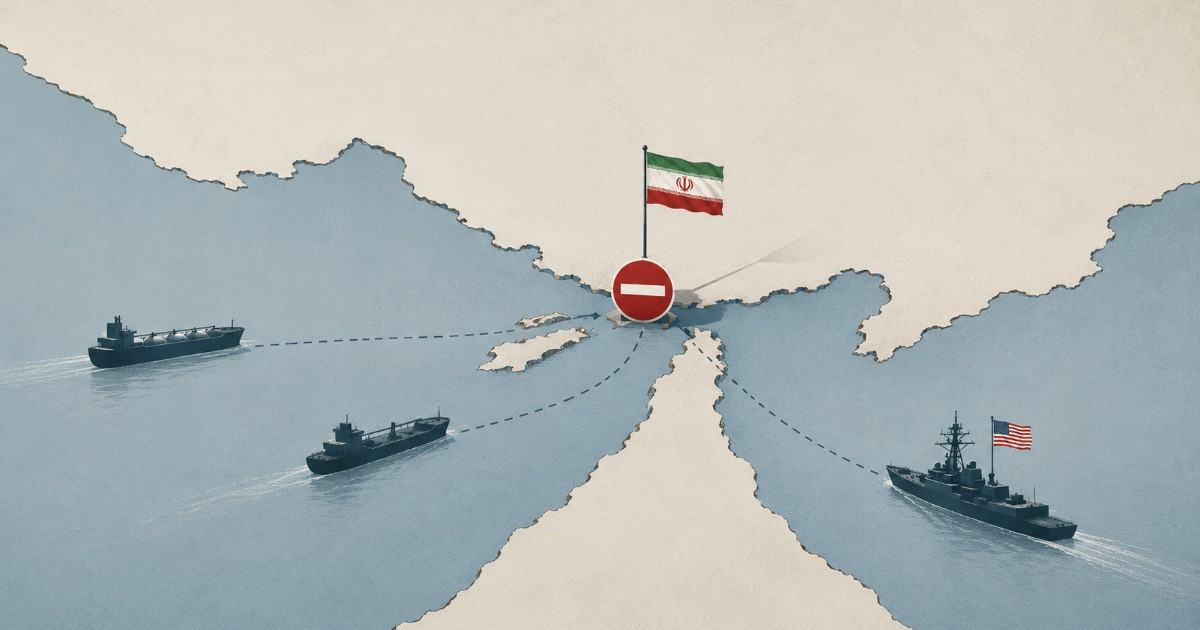
This Saturday, Iran's Armed Forces declared the Strait of Hormuz closed to maritime traffic, a move prompted by ongoing Israeli airstrikes in southern Lebanon. Tehran has also held Washington accountable for violating a peace agreement signed just three days prior.
The Central Headquarters of Khatam al-Anbiya, the main command of the Iranian Army, issued the announcement through a statement released by the official IRNA agency.
"Due to the non-compliance and blatant violation by the United States of the first clause of the memorandum of understanding to end the war, and in response to the ongoing and persistent ceasefire violations by the Zionist regime in southern Lebanon (...), it is announced that the Strait of Hormuz will be closed to vessel transit," the Iranian command stated.
Tehran described this closure as the "first step" in its response to the breach of commitments by Washington and warned of further measures: "Should the aggression continue, new actions have been planned and will be executed to compel the enemy to fulfill its obligations."
The immediate trigger was the Israeli attacks this Saturday that resulted in at least seven casualties in southern Lebanon, including two minors, in areas such as Nabatiyeh.
Israel justified the bombings as retaliation for projectiles launched by the Shiite group Hezbollah, although it claimed to remain committed to the ceasefire announced on Friday by US and Israeli officials.
Iran condemned the "ruthless killings" and the displacement of hundreds of thousands in Lebanese territory, criticizing that Israeli forces have not withdrawn from the south of the country.
The Strategic Impact of the Strait Closure
This marks the second closure of the crucial maritime passageway in under four months. Iran and the United States had postponed peace negotiations scheduled for Friday, June 19, in Switzerland, directly linking the cancellation to the Israeli assaults in Lebanon.
On June 17, Iran and the United States signed a 14-point memorandum of understanding aimed at ceasing hostilities across all fronts, reopening the strait, initiating nuclear negotiations within 60 days, establishing a $300 billion fund for Iranian reconstruction, and lifting US sanctions.
Tehran first blocked the maritime route on February 28, 2026, at the onset of the war. Washington responded in mid-April with a naval blockade on Iranian ports and vessels.
The Strait of Hormuz is a critical global energy chokepoint: its narrowest width of merely 39 kilometers sees the transit of approximately 20 million barrels of oil daily, accounting for 20% of the world's maritime crude trade, along with nearly 20% of globally traded liquefied natural gas.
Since Israel resumed bombings over Lebanon on March 2 and launched a ground invasion on the 16th of the same month, the death toll in Lebanon from the Israeli offensive has surpassed 4,000, according to updated data this Saturday from the EFE agency.
This Saturday, the Iranian Foreign Minister traveled to Switzerland to demand Washington's adherence to the peace agreement, while a new date for discussions on Iran's nuclear program has yet to be set.
Key Questions About the Strait of Hormuz Closure
Why did Iran decide to close the Strait of Hormuz?
Iran closed the Strait of Hormuz in response to Israeli airstrikes in southern Lebanon and accused the United States of breaking a recent peace agreement.
What is the significance of the Strait of Hormuz?
The Strait of Hormuz is a vital global energy passage where about 20 million barrels of oil and 20% of the world's liquefied natural gas transit daily.
What are the implications of this closure?
The closure could significantly impact global oil and gas supply, as a substantial portion of the world's energy trade passes through this narrow strait.