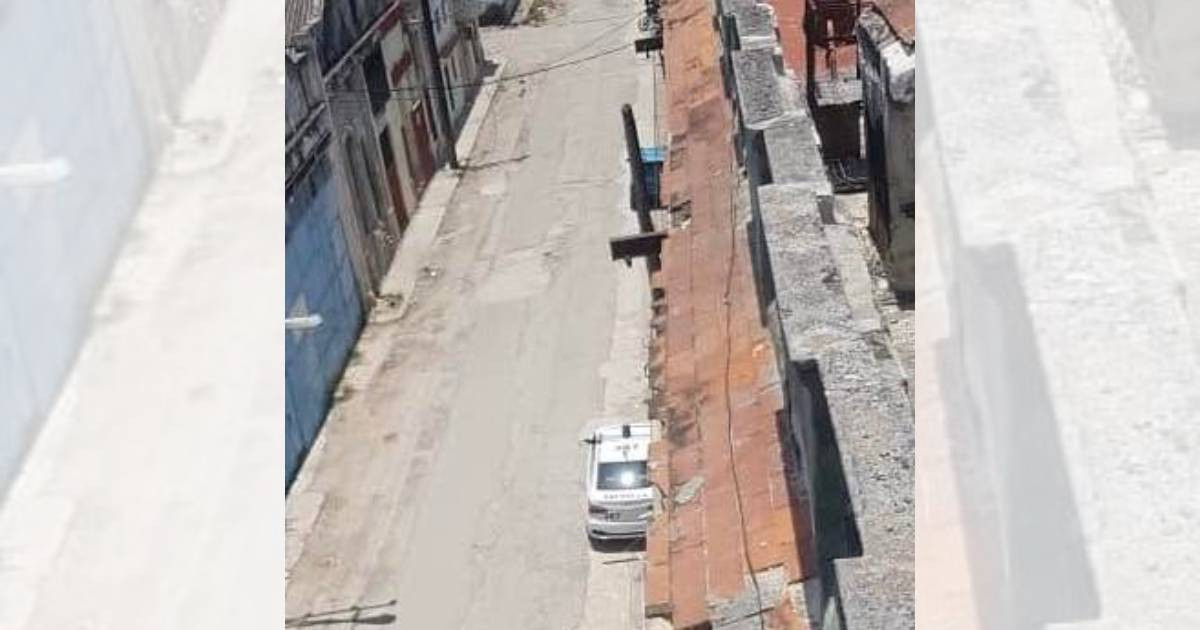
On Friday, Cuban State Security surrounded the home of activist María Mercedes Benítez in Havana, where opposition leader Manuel Cuesta Morúa was also present. Authorities demanded from the street that both individuals leave the house to proceed with their arrest, according to a Facebook statement by the Council for the Transition in Cuba (CTDC).
Police officers, accompanied by a patrol car, physically blocked the exit of the building in what the opposition group described as "completely arbitrary and lacking any legal justification."
Later, State Security approached Benítez's residence to deliver a formal summons to Cuesta Morúa. As reported by the CTDC, he is required to appear at the Zanja police station in Centro Habana on Saturday, June 20, at 9:00 AM.
Cuesta Morúa has informed the organization of his decision not to comply with this summons.
Initially, Cuesta Morúa believed he was only interacting with a police officer, which shaped his initial response. However, he and Benítez later realized that the officer was accompanied by a State Security official.
Rising Tensions Amid Protests
The CTDC linked this incident to the "growing nervousness of the authorities" over the daily citizen protests occurring across the country, which include banging pots, demonstrations, and public expressions of discontent, primarily due to the severe electricity crisis marked by blackouts lasting up to 22 hours a day.
"No citizen should be intimidated or threatened with arbitrary arrest for exercising universally recognized rights," stated the CTDC, concluding its denunciation with a clear statement: "This is repression."
A Pattern of Intimidation
This Friday's operation is not an isolated incident. On February 24, the Cuban regime prevented journalists and activists, including Cuesta Morúa, Yoani Sánchez, Reinaldo Escobar, and Boris González Arenas, from leaving their homes during the anniversary of the shootdown of Brothers to the Rescue planes.
In May, police and State Security blocked journalist Camila Acosta from leaving her home for the third time in a week.
The strategy involves stationing patrols and agents outside dissidents' homes to restrict their movement without formal detention, thus avoiding the official recording of an arrest.
Background on Cuesta Morúa and Benítez
Cuesta Morúa has led the Council for the Democratic Transition in Cuba since October 2025, succeeding José Daniel Ferrer after his exile to Miami. He has been detained multiple times: in September 2021, January 2022, and July 2022.
Benítez, meanwhile, coordinates Citizens Observers of Electoral Processes and is a member of the Ladies in White, with a documented history of state harassment, including detentions since 2020.
The repression intensifies as protests continue unabated. The Cuban Conflict Observatory reported 1,311 protests in May 2026, a number close to the historic high of 1,333 in December 2025.
Understanding the Current Political Climate in Cuba
What prompted the recent actions by Cuban State Security against activists?
The recent actions are linked to the authorities' growing unease over citizen protests, which are spurred by the ongoing electricity crisis and other socio-economic issues.
How has the international community reacted to the repression in Cuba?
International human rights organizations have consistently condemned the Cuban government's repressive tactics against activists and opposition leaders.