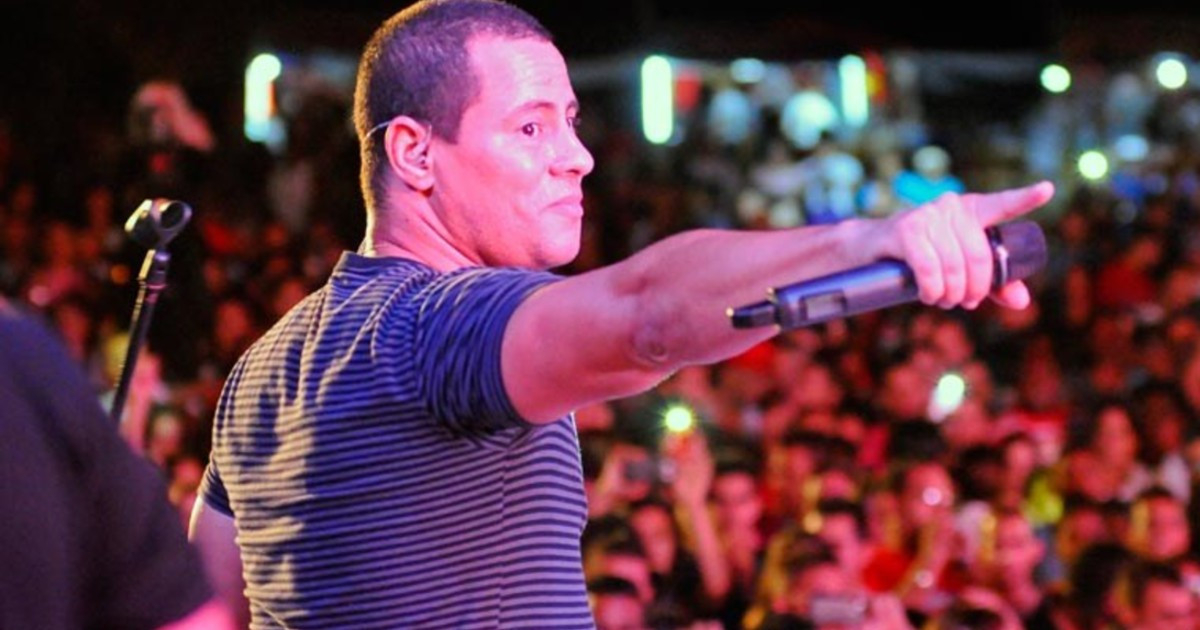
Cuban singer-songwriter Israel Rojas, known for leading the duo Buena Fe and serving as a prominent cultural voice for the Cuban regime, made an unexpected call for political reforms in Cuba on Friday. This announcement came shortly after the National Assembly approved a significant package of 176 economic reforms.
Rojas, who holds a law degree from a school affiliated with the Ministry of the Interior (Minint), praised the economic measures ratified on Thursday but emphasized their inadequacy.
"I propose that, just as these economic changes—delayed to an irresponsible extent—are important, it's equally crucial to initiate transformations in the modes of social participation and political engagement in Cuba," he expressed on his Facebook page.
Delving deeper, Rojas delineated the scope of necessary changes: "We need updates, adjustments to reality, evolution of certain organizations, the dissolution of others, and the emergence of new entities."
His appeal is striking given his past actions. During the July 11, 2021 protests, he appeared on state television supporting the crackdown on demonstrators.
In May 2023, Rojas publicly denied the existence of political prisoners in Cuba. Opposition activist Guillermo "Coco" Fariñas labeled him a "professional oppressor" due to his Minint training.
However, Rojas has gradually shifted his stance in recent months. In February, he acknowledged a "policrisis" in the nation, admitted in March that the elderly were scavenging for food, and in May criticized state media for ignoring his statements.
His latest post is his most unequivocal political declaration yet, although it doesn't challenge the revolutionary framework. Rojas critiques the stagnation within the system rather than the system itself.
"Perhaps more boldness and daring are needed than have been exhibited to try something different economically. Hopefully, it won't be delayed much longer. And hopefully, it won't be too late," he remarked.
Rojas concluded his message with a commitment that hints at a carefully measured distance from power: "Count on me to seek as much progress and human and national dignity as possible."
The immediate backdrop is the most extensive economic reform package since the Special Period, approved on Thursday by the National Assembly. The 176 measures, organized into 23 strategic areas, include the authorization of private banking for the first time since 1959, private currency exchange houses, the transformation of state-owned enterprises into commercial companies, and the removal of the 100-worker limit for small and medium-sized enterprises.
Despite the scope of these measures, leader Miguel Díaz-Canel asserted to the National Assembly of People's Power that "we are not abandoning socialism." Meanwhile, economist Pedro Monreal described the process as "belated pragmatism," warning that Cuba missed the chance to pursue gradual reforms akin to those in China or Vietnam.
The Economic Commission for Latin America and the Caribbean (Cepal) forecasts a 6.5% contraction in Cuba's GDP by 2026, predicting that the island will remain the worst-performing economy in Latin America for the second consecutive year.
Understanding Cuba's Political and Economic Changes
What economic reforms were approved by the Cuban National Assembly?
The Cuban National Assembly approved 176 economic reforms, including the introduction of private banking, private currency exchange houses, and the transformation of state-owned enterprises into commercial entities. Additionally, the reforms eliminated the cap on the number of employees for small and medium-sized enterprises.
How has Israel Rojas's stance on the Cuban regime changed?
Israel Rojas has shown a gradual shift in his stance, acknowledging the country's crises and calling for political reforms. Despite his previous support for the regime, he now advocates for updates and changes in political and social participation in Cuba.
What are the projections for Cuba's economic future according to Cepal?
The Economic Commission for Latin America and the Caribbean (Cepal) predicts a 6.5% contraction in Cuba's GDP by 2026, marking the island as the lowest-performing economy in Latin America for a second year in a row.