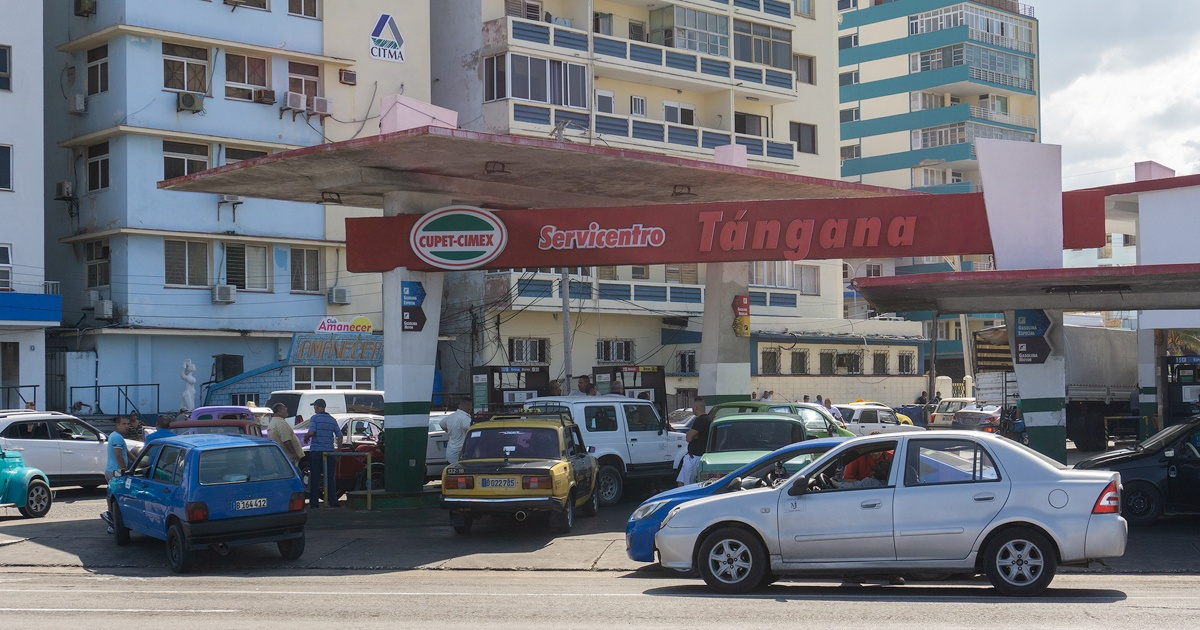
On Thursday, the Cuban government announced a significant shift in its economic landscape, marking one of the most profound changes since Raúl Castro's reforms over a decade ago. The state will now allow private and foreign investment in the fuel sector, partially opening this critical area to non-state actors.
This decision is part of a broad package of 176 economic and social reforms introduced by Prime Minister Manuel Marrero Cruz to the National Assembly of People's Power. During this extraordinary session, the government subtly acknowledged the severe economic, energy, and financial crisis gripping the nation.
Private and Foreign Capital to Enter Fuel Market
Among the many proposals, the move to invite private and foreign entities to participate in fuel importation and distribution stands out for its symbolic weight. For decades, the Cuban state tightly controlled this sector, with little room for non-state players.
Documented under the "Energy Transformations" section of the reform package, this initiative allows private domestic companies, cooperatives, joint ventures, and foreign investors to engage in a market historically dominated by state entities such as the Unión Cuba-Petróleo (CUPET).
The government's decision implicitly admits the state's inability to financially sustain the country's energy supply independently. Recent years have seen fuel shortages leading to prolonged blackouts, public transportation halts, production slowdowns, and frequent gas station supply crises.
Transforming Gas Station Management
The reform also envisions a complete overhaul of the service station network. The proposal suggests expanding and restructuring the management of service stations, including mobile ones. Although specifics on implementation remain vague, the language implies that state-run stations might soon be operated by various economic actors.
Such a shift would be a monumental change in a sector that has been under state control for decades.
Solar Panels Become Mandatory
The government has also mandated that service stations move toward energy self-sufficiency. The reform requires stations managed by different economic actors to incorporate photovoltaic systems with storage capabilities, allowing them to operate independently from the National Electric System.
This initiative addresses the vulnerabilities of Cuba's electrical grid, which suffers from frequent blackouts due to aging power plants and fuel shortages. The goal is for gas stations to remain operational even during widespread power outages.
Embracing Solar-Powered Charging Stations
Another innovative aspect of the reform package is the promotion of solar-powered charging stations for electric vehicles, known locally as "solineras." This measure aims to establish a minimal infrastructure to support the future expansion of electric mobility, a strategy also reflected in other transportation-related transformations.
Facilitating Energy Transition with Financial Support
The government acknowledges the need for funding to develop renewable energy sources. To that end, it proposes designing financing lines, easing requirements, and expanding guarantees for providing credits to businesses and individuals interested in investing in solar systems, energy storage, charging infrastructure, or other technologies that reduce fossil fuel consumption.
Details on the sources of these funds or the specific terms of the credits were not provided by the government.
State Enterprises Granted Access to Foreign Payment Platforms
Another significant change aims to ease international operations related to fuel. The reform allows state enterprises to utilize foreign platforms for fuel trade payments, acknowledging the challenges Cuba faces in international transactions due to financial restrictions, liquidity issues, and limited access to the global banking system.
New Fuel Import Tax Introduced
Alongside the partial sector liberalization, the government plans to implement a new tax. The proposal suggests imposing up to a 1% tax on the import of physical or financial fuel for operational inventory purposes. Although the mechanism's details remain unclear, the measure appears intended to fund strategic reserves and ensure minimal operational inventories for the energy system.
Tax Incentives for Renewable Energy Investments
The package also includes tax benefits for investments in renewable sources. The proposal reduces taxes equivalent to the investment amount for both state and non-state economic actors investing in renewable energy sources. This fiscal reduction applies when such investments benefit social centers, healthcare institutions, community services, areas assisting vulnerable populations, or public lighting projects.
The aim is to encourage businesses and private enterprises to take on some of the investments traditionally shouldered by the state budget.
The energy transformations are part of a broader package that includes opening private banking, authorizing private currency exchanges, permitting national and foreign investors to purchase shares in state enterprises, expanding foreign investment, and increasing private sector participation in numerous economic activities.
However, the opening of the fuel market stands out as a particularly strategic sector that the Cuban state has controlled since 1959. This decision highlights the extent to which the economic crisis has forced the government to reconsider previously steadfast positions.
During his speech, Marrero emphasized that these reforms do not signify an abandonment of socialism or state responsibilities but rather an adaptation to the country's current circumstances. The government recognizes that these changes will entail profound shifts in the national economic structure, affecting over 148 existing legal provisions and necessitating the development of numerous new legal norms.
For now, these proposals will undergo debate and eventually be transformed into concrete legislation. However, the political message is clear: faced with the most severe economic and energy crisis in decades, the Cuban regime is willing to open even the most untouchable sectors.
FAQs About Cuba's Fuel Sector Reform
Why is Cuba allowing private investment in the fuel sector?
Cuba is opening the fuel sector to private investment due to a severe economic and energy crisis, recognizing it lacks the financial capability to sustain the energy supply independently.
What changes are proposed for Cuba's service station network?
The reform suggests expanding and restructuring the management of Cuba's service station network, potentially allowing various economic actors to operate stations currently managed by state enterprises.
How will the introduction of solar energy affect Cuban service stations?
Service stations in Cuba will be required to incorporate photovoltaic systems with storage to become energy self-sufficient, ensuring operations continue during power outages.
What are "solineras" in the context of Cuba's energy reforms?
"Solineras" are solar-powered charging stations for electric vehicles, part of Cuba's strategy to support the expansion of electric mobility.