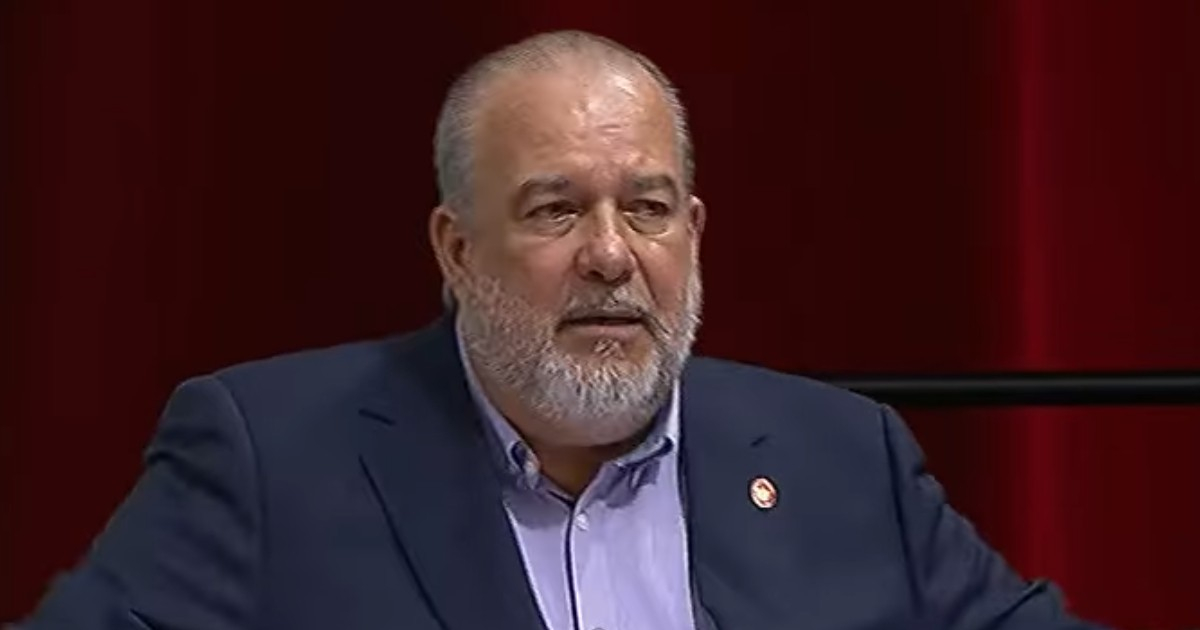
In a recent announcement, Prime Minister Manuel Marrero revealed that Cuba will open its doors to foreign fast-food franchises, sparking a flood of comments on social media. Rather than excitement, the reaction was filled with skepticism and irony, with a question echoing repeatedly: "Where is the blockade?"
On Thursday, Marrero declared that the regime would allow the creation of national restaurant, café, and burger chains, inviting international brands to establish themselves on the island. "If a small business, an individual, or a foreign investor wants to create a network of restaurants, cafés, or burger joints, they will be allowed, aiming to expand services to the population," stated the official. This initiative is part of a broader package of 176 economic measures approved by the Extraordinary Plenum of the Central Committee of the Communist Party of Cuba.
Public Reaction: Disbelief and Distrust
The response on Facebook was swift and revealing, serving as a barometer of the deep-seated distrust accumulated over decades. Many pointed out the contradiction with the official narrative about the embargo. "Now you can have multiple businesses, open private restaurant chains, and stores. So all of that was impossible because of the 'BLOCKADE'? Whose blockade?" wrote one user. Another was more direct: "So, whose blockade was it, anyway?" A third summed up the sentiment with a widely circulated phrase: "Finally, Donald Trump lifted the blockade and restrictions... after over 70 years of inciting hatred, admitting that the blockade was always internal."
Economic Realities and Concerns
An additional concern was the purchasing power of Cubans. The minimum wage in Cuba is 3,210 pesos per month, equivalent to about $4.68, while the basic food basket is estimated to cost over 50,000 pesos. "With my salary of 2,960 CUP, will I be able to afford a McDonald's with shame when that moment arrives?" questioned one Cuban. Another asked bluntly: "Can a retiree afford a McDonald's meal or a KFC bucket? Can the children of accountants, engineers, and doctors enjoy a Happy Meal?"
Fear of Government Expropriation
Apprehension about expropriation also dominated the conversation. "I can imagine a KFC, etc., and six months after everything is running smoothly, the revolutionary socialists come and say this is now government property," predicted a commentator, recalling the history of confiscations that began in 1959. Another captured the historical contradiction: "What should have been left private since '59 was removed, only to be reinstated now."
Infrastructure Challenges and Optimism
The lack of basic infrastructure sparked another wave of irony. "With electricity? Without it, how do they cook the burgers? How funny!" wrote one user, alluding to power outages exceeding 20 hours daily in some Cuban provinces. Another added: "No business can operate in a country where there's only electricity for two hours."
Despite the skepticism, some saw a silver lining. "At least the chains will need to hire people, and those Cubans will see some real money," commented one individual. However, even this optimism was tempered by questions about the currency in which salaries would be paid, a question that was repeatedly asked without any official response.
Before this announcement, no foreign fast-food franchise officially operated in Cuba. What existed were private businesses mimicking international brands with adapted names, like "Starcafé" or "Burger Queen," opened in Havana in 2023 and 2024, respectively. Even Miguel Díaz-Canel admitted this week, "There are obstacles that do not come from outside or are not due to blockades. There is slowness, bureaucracy, rules that hinder those who want to produce, and decisions we have postponed," an acknowledgment that Cubans on social media did not let pass without comment.
Key Insights on Cuba's Economic Changes
What changes did Prime Minister Manuel Marrero announce?
Prime Minister Manuel Marrero announced that Cuba will allow the establishment of foreign fast-food franchises and national chains of restaurants, cafés, and burger joints as part of a new economic strategy.
How did the Cuban public react to the announcement?
The Cuban public reacted with skepticism, irony, and disbelief, questioning the contradictions with the official discourse on the embargo and expressing concerns about purchasing power and potential expropriation.
What are the economic realities faced by Cubans?
Cubans face significant economic challenges, with a minimum wage of 3,210 pesos (about $4.68) and a basic food basket costing over 50,000 pesos, raising concerns about affordability of foreign fast-food chains.