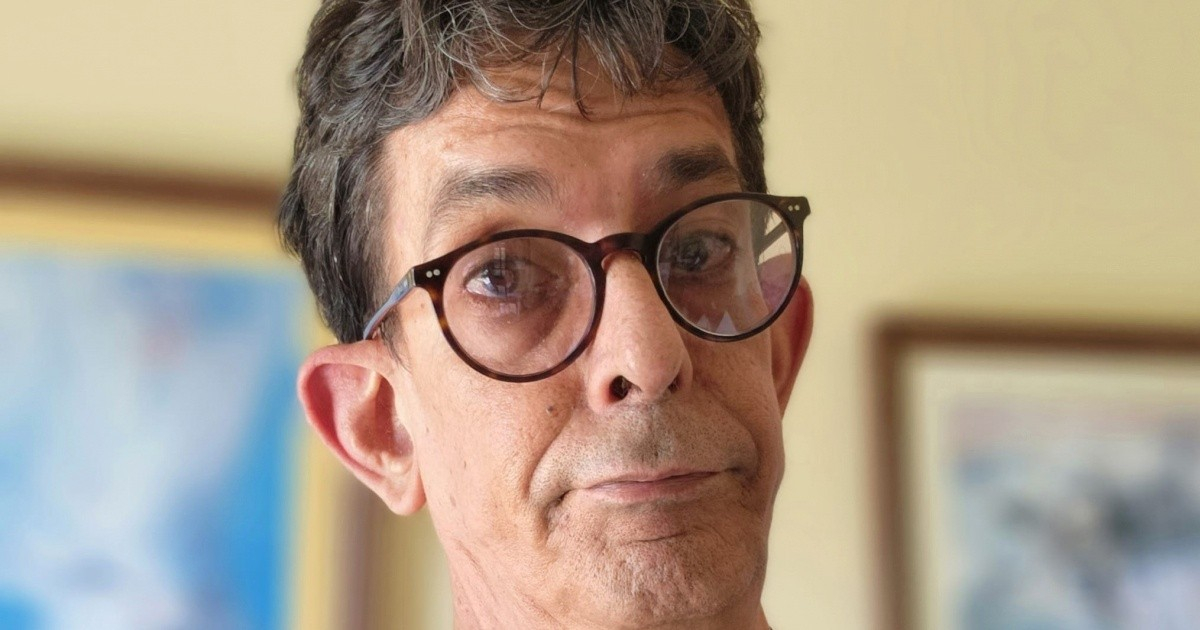
Comedian and commentator Ulises Toirac has sharply criticized the Cuban government's recent package of 176 economic measures through two Facebook posts, offering a satirical fictional narrative and a political essay as his most biting analysis of the week. Both pieces reach the same conclusion about the regime's actions.
Satirical Fiction: A Closer Look Behind the Scenes
In his first post, titled "Apocryphal Radiograph," Toirac crafts an imaginary story to illustrate what he believes happened behind closed doors. He discusses negotiations with Washington, energy pressures, the role of Sherritt International—the Canadian mining company that signed an exclusive agreement with Gillon Capital just before the National Assembly session—and the introduction of fast-food franchises as a symbol of Americanization.
"They just changed the collar. The soap opera will continue... We'll see some political changes soon... Not too much, so we don't lose our grip. Many people will be satisfied with solar panels covering the sky and number 3 burgers," Toirac wrote.
His assertion is that these reforms are merely cosmetic, leaving the political system untouched while the populace settles for temporary relief.
A Political Essay: Historical Parallels and Warnings
The second post, published in the early hours and titled "In Troubled Waters, Fishermen Gain," delves deeper with explicit historical parallels. Toirac highlights that after the Soviet Union's collapse, 43% of the initial Russian oligarchs emerged from the Soviet elite.
He references Vagit Alekperov—a former Deputy Minister of Oil who founded and privatized Lukoil in 1993—to warn that this process has been thoroughly studied by all interested parties, especially those with financial motives.
Regarding the origins of the reforms, Toirac dismisses popular pressure as the real driver: "While popular pressure echoes through the halls of the Palace, it is not decisive. To be so, mere pot-banging protests are insufficient, even if they form part of the sonic landscape as a sign of popular discontent, they do not truly express the magnitude of the misery faced by ordinary Cubans."
External Influences and Demands for Exclusion
Toirac argues that the true catalyst is the United States government, which "kept talking but tightened the screws." He claims that the measures—"purely capitalist in style"—will be implemented swiftly.
However, the most pointed part of his second post is a specific demand: that members of the PCC, FAR, MININT, and their potential frontmen be legally barred from participating in the new economic framework.
"Some Cubans, in my view, should be excluded from investing or participating in any way in the creation of businesses, companies, economic organizations, lenders, executors... NO FORM OF PARTICIPATION in the economic framework," Toirac wrote, adding, "Some resources are costing lives and misery to people, from which no personal gain should be derived, now or ever. These resources are not private."
He encapsulates this demand in three words: "Exclusion clause. And transparency. Just to know if the game is really on."
President Díaz-Canel defended the measures before the National Assembly, insisting that "we are not abandoning socialism" and that "we are not doing this because of Yankee pressure," despite acknowledging that the model survived for decades thanks to Soviet and Venezuelan resources, which are no longer available.
Frequently Asked Questions About Cuba's Economic Measures
What are the new economic measures implemented by the Cuban government?
The Cuban government has introduced a package of 176 economic measures intended to reform the economy, though critics argue these are superficial changes.
Why does Ulises Toirac criticize these economic measures?
Toirac believes that the reforms are only cosmetic, with no real change to the underlying political system, while the population is pacified with temporary remedies.
How does Toirac view the influence of the United States on these reforms?
Toirac argues that the true impetus for these reforms comes from the U.S. government applying pressure, rather than internal popular demand.