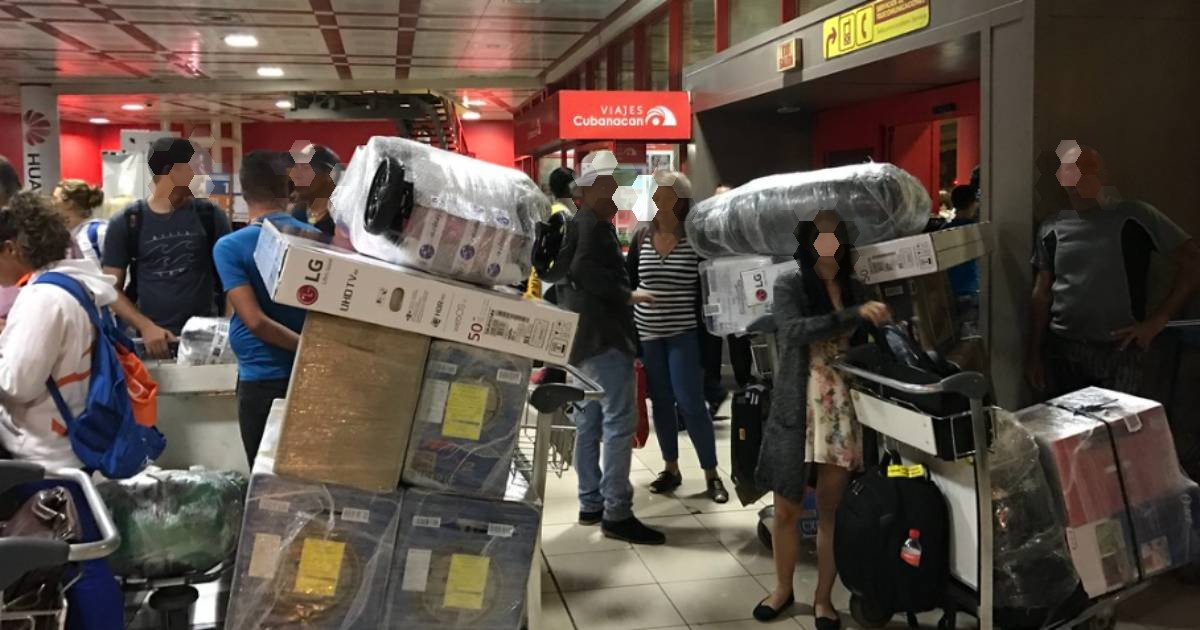
On Thursday, the Cuban government unveiled a groundbreaking policy allowing individuals to import goods for commercial purposes. This marks a significant shift from decades-long restrictions and opens new opportunities for many Cubans who previously could only import items for personal or family use.
This initiative is part of a comprehensive package of 176 economic and social reforms introduced by Prime Minister Manuel Marrero Cruz during the Third Extraordinary Session of the National Assembly of People's Power (ANPP) held in Havana.
Historically, Cuban law restricted citizens to importing goods solely for "non-commercial" purposes, with strict limits on value and quantity. Import activities had been confined to state enterprises, cooperatives, and authorized small and medium-sized enterprises (SMEs).
New Commercial Prospects for Individuals
With this new policy, the government is opening the door for individuals to engage legally in activities that have often been conducted informally. This was typically done through "mules," who transport goods from abroad for resale in Cuba.
The significance of this measure is heightened as it comes just two months after the implementation of a new Customs Decree-Law, which tightened regulations on importing goods into the country and explicitly banned the importation of packages for third parties outside personal luggage.
Direct Foreign Trade Operations
Beyond this change, the government proposes that private companies and cooperatives can directly engage in foreign trade operations, pending authorization from the Ministry of Foreign Trade and Foreign Investment.
The obligatory involvement of state entities in certain import and export operations conducted by non-state economic actors will also be removed, addressing a long-standing demand of the Cuban private sector.
Prime Minister Marrero presented these measures in response to the severe economic challenges facing the nation.
"We are confronting the most complex context since the Special Period," he stated during his address to lawmakers.
Addressing Internal and External Challenges
While the government continues to blame U.S. sanctions for exacerbating the crisis, it has also recently acknowledged internal issues such as bureaucracy, delays in implementing reforms, and the limitations of the current economic model.
To underscore the necessity of these changes, Marrero referenced a statement made by Fidel Castro during the economic crisis of the 1990s: "Life, reality, the dramatic situation the world is experiencing forces us to do what we would never have done otherwise," he recalled.
According to official data, the reform package was crafted from 390 proposals reviewed by authorities, with two-thirds incorporated into the final document. The Political Bureau later added further recommendations.
The reforms received the backing of the Communist Party's Central Committee during an extraordinary plenary session held on Wednesday and were presented to the National Assembly for ratification on Thursday.
These measures arrive at an especially critical juncture for the Cuban economy, plagued by prolonged blackouts, food and medicine shortages, persistent inflation, and a continuous decline in productive activities.
Despite the scope of the announcements, the government maintains that these reforms do not signify a political shift.
"These actions are not a capitulation, but rather a sovereign adjustment of development tools to the country's specific circumstances," Marrero asserted.
Key Questions About Cuba's New Import Policy
What does the new import policy in Cuba allow?
The new policy permits individuals to import goods for commercial purposes, breaking away from the longstanding restriction of importing only for personal or family use.
How does this change impact private businesses in Cuba?
The change allows private businesses and cooperatives to conduct foreign trade operations directly, removing the mandatory involvement of state entities in certain import and export processes.
What challenges is the Cuban economy currently facing?
Cuba's economy is currently dealing with prolonged blackouts, shortages of food and medicine, persistent inflation, and a steady decline in productive activities.