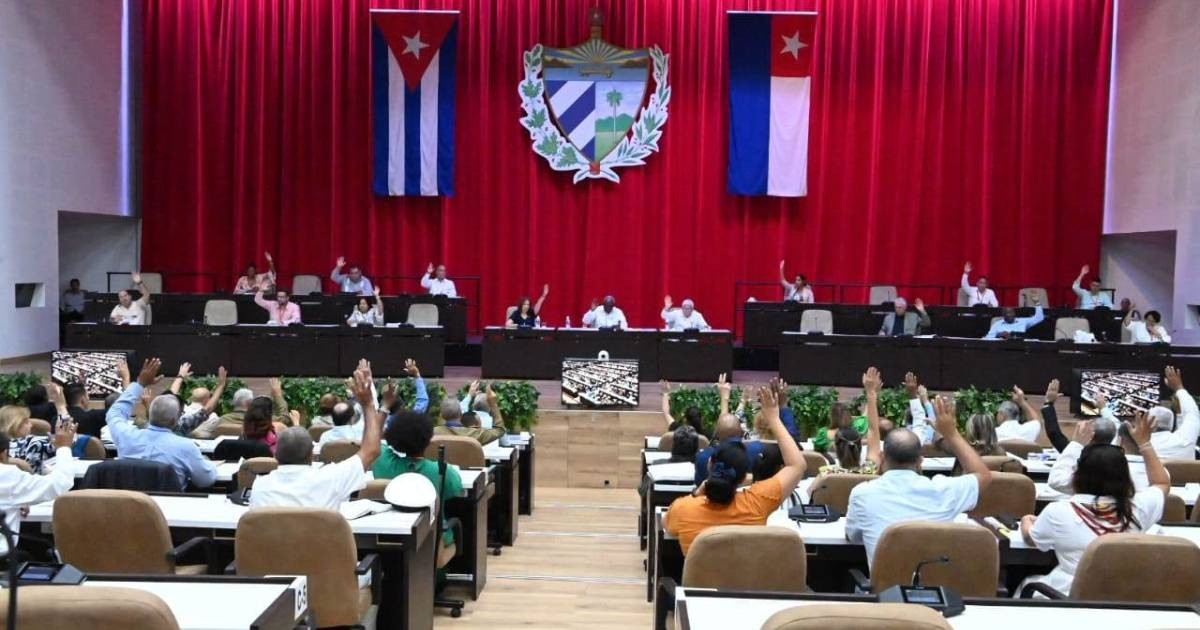
On Thursday, the Cuban regime unveiled an extensive set of 176 economic and social reforms, marking a significant shift in policy. These changes include permitting private banks, establishing private currency exchanges, opening up more to foreign investment, and overhauling the state subsidy system.
These initiatives were introduced by Prime Minister Manuel Marrero Cruz during the Third Extraordinary Session of the National Assembly of People's Power, held at the Palace of Conventions in Havana. The announcement comes amidst the most severe economic crisis the island has faced in decades.
Prime Minister Marrero detailed that the proposals are structured around 23 strategic pillars, aiming to address what the government itself has termed the most challenging scenario since the Special Period of the 1990s.
Key Economic Reforms Unveiled
Among the most noteworthy reforms is the unprecedented authorization of private banking institutions, a first since Fidel Castro rose to power in 1959. The package also proposes the conversion of state-owned enterprises into joint-stock companies, allowing private and non-state actors to invest in their capital.
The energy sector is also targeted for transformation. The new policies will enable private and foreign investors to engage in activities involving the importation and distribution of fuels.
Impact on Cuban Private Sector
Changes will also extend to the national private sector. The government plans to remove the cap of 100 workers for micro, small, and medium-sized enterprises (SMEs), allowing individuals to own multiple businesses and hold shares in various enterprises.
In the financial domain, authorities announced the introduction of private currency exchanges, a real-time digital currency market, and a currency auction system aimed at tackling the growing exchange rate distortions affecting Cuba's economy.
Subsidy System and Tax Introductions
A significant shift will occur in the subsidy system. The subsidized basic basket will now be focused on retirees and vulnerable groups, progressively replacing widespread subsidies on goods and services with targeted aid.
The government also plans to gradually introduce a Value Added Tax (VAT), a tax not previously part of Cuba's fiscal framework.
The approval process followed the usual protocol of the Cuban political system. After being announced by Miguel Díaz-Canel on June 12 and subsequently endorsed by the Communist Party's Central Committee, the measures were presented to the National Assembly for ratification.
Marrero disclosed that 390 proposals for economic and social transformation were reviewed in the process. He noted that 66.7% were integrated into the final document, along with numerous additional recommendations from the Political Bureau.
To justify the necessity of these changes, the Prime Minister quoted Fidel Castro from the economic crisis of the 1990s: "Life, reality, the dramatic situation the world is experiencing compels us to do what we would never have done otherwise," he recalled.
Challenges Amid Economic Decline
The reforms come at a time of continuous economic decline in Cuba. International organizations predict another contraction of the Gross Domestic Product by 2026, while the country grapples with prolonged blackouts, fuel shortages, and declining agricultural and industrial production, along with one of the largest migration waves in recent history.
The announcement follows a public acknowledgment by Díaz-Canel that part of the crisis stems from internal issues. "There are obstacles that do not come from outside or from blockades. There is sluggishness, bureaucracy, regulations that hinder those who want to produce, and decisions we have postponed," he admitted during the closing of the Communist Party's Central Committee Plenary.
The measures have sparked a wide-ranging debate among economists and citizens. While authorities present them as a necessary update to the economic model, many analysts warn they come after years of productive and financial deterioration, at a time when Cuba's economy faces one of the most significant challenges in its recent history.
Understanding Cuba's Economic Reforms
Why are private banks significant in Cuba?
The introduction of private banks is significant because it marks the first time since 1959 that such institutions are permitted, signaling a major shift in Cuba's economic policy.
How will the subsidy system change in Cuba?
The subsidy system will be restructured to focus on retirees and vulnerable groups, gradually replacing general subsidies with targeted assistance.
What impact will these reforms have on Cuba's private sector?
The reforms will allow more flexibility in the private sector by removing worker limits for SMEs, enabling individuals to own multiple businesses, and facilitating shareholding in various enterprises.