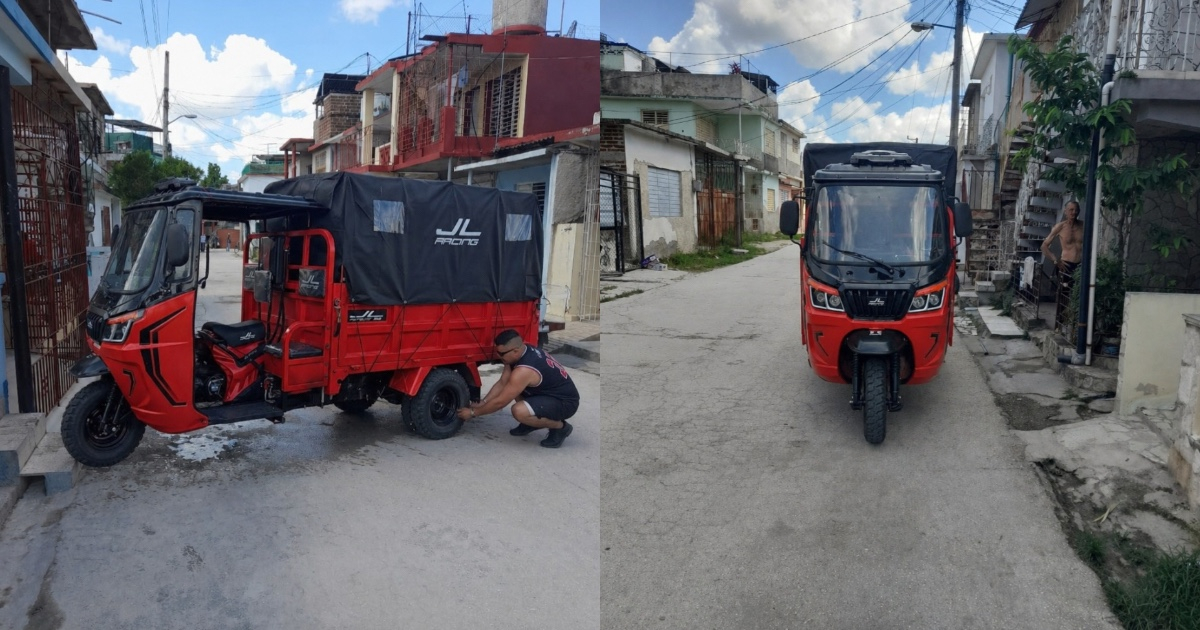
Claudia Y., a young Cuban originally from Holguín now living in the United States, was swindled out of $6,000 while attempting to purchase an electric tricycle for her family in Cuba. The scam involved a combination of WhatsApp hacking and AI-manipulated images to fake a delivery that never took place.
Trusting the Wrong Source
Claudia connected with a seller via social media, whose profile appeared legitimate. She was persuaded by the promise that payment would only be made once the tricycle was in her family's hands in Cuba.
"We reached out to someone on social media whose profile seemed incredibly trustworthy because they said the payment for the electric scooters would be made only after delivery in Cuba," Claudia Y. explained in an interview with journalist Tania Costa.
Exploiting Vulnerable Relatives
The scammers first contacted Claudia's elderly relatives in Cuba, who had limited digital literacy. They requested personal information, identity cards, addresses, and photos of the house front, supposedly to handle legal paperwork and locate the home easily for delivery.
During this process, they sent a WhatsApp verification code under the guise that it was for the vehicle's registration number. The unsuspecting relative forwarded it, losing control of the account. The scammers then impersonated the family member, communicating with Claudia Y. via text messages. Given the communication challenges with Cuba, she suspected nothing.
AI and the Perfect Deception
The key to the deception was an AI-manipulated photograph. The scammers used an image of the house exterior previously sent by the relative and inserted the tricycle, convincing Claudia Y. that the delivery was successful. "They put the scooter in front of the house in the photo. Even a known neighbor appeared in the picture. That's when I sent the $6,000," she recounted.
The criminals deliberately took advantage of Cuba's energy and connectivity crisis to avoid real-time verification. "They use artificial intelligence because there are so many deficiencies with blackouts, internet, electricity; video calls are practically impossible," she noted.
Discovering the Fraud
The scam was uncovered by chance. Claudia Y. returned home after a medical appointment with her three-month-old baby and messaged her mother to congratulate her on the tricycle. Her brother-in-law replied that they were still waiting for it. Upon calling her father-in-law, who was supposed to receive it, he confirmed nothing had arrived.
"You sent us a photo showing the scooter at the house, everything was fine, everyone was so happy, and we were having coffee. That's when we realized we were scammed," she remembered.
Tracing the Culprits
The payment was made in two transfers of $3,000 each to different accounts. Claudia Y. and her husband conducted their investigation and identified two individuals linked to those accounts: one with a trucking company in the U.S. and another in Miami, both with Cuban accents. All information was handed to the police and bank, but by the interview's time, the money hadn't been recovered.
This type of fraud, blending WhatsApp hacking and AI-generated images to fake deliveries of scooters and solar panels, has been increasingly documented since 2026.
In April 2026, Banco Bandec warned about WhatsApp hacks via SMS verification codes, stating no legitimate process requires sharing such a code.
In September 2025, a Cuban in Miami reported a similar $1,200 scam while trying to purchase an electric motorcycle for his sister.
"It pains me that so many fall for this scam by unscrupulous people exploiting the Cuban's need to help family," Claudia Y. lamented, advising, "Social media platforms aren't formal venues for conducting any business."
Understanding AI Scams Targeting Cubans
How did Claudia Y. get scammed?
Claudia Y. was deceived by scammers who used a combination of WhatsApp hacking and AI-manipulated images to create a false impression of an electric tricycle delivery.
What role did AI play in the scam?
AI was used to alter a photograph sent by Claudia's relatives, inserting the tricycle to falsely show that it had been delivered.
Why are scams like these becoming more common?
These scams are increasing due to advancements in AI technology and the challenges of verifying transactions in Cuba, which is plagued by connectivity and energy issues.