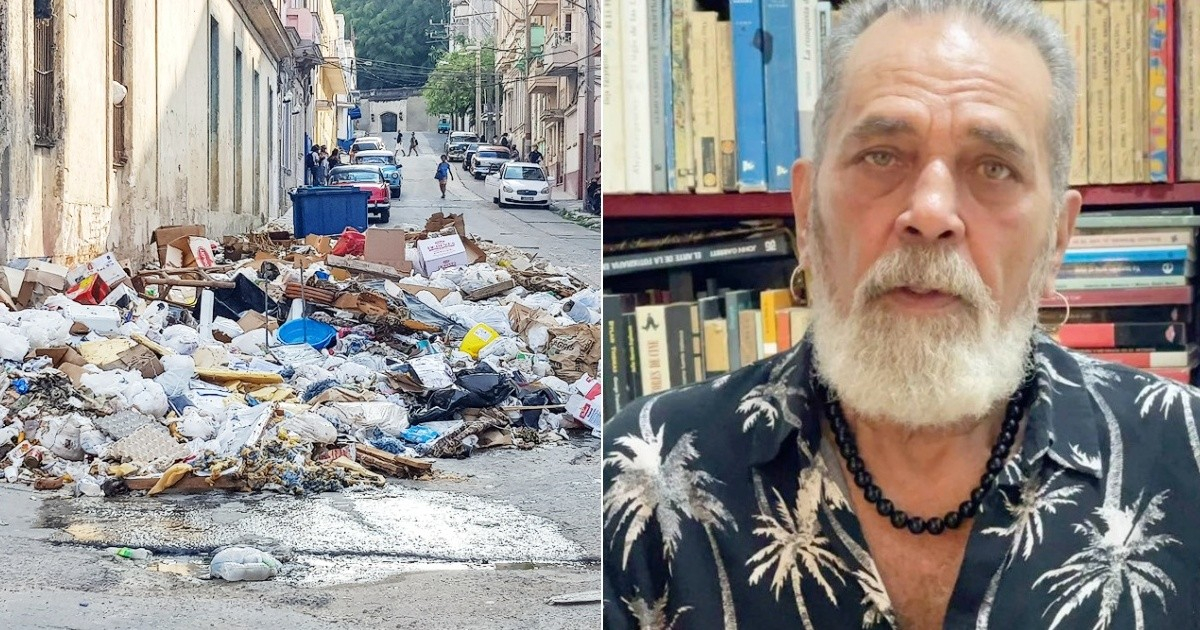
Cuban actor Luis Alberto García Novoa took to Facebook this Thursday, sounding the alarm about the severe epidemiological threat looming over Cuba as summer begins. He cautioned that the nation risks collapsing under an epidemic of vector-borne diseases unless immediate action is taken.
García painted a grim picture of the island's health conditions in his post:
"I'm a full-time atheist, but may GOD prevent one of those epidemics—daughters, sisters, cousins, or little friends of dengue—from erupting among us in this boiling cauldron of mosquitoes, sewage, and endless garbage dumps where we're barely surviving (July and August are still to join the party) because we'll be dropping in the Cuban streets like iguanas in a cold snap."
This warning comes at a time when even the regime has acknowledged the risk.
Mounting Health Threats
On June 12, the Deputy Minister of Public Health, Carilda Peña, warned on the Mesa Redonda program that Cuba could face a new epidemic if factors facilitating the spread of the Aedes aegypti mosquito aren't contained.
"If all four serotypes circulate, clearly when one becomes predominant in our health situation, we could see localized outbreaks of the disease. If we don't take action, an epidemic could ensue," Peña stated, as cited by the Ministry of Public Health in its dengue epidemic alert.
That same day, health authorities in Matanzas reported the first dengue cases of the 2026 season, along with a significant number of suspected cases under surveillance.
Structural Health Crisis
García's concerns are not isolated opinions but are supported by hard facts.
In Havana, only 44 out of 106 garbage trucks were operational as of February 2026, while the city produces between 24,000 and 30,000 cubic meters of waste daily.
Frequent power outages force thousands of families to store water in containers that become breeding grounds for the mosquito.
Additionally, hepatitis A is spreading across the country, particularly affecting Havana, Matanzas, Santiago de Cuba, Ciego de Ávila, and Camagüey.
The most recent data is alarming: according to the Pan American Health Organization, Cuba ended 2025 with at least 81,909 cases of dengue and chikungunya, along with 65 related deaths.
The Ministry of Public Health officially acknowledged the dengue epidemic in November 2025, months after the outbreaks began.
Outspoken Advocacy
This post is just the latest in a series of public statements by García throughout June 2026.
On June 10, García accused leaders of abandoning the people "in the darkness of night" with a single directive: "Deal with it!"
On June 16, he was even more forthright, demanding that officials endure the same hardships as the populace: "I want to see them going hungry, with their guayaberas and uniforms drenched in sweat, unable to sleep, without medicines, doing everything on foot, lacking money to solve anything. Suffering just like the lower classes."
In the same message, García dismissed the notion that the embargo is solely to blame for the crisis: "Enough of claiming that the U.S. embargo is THE ONLY CULPRIT for this hell we're burning in."
With July and August ahead—months marked by intense heat, humidity, and Aedes aegypti proliferation—the actor's warning encapsulates what official data confirms but the regime hesitates to accept as its own responsibility: Cuba is entering its most perilous summer yet, with uncollected trash, no guaranteed potable water, and frequent power outages.
Understanding Cuba's Health Crisis
What diseases pose a threat to Cuba currently?
Cuba faces significant threats from vector-borne diseases such as dengue and chikungunya, with 81,909 cases reported in 2025. Additionally, hepatitis A is spreading across the country.
Why is the Aedes aegypti mosquito a concern for Cuba?
The Aedes aegypti mosquito is a primary vector for dengue and other diseases. Its proliferation is facilitated by poor sanitation, frequent water storage due to outages, and the country's tropical climate.
What has the Cuban government done to address the health crisis?
The government has acknowledged the risk of a new epidemic but has been criticized for being slow to respond and for not taking sufficient action to mitigate the spread of diseases.