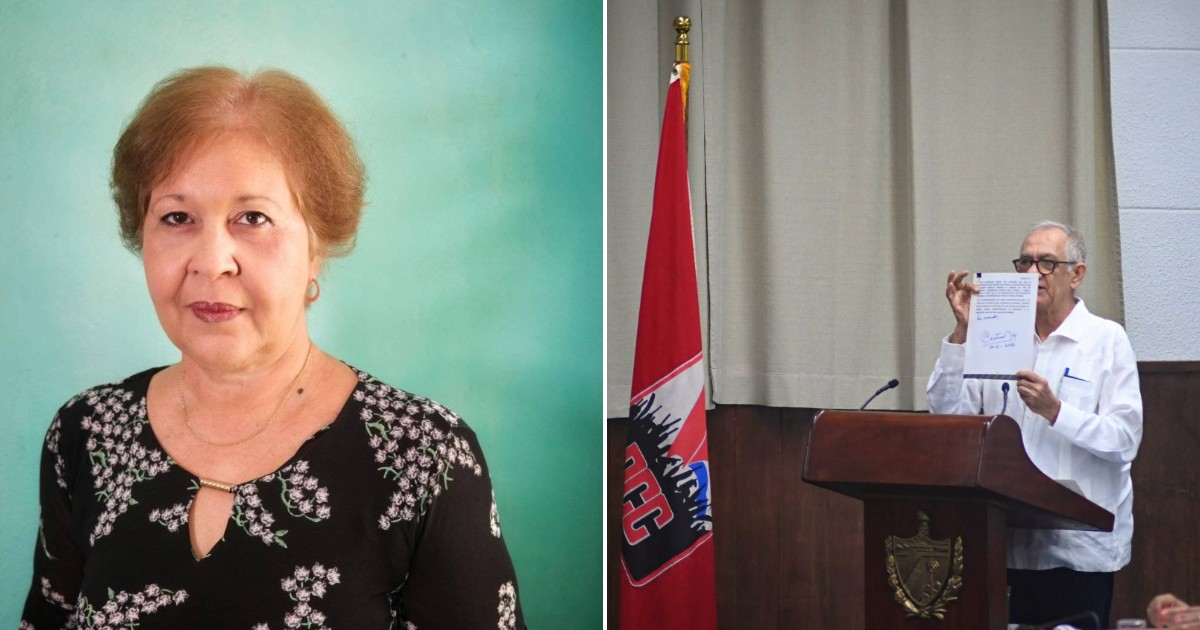
On Thursday, historian and activist Alina Bárbara López Hernández expressed skepticism regarding the Cuban government's recent announcement of over 20 economic reforms approved at the Extraordinary Plenary Session of the Central Committee of the Communist Party of Cuba. She dismissed the measures as mere stalling tactics lacking genuine intent for change.
López Hernández took to Facebook to voice her concerns, drawing a direct comparison between the current regime's rhetoric and a speech delivered by Raúl Castro nearly two decades ago. "They're buying time. It's an old tactic of those in power," she noted, reflecting on Castro's 2007 campaign dubbed "Updating the Cuban Economic and Social Model," which she argues mirrors today's declarations.
Recycled Strategies in a Failing Economy
The plenary session, which included Raúl Castro's participation via video conference at the age of 94, aimed to legitimize measures such as reducing ministries from 27 to 21, granting more autonomy to state enterprises, allowing imports and exports outside state control, and expanding small and medium-sized enterprises. López Hernández provided a timeline of 11 unsuccessful economic strategies the regime has attempted since the fall of the socialist bloc, including the Rectification Process, GAESA's creation, and the Mariel Special Development Zone.
Historical Context and Public Discontent
The intellectual recalled the reformist cycle that began in 2007 and ended in 2021 at the 8th Congress of the PCC with the failure of the "Tarea Ordenamiento," the handover of the general secretary position to Miguel Díaz-Canel, and the elimination of nearly all guidelines. She also referenced the public protests on July 11, 2021, when frustrated Cubans took to the streets shortly after the congress concluded. "Instead of listening, they called for combat against it," she wrote.
López Hernández's skepticism resonates with many Cubans who responded on social media with sarcasm and frustration, using phrases like "Same dog, different collar" and "The circus has begun" to describe the government's latest announcements.
A Country in Crisis
The plenary took place amidst widespread cacerolazos in Santa Clara, Havana, and Santiago de Cuba, with power outages lasting up to 22 hours daily and an electrical deficit nearing 2,000 MW. The Economic Commission for Latin America and the Caribbean (ECLAC) projects a 6.5% decline in Cuba's GDP by 2026, positioning it as Latin America's poorest-performing economy for the second consecutive year.
López Hernández concluded her social media post with a stark warning about the root of the crisis: "They haven't even named the new measures approved today at the PCC's Extraordinary Plenary. But they forget one thing: the crisis is fundamentally political. And time is up."
Understanding Cuba's Economic Challenges
What are the key economic reforms recently announced by the Cuban government?
The reforms include reducing the number of ministries from 27 to 21, increasing autonomy for state enterprises, eliminating mandatory import and export state channels, and expanding small and medium-sized enterprises.
Why does Alina Bárbara López Hernández criticize these reforms?
López Hernández believes these reforms are merely a stalling tactic by the government, lacking genuine intent to create real change, as evidenced by similar promises made in the past without successful outcomes.
How have Cuban citizens reacted to the government's announcements?
Many Cubans have reacted with irony and frustration on social media, expressing doubt and dissatisfaction with the government's repeated promises of reform.