The renowned Cuban economist, Pedro Monreal, has cautioned that the so-called "reforms" proposed by the ruling regime are structurally constrained. This limitation isn't rooted in the measures themselves but rather in the absence of the international commercial and financial support that facilitated recovery in the 1990s.
"Without access to energy, foreign currency, technology, and external demand, it's improbable that the moves linked to the 'enhancement' of the current model will be successful. What is necessary is a much deeper transformation, which is conspicuously absent from the communist party's agenda," Monreal expressed in his Facebook post, "El Estado como tal," just a day before the Extraordinary Plenum called by the Political Bureau.
Communist Party's Plenum and Current Challenges
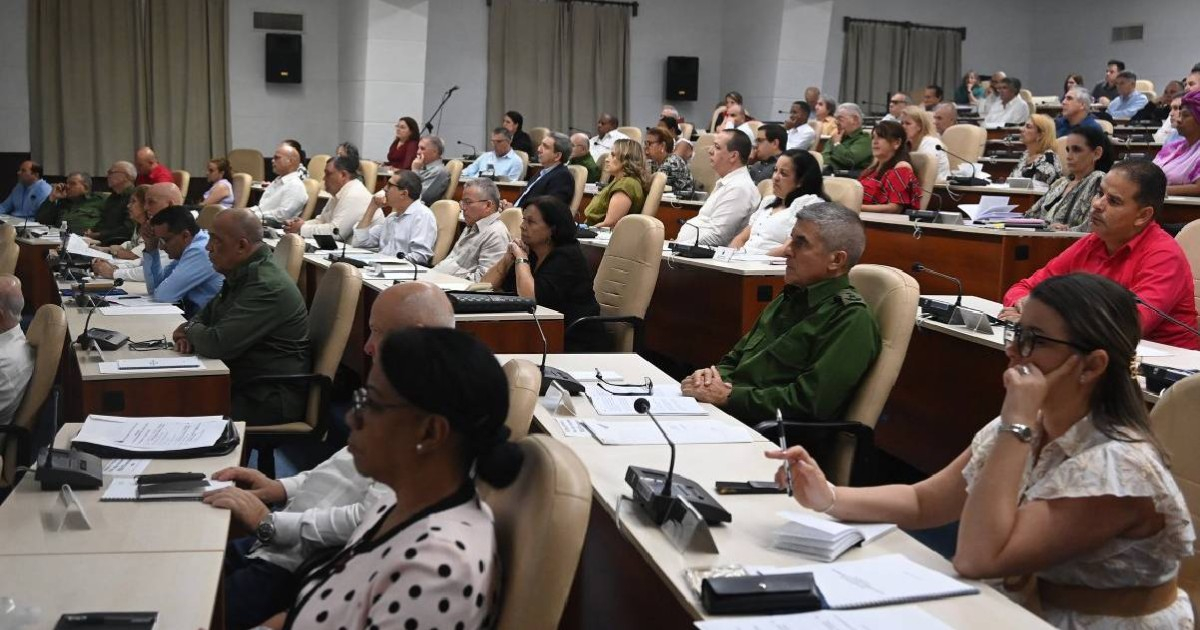
On Wednesday, the Cuban government convened an Extraordinary Plenum of the Communist Party of Cuba, planning to present these measures at the National Assembly's extraordinary session scheduled for Thursday. It was also announced that Raúl Castro had approved the anticipated economic transformations.
Monreal's central argument draws on historical parallels: during the Special Period, Cuba experienced a swift and profound collapse but managed to stabilize relatively quickly due to international reintegration, involving remittances, tourism, external credit, and foreign investment.
Historical Parallels and Economic Isolation
"Cuba's international reintegration in the 1990s was an economic process devoid of superpower sponsorship or subsidies. It didn't bring about a boom or restore previous production levels but succeeded in halting the collapse," he noted.
The decentralizing measures approved in 1993—legalization of foreign currency, self-employment, and creation of UBPCs—succeeded precisely because that external financial space was already open. The "Bolivarian arrangements" with Venezuela would arrive later.
Today, the situation is drastically different. The economist argues that Cuba faces "a geopolitical disconnection enforced by the U.S., unrelated to any economic 'enhancement,'" and overcoming this would "depend on a diplomatic process about which there's little information."
In his post's comments, Monreal hinted at a possibility: "Perhaps this matter of approving 'transformations' is part of current or future exchanges. Something that could establish a point of contact. It's unclear to me."
The Impact of External Sanctions
The material backdrop of this external restriction is devastating. Over 240 sanctions imposed by Washington since January 2026, including Executive Order 14404 on May 1, which introduced secondary sanctions against foreign companies operating with GAESA, have led to the withdrawal of at least 11 airlines, a drop in fuel imports by 80% to 90%, and power outages lasting up to 25 hours daily in more than 55% of the territory.
The Economist forecasts a GDP contraction of -7.2% in 2026, accumulating a decline of 23% since 2019.
Voices of Dissent and Political Critique
Within this context, commentator Joel Ernesto Marill concurred with Monreal's assessment and extended his political critique: "The pressure being exerted on the Cuban economy is one for the history books."
Marill acknowledged that Cuba has "many things to change, deeply—including the ineffective central planning scheme," but insisted it should have the right to do so "without starving the population with sanctions in the process."
The reforms announced by Díaz-Canel include reducing ministries from 27 to 21, granting more autonomy to municipalities and businesses, opening up to investment from the diaspora, and boosting small and medium-sized enterprises. Other Cuban economists have labeled these moves as "too late, too bad, too little."
Octavio Couso Expósito summed up the situation with a formula circulating in the discussion thread: "On our side, too much caution, too much arrogance, and an excess of conservatism; on the other side, a government in the White House that has shattered decency norms, embodying the worst and most extreme, without scruples. The perfect storm."
Understanding Cuba's Economic Dilemma
Why are the announced reforms in Cuba considered limited?
The reforms are considered limited due to a lack of international commercial and financial support, which is necessary for their success. Without energy, currency, technology, and external demand, the effectiveness of these reforms is highly doubtful.
What historical parallels does Pedro Monreal draw regarding Cuba's economic situation?
Monreal draws parallels to the Special Period, where despite a rapid and deep collapse, Cuba managed to stabilize due to international reintegration that included remittances, tourism, external credit, and foreign investment, without relying on superpower sponsorship or subsidies.
How do U.S. sanctions impact Cuba's economy?
U.S. sanctions have led to significant economic challenges for Cuba, including the withdrawal of airlines, a steep decline in fuel imports, and extensive power outages. These sanctions exacerbate the country's economic isolation, making recovery difficult.