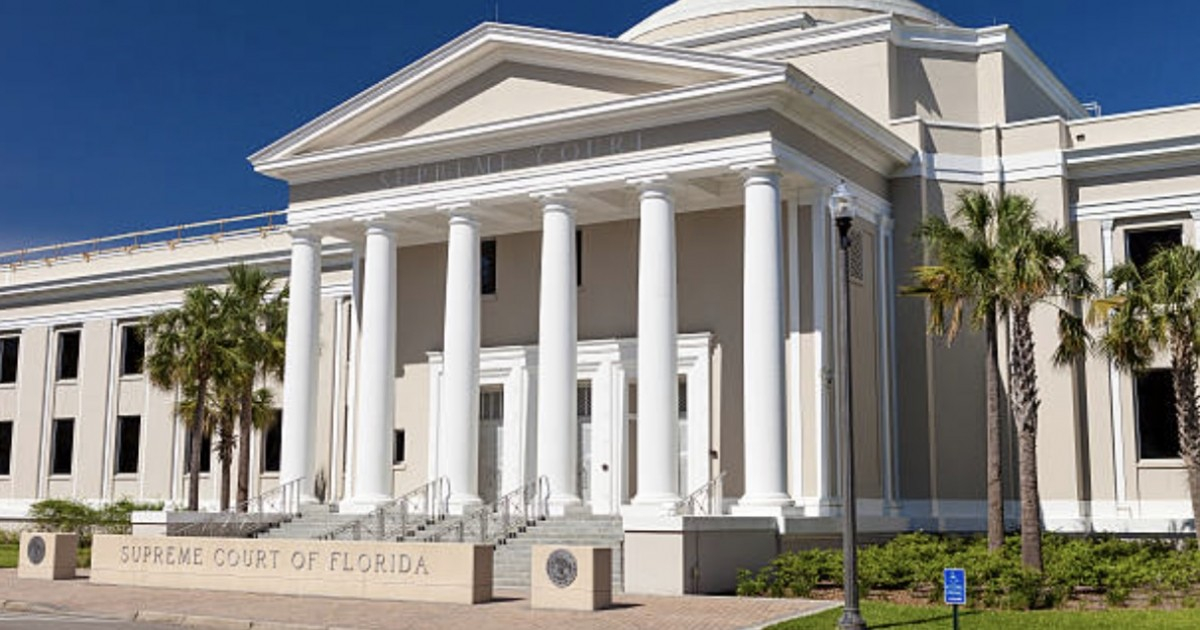
A Florida appellate court ruled on Wednesday that the state law prohibiting adults aged 18 to 20 from carrying concealed firearms is unconstitutional. This decision broadens gun rights in Florida and reverses a restriction put in place after the Parkland school shooting.
The Fourth District Court of Appeal found that the ban infringes upon the Second Amendment of the United States Constitution, as it denies this age group the full exercise of their right to self-defense.
“Limiting the right to self-defense for young adults aged 18 to 20—members of the same 'political community' as other law-abiding adults—would render the Second Amendment a 'second-class' right,” Judge Spencer D. Levine stated in the court's opinion.
The ruling was supported by Chief Judge Jeffrey T. Kuntz and Judge Shannon K. Shaw.
The case began with the arrest of Jaylen Eubanks in 2024. At the time, Eubanks was 18 years old and faced charges for improper exhibition of a firearm and concealed carry. After his challenge to the law's constitutionality was initially rejected by a lower court, the case was taken to appeal.
Background and Legislative Context
The contested law was enacted by the Florida Legislature in 2023, as part of the measures following the tragic 2018 shooting at Marjory Stoneman Douglas High School in Parkland, which claimed 17 lives and injured 17 others.
A key factor in the case's outcome was the decision by Florida Attorney General James Uthmeier not to defend the law in the appellate court. Earlier this year, his office declared the restriction unconstitutional.
The Broward County State Attorney’s Office attempted to support the law, expressing disagreement with the state government's position.
“Given the impact of gun crimes in Florida, including the February 14, 2018, mass shooting at Marjory Stoneman Douglas High School, we respectfully disagree with the stance taken by the Attorney General's Office,” said Broward State Attorney Harold F. Pryor.
Impact of Supreme Court Precedents
The decision draws on recent U.S. Supreme Court precedents, particularly the New York State Rifle & Pistol Association v. Bruen case, which expanded constitutional protections for carrying firearms. The judges also referenced a 2024 federal ruling that overturned similar restrictions in Minnesota.
Upon hearing the ruling, Uthmeier welcomed the decision.
“In another victory for the inalienable rights of Floridians, the 4th District Court of Appeals agreed with our position that Florida's law prohibiting adults under 21 from carrying concealed firearms is unconstitutional,” he wrote on social media platform X.
The Attorney General also indicated that he will not seek further review of the ruling and will work with the Department of Agriculture and Consumer Services to implement the decision.
Broader Implications and Legislative Changes
This ruling adds to a series of decisions and legislative changes that have gradually expanded gun rights in Florida in recent years.
In 2023, Governor Ron DeSantis signed into law a measure allowing concealed carry without a license. Two years later, an appellate court declared the state’s open carry ban unconstitutional.
The trend is also reflected in the state Legislature. In March 2025, the Florida House of Representatives passed an initiative to lower the minimum age for purchasing rifles and shotguns from 21 to 18, continuing its legislative journey.
According to Thomas Cottone, Eubanks’ attorney, the ruling could have widespread implications beyond this case.
“It’s even better than I anticipated,” he said, noting that he plans to use this precedent in other cases involving restrictions on the right to carry firearms in Florida.
Understanding Florida's Gun Law Changes
What was the basis for declaring the concealed carry ban unconstitutional?
The court found that the ban violated the Second Amendment of the U.S. Constitution by restricting the self-defense rights of young adults aged 18 to 20.
How did recent Supreme Court decisions influence this ruling?
The ruling was influenced by the New York State Rifle & Pistol Association v. Bruen decision, which expanded constitutional protections for carrying firearms, as well as a 2024 federal decision that overturned similar laws in Minnesota.
What are the broader implications of this court decision?
The decision could set a precedent for challenging other restrictions on gun rights in Florida, potentially leading to further legislative and judicial changes that expand firearm rights.