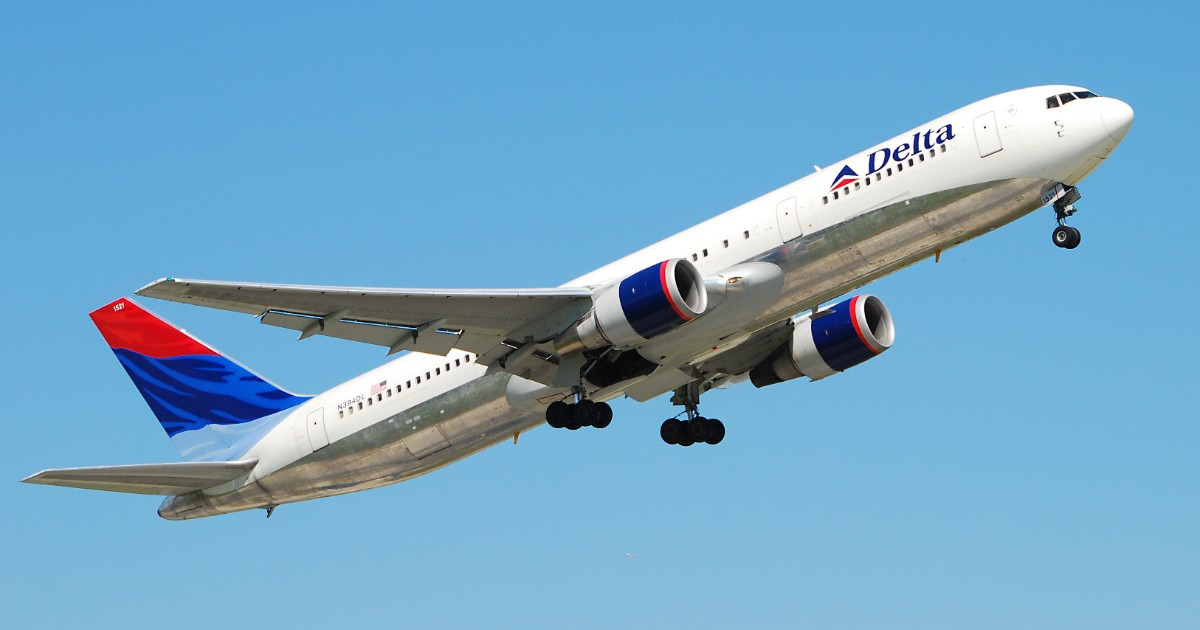
Delta Air Lines has completely discontinued its daily service between Atlanta and Havana while halving its flights from Miami, as reported by Caribbean News Digital, a travel-focused publication.
This decision received approval from the U.S. Department of Transportation (DOT) through a temporary waiver, allowing the airline to freeze its slots without losing long-term flight rights.
Details of the Service Reductions
The daily route from Atlanta's Hartsfield-Jackson International Airport, Delta's primary global hub, has been entirely eliminated.
Meanwhile, in Miami, Delta has reduced its operations from two daily flights to just one, cutting its weekly seat capacity to the island by 50%.
The airline justified this move with a straightforward statement: "Current aviation market conditions simply do not justify the previously allocated seat volume."
Delta will now focus its efforts on the segment of visits to family and friends originating from Miami, considered the most resilient traffic between the U.S. and Cuba. The airline has also left the door open to resuming more flights if demand shows consistent recovery.
A Tourism Sector in Decline
Delta's decision underscores a broader collapse in Cuban tourism in 2026. According to Cuba's National Statistics and Information Office (ONEI), the island welcomed just 30,883 international visitors in May, marking the lowest monthly figure in years.
During the first five months of the year, Cuba attracted 359,491 tourists, a 58.4% decrease compared to the same period in 2025.
All major source markets have plummeted: Canada fell by 67.4% to 126,239 visitors; Russia decreased by 62.5% to 21,136; and the United States declined by 55.3% to 25,572.
The only segment to withstand these challenges was the Cuban community abroad, which increased its share from 6.8% of visitors in January to 47.6% in May.
Fuel Crisis and Political Pressure
The collapse in air connectivity is partly due to a worsening energy crisis since January 2026. Executive Order 14380, signed by Donald Trump on January 29, declared a national emergency concerning Cuba and authorized additional tariffs against countries supplying oil to the island.
In the weeks that followed, Cuba announced a shortage of Jet A-1 fuel at nine international airports, leading to a wave of flight cancellations.
U.S. airlines have resorted to "tankering"—carrying enough fuel from the mainland for round trips—to navigate the local scarcity. Yet, the mix of regulatory restrictions, declining demand, and increased operational costs has eroded the feasibility of maintaining multiple flights.
At least 11 international airlines halted flights to Cuba in 2026, including Air Canada, WestJet, Sunwing, Air Transat, LATAM Peru, Magnicharters, Air France, Iberia, Rossiya, Nordwind, and Turkish Airlines.
Air Transat reported losses of $17.8 million directly linked to suspending its routes. Iberia suspended its direct Madrid–Havana route on June 1, describing the decision as one that "exclusively affects Cuba, due to its exceptional situation."
Political pressure adds to these operational challenges. Cuban-American Congressman Carlos Giménez sent letters in February to the CEOs of American Airlines and Delta, urging them to cease all flights to Cuba, arguing that they "provide the dictatorship with hard currency that only benefits its repressive apparatus and not the Cuban people."
Cuba concluded 2025 with just 1.8 million visitors, the lowest number since 2002, excluding the pandemic years. This figure is a far cry from the 4.6 million recorded in 2018.
Hotel occupancy rates fell to 12.9% in the first quarter of 2026, less than half of the 23.7% seen during the same period the previous year.
Understanding Delta's Flight Adjustments to Cuba
Why did Delta reduce its flights to Cuba?
Delta reduced its flights due to unfavorable aviation market conditions that did not justify the previous seat allocations, along with a significant decline in tourism demand.
What impact has the energy crisis had on flights to Cuba?
The energy crisis, exacerbated by U.S. sanctions, has led to fuel shortages, causing numerous flight cancellations and forcing airlines to carry additional fuel for round trips.
How has the political situation influenced airline operations in Cuba?
Political pressures, including calls from U.S. lawmakers to cease flights, have added to the challenges faced by airlines operating in Cuba, impacting their decisions to reduce or suspend services.