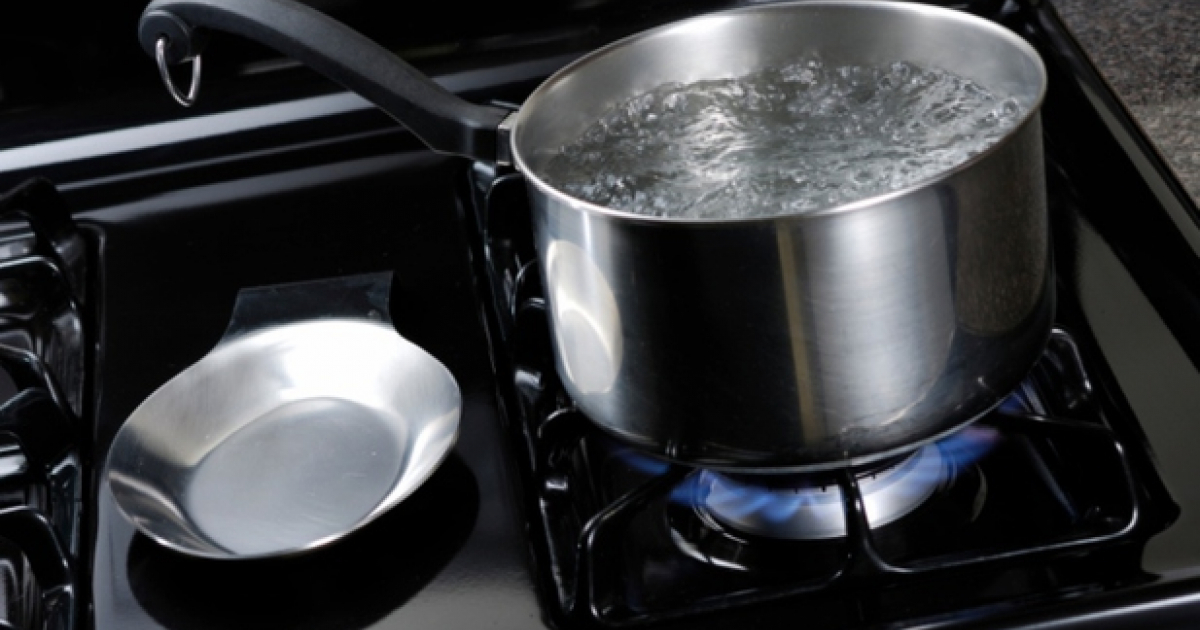
On Wednesday, Camagüey authorities acknowledged a severe nationwide shortage of chlorine gas and aluminum sulfate—key chemicals necessary for treating water in purification plants—and urged residents to boil water at home as an emergency measure, according to a statement broadcast by Radio Camagüey.
Daniel Fuentes Milanés, the provincial director of Camagüey's Water and Sewerage Company, highlighted that the electrical deficit exacerbates the situation further, making it essential to rely on alternative treatment methods within households.
Ironically, residents struggle to find cooking methods due to power outages lasting over 20 hours and the unavailability of liquefied petroleum gas, forcing people to turn to increasingly expensive charcoal on the informal market.
"Consequently, pharmaceutical workers will increase the production of 1% sodium hypochlorite, allowing the population greater access to this product for manual chlorination. Many homes in the province have some alternative devices, such as homemade filters or those sold in the commercial network, which also help improve water quality," stated the official.
In the municipalities of Nuevitas and Guáimaro, and at the Las Flores Water Treatment Plant, authorities also stressed the need to decant water, as reservoirs in these areas are more turbid.
Damarys Guillén Luis, technical director of the Provincial Pharmacy and Optics Company of Camagüey, detailed the instructions for using sodium hypochlorite: "It is a temporary product, lasting thirty days after being prepared in our units, so it is not recommended to store it. Use three drops per liter of water to chlorinate it and wait at least ten minutes after adding the product before consuming."
The official warned of a shortage of containers, suggesting that residents bring their own to designated pharmacies in the city for bulk sales: those at Avenida de La Libertad, the Pediatric Hospital, Álvarez Fuente, the corner of Martí and San Pablo streets, La Borla, and Plaza de Méndez.
"Currently, two 30-milliliter bottles are dispensed, and depending on the supply of hypochlorite, it could increase to four bottles per person," Guillén Luis added.
The recommendation to boil water directly clashes with the island's energy crisis.
On Wednesday, the national electricity availability was just 970 MW against a demand of 2,525 MW, with a projected deficit of 2,000 MW during peak nighttime hours, resulting in power outages lasting up to 20 to 25 hours daily in several provinces.
The health implications make the situation even more urgent. In April 2026, Camagüey reported between 30 and 40 daily positive cases of hepatitis A, a disease transmitted through contaminated water or food, though authorities refused to formally acknowledge it as an outbreak.
The water crisis has national ramifications: nearly 2.7 million Cubans lack regular access to potable water, and almost 10 million face intermittent supply, while the hydraulic system operates with just 37% of the necessary fuel for pumping.
On June 7, state channel Canal Caribe journalist Gisela García Rivero admitted that "currently all provinces in the country have reported cases of hepatitis A," with the largest outbreaks concentrated in Havana, Matanzas, Santiago de Cuba, Ciego de Ávila, and Camagüey.
Understanding the Water and Energy Crisis in Cuba
Why is there a shortage of water treatment chemicals in Camagüey?
The shortage is part of a nationwide issue affecting the availability of chlorine gas and aluminum sulfate, which are essential for water treatment in purification plants.
What alternative methods are being used for water treatment in Camagüey?
Residents are encouraged to boil water and use sodium hypochlorite for manual chlorination. Some households also use homemade or commercially available filters to improve water quality.
How is the energy crisis impacting the water crisis in Cuba?
Frequent and prolonged power outages hinder the ability to boil water and operate water pumps, exacerbating the water supply issues across the island.