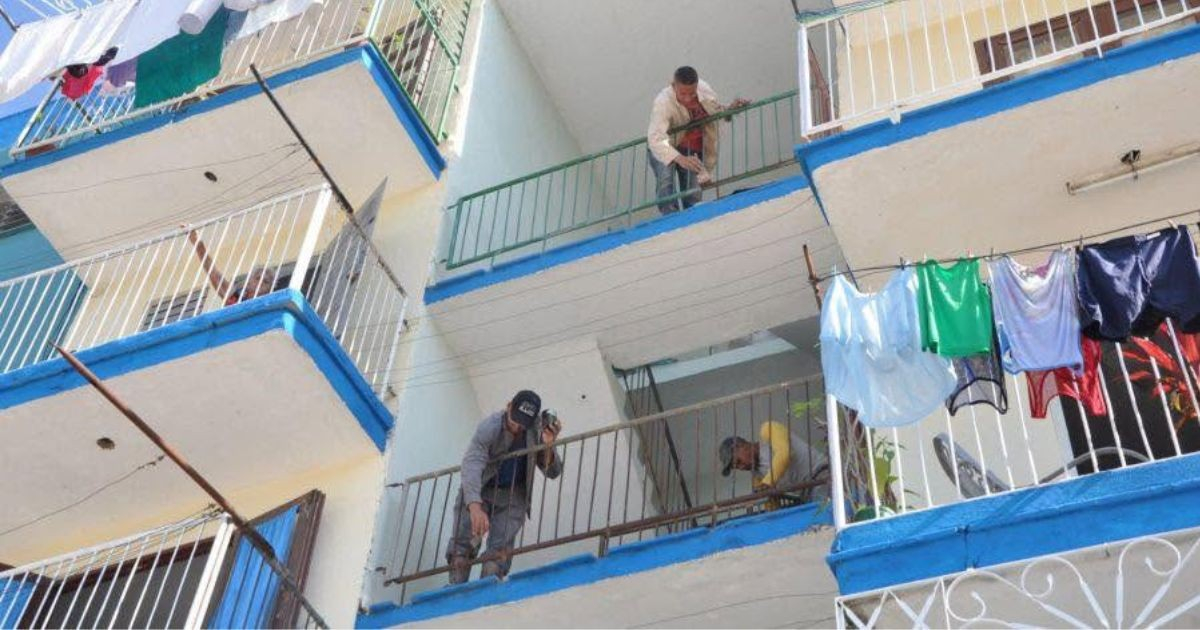
The Provincial Housing Directorate of Sancti Spíritus is actively encouraging each multifamily building in the area to establish its own bank account linked to the neighborhood council. This initiative is paving the way for the mandatory fee model outlined in the upcoming Housing Law, which is still awaiting parliamentary approval.
This push comes in response to a specific issue: a water pump failure left 19 buildings in the Olivos 1 neighborhood of Sancti Spíritus without water service, as reported by Radio Vitral Sancti Spíritus.
Yuslevi Vázquez Castillo, the legal deputy director of Housing in the region, explained that resolving such issues requires both technical solutions and community organization. He emphasized the importance of buildings having their own funds to address unexpected breakdowns.
"Having these funds prevents the need for immediate collections, which could adversely impact residents, especially in the current economic climate," the official noted.
The bank accounts must be authorized through a resolution by municipal directors in the sector. Their management will be entrusted to the neighborhood council boards, which authorities are also urging to strengthen with effective organizational structures.
Ahead of National Legislation
The initiative in Sancti Spíritus is a precursor to the legal framework the regime aims to implement nationwide. The draft of the new Housing Law, comprising 190 articles and 91 pages, calls for the establishment of administrative boards in all multifamily buildings throughout the country. These boards will be empowered to impose mandatory monthly fees for common expenses.
Article 157 of the draft law is clear: "Decisions made by the Administrative Board are binding on all owners," with no option to opt out of payments.
The fees would cover expenses such as cleaning, maintenance, preservation, and the rehabilitation of common elements like staircases, patios, cisterns, water pumps, and elevators.
The draft was open for public consultation until February 28, 2026, and bears the signatures of Juan Esteban Lazo Hernández, head of the National Assembly, and Miguel Díaz-Canel, although approval dates remain unspecified.
Context of Housing Crisis
This development occurs against the backdrop of a persistent housing crisis that the regime has been unable to resolve. The official housing deficit exceeds 805,000 units, with 35% of the housing stock in fair or poor condition. In 2025, only 22% of the annual construction plan was achieved, resulting in just 2,382 homes completed out of the 10,795 planned.
Once the law is approved, the Council of Ministers will have 60 days to issue the regulations, and the text will become effective 90 days after its publication in the Official Gazette.
Understanding the Implications of the New Housing Law in Cuba
What prompted the push for mandatory fees in Sancti Spíritus?
A water pump failure that affected 19 buildings in the Olivos 1 neighborhood highlighted the need for buildings to have their own funds to address such emergencies.
What expenses will the mandatory fees cover?
The fees will cover common expenses, including cleaning, maintenance, preservation, and rehabilitation of common areas such as staircases, patios, cisterns, water pumps, and elevators.
What does the new Housing Law propose for multifamily buildings?
The proposed law suggests creating administrative boards in all multifamily buildings to handle mandatory monthly fees for common expenses, with their decisions being binding on all owners.
What is the current state of Cuba's housing crisis?
Cuba faces a significant housing deficit, with over 805,000 units needed, and 35% of existing housing in fair or poor condition. The construction goals for 2025 were largely unmet, with only 2,382 homes completed out of the planned 10,795.