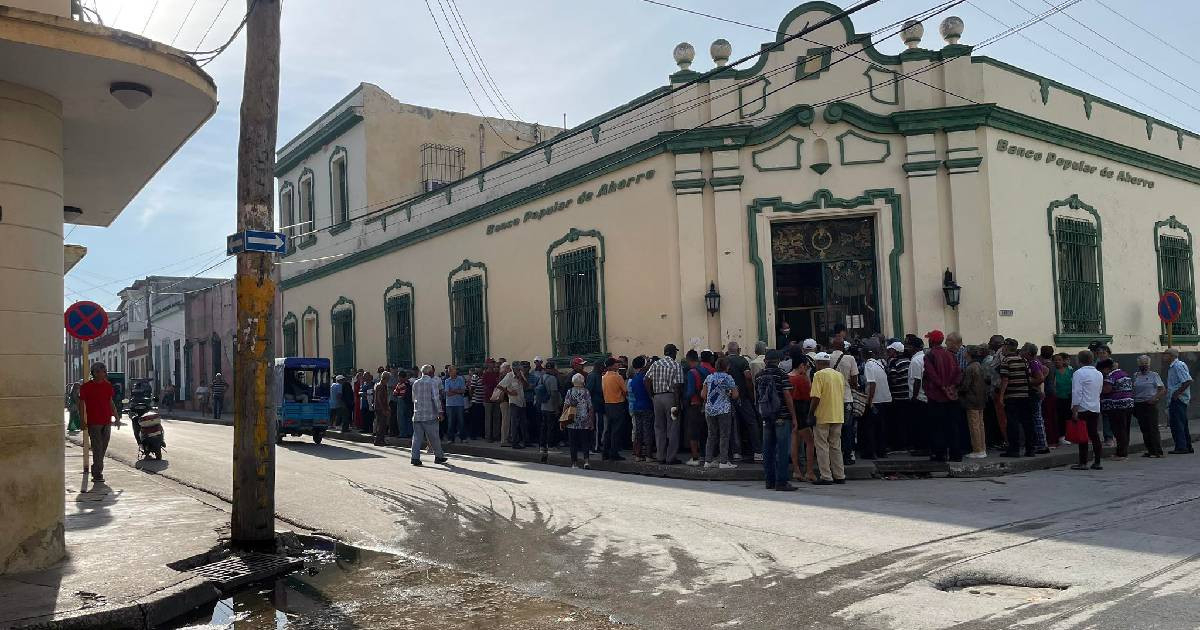
The Provincial Government of Granma has openly acknowledged its inability to secure the funds necessary to pay pensions to over 111,000 retirees for the month of June. This candid admission is unusual for a provincial authority in Cuba.
A special broadcast by the CNTV Granma featured the Provincial Commission for Social Security announcing that they have fallen short of the required 400 million pesos in cash needed to fulfill the monthly obligations.
The official statement outlines a staggered payment approach, contingent upon the daily cash inflows at each bank branch. The Banco Popular de Ahorro will orchestrate collections based on the age groups of the pensioners.
The most critical issue affects those receiving payments through postal offices. Although payments were scheduled to commence on Wednesday, the government admitted that "the funds are still unavailable in most municipalities of Granma."
Provincial authorities blame the crisis partly on private businesses, which they claim largely fail to honor deposit agreements with banks. Additionally, a widespread aversion to electronic payments keeps cash circulating outside the formal financial system.
Since April, measures have included daily monitoring of cash deposits at each branch, centralizing authorizations for withdrawals exceeding 5,000 pesos, prioritizing vulnerable retirees, and shutting down businesses that do not deposit their earnings.
The Provincial Defense Council has also mandated that a government official be present at each bank and postal office to inform retirees of the situation as they come to collect their payments.
The Broader Context of Cuba's Financial Struggles
This predicament is not unique to Granma. Across Cuba, elderly citizens endure long lines to receive their monthly pensions, with many ATMs out of service and banks operating on reduced hours due to power outages.
As Granma admitted its financial incapacity, a bank in Havana was reportedly robbed during a blackout, just hours before pension payments were meant to begin.
Since September 2025, the minimum pension in Cuba has been set at 4,000 Cuban pesos. However, rampant inflation and a soaring dollar have devalued the national currency significantly. Currently, those 4,000 pesos are worth less than $10 on the informal market, while the basic cost of living exceeds 12,000 pesos per month per person.
The provincial government concluded its announcement with a reassurance: "Not everyone will receive their payment when they wish, but everyone will be paid."
FAQs on Granma's Pension Payment Crisis
What caused the pension payment delays in Granma?
The delays are attributed to insufficient cash reserves and private businesses not fulfilling deposit agreements with banks, compounded by a general reluctance to use electronic payments.
How is the Granma government addressing the pension payment issue?
Measures include staggered payments based on cash availability, prioritizing vulnerable retirees, and having government officials explain the situation to pensioners at payment sites.
How does the economic situation affect Cuban retirees?
Inflation and the devaluation of the Cuban peso have significantly reduced the purchasing power of retirees, with their pensions now worth less than $10 on the informal market.