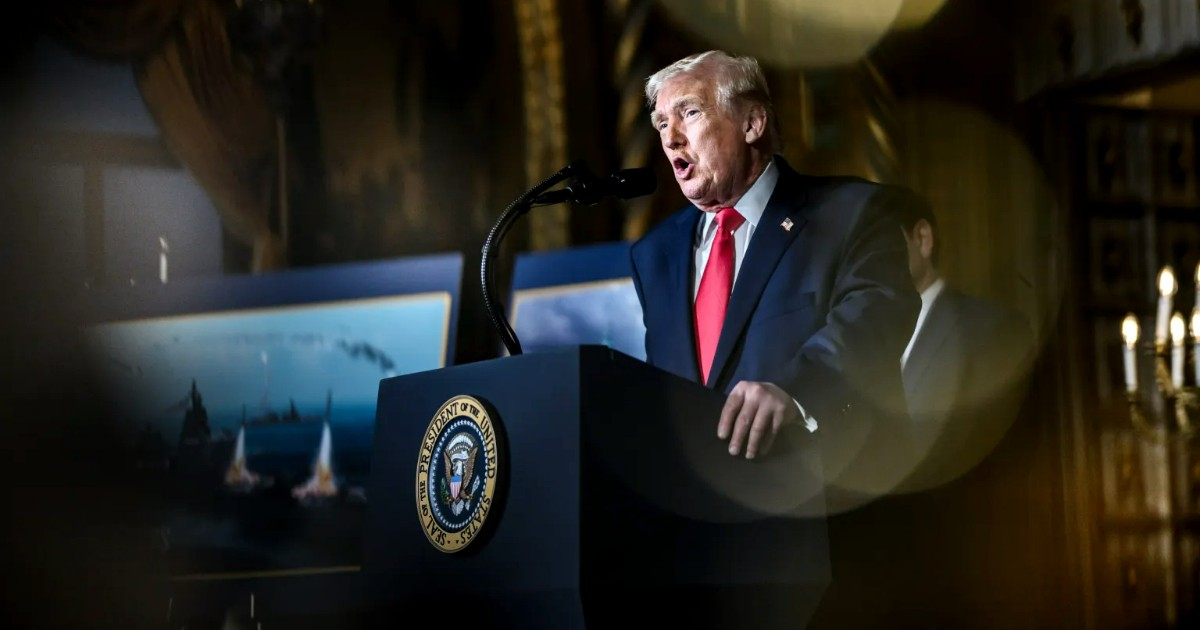
Several prominent figures within President Donald Trump's administration, including CIA Director John Ratcliffe, Secretary of State Marco Rubio, and Defense Secretary Pete Hegseth, have voiced skepticism about whether Iran will adhere to the nuclear commitments outlined in a memorandum of understanding signed on Sunday, June 15. This information was reported by Axios and echoed in The Telegraph.
Trump revealed the agreement on his 80th birthday, claiming it ended the armed conflict that began on February 28, 2026, with Operation Epic Fury, a series of coordinated attacks by the U.S. and Israel against Iranian military and nuclear installations.
U.S. intelligence reportedly discovered that Iranian officials were discussing the agreement in ways that contradicted what they communicated to both mediators and the Washington negotiating team. An anonymous source bluntly stated, "Intelligence indicates that Iran's intentions do not align with their commitments under the agreement."
The memorandum, described by Vice President JD Vance on CNN as being just a page and a half long, is intentionally vague and lacks specific details regarding Iran's enriched uranium stockpile commitments.
Rather than providing technical specifics, the document broadly states that Iran "reiterates it will never produce nuclear weapons," a phrase reminiscent of the 2015 nuclear agreement under the Obama administration.
Trump administration officials acknowledged that the document is "incredibly vague" and was crafted as a "political document" to allow Iran to present it favorably to its domestic audience.
According to these officials, the actual commitments—including U.S. involvement in the destruction of enriched material under the supervision of the International Atomic Energy Agency—were communicated through confidential channels and are not part of the official document.
"What matters more than the document itself are the understandings we have among ourselves," one official told CNN, adding that the agreement "essentially states we will lift sanctions, make a nuclear deal, unfreeze funds. But we will lift sanctions based on progress."
In March 2026, international inspectors released a report warning that Iran possessed approximately 440 kilograms of enriched uranium at 60% purity, enough to produce 10 nuclear weapons according to experts.
The agreement does clearly outline financial benefits for Iran: access to a $300 billion reconstruction fund financed by regional powers—not by the U.S., as emphasized by Trump and Vance—immediate lifting of oil sanctions, and the unfreezing of assets contingent on negotiation progress.
Vance defended the framework on Fox News, asserting, "We have fundamentally transformed the Middle East, whether they comply or not. This is just the icing on the cake, assuming they do everything right."
The secrecy surrounding the document has attracted criticism even from Trump's allies. Republican Senate Leader John Thune stated on Tuesday his desire to "obtain more information, more details." Meanwhile, Democratic Leader Chuck Schumer was more direct, insisting, "The American people deserve details and full transparency. What have we truly gained from Trump's war?"
Israel, which participated alongside the U.S. at the onset of the conflict, requested to see the agreement text but was denied by the Trump administration, indicating a growing rift between the allies. Qatar and Pakistan acted as mediators throughout the process.
The official signing ceremony is scheduled for this Friday in Switzerland, with Vance in attendance, at which time the complete text is expected to be published. This event will mark the beginning of a 60-day period of in-person technical negotiations between delegations from both countries, described by the Trump administration as a testing phase to assess Iran's sincerity.
Key Questions About the U.S.-Iran Agreement
What are the main concerns regarding Iran's compliance with the agreement?
The primary concerns center around Iran's intentions not aligning with their commitments, as suggested by U.S. intelligence. The vagueness of the memorandum also raises doubts about Iran's adherence to the agreement's terms.
What financial benefits does Iran gain from the agreement?
Iran stands to gain access to a $300 billion reconstruction fund financed by regional powers, immediate lifting of oil sanctions, and the unfreezing of assets, provided there is progress in negotiations.
How has the secrecy surrounding the agreement been received?
The lack of transparency has been criticized even by allies of Trump, who are calling for more details. Some leaders, like Chuck Schumer, demand full transparency to understand the agreement's benefits.
What is the significance of the official signing ceremony in Switzerland?
The signing ceremony will officially mark the beginning of a 60-day negotiation period, aimed at testing Iran's commitment to the agreement. This will involve technical discussions between both nations' delegations.