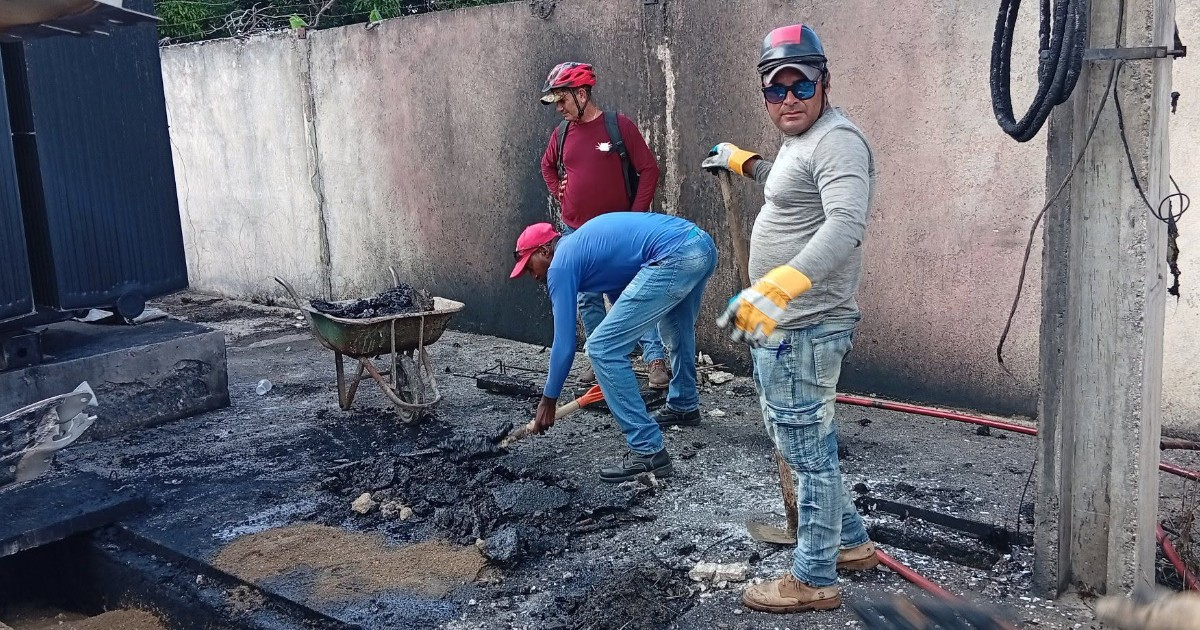
An electrical fire broke out on Tuesday at the Van Troi 2 substation in Caibarién, a coastal town in the province of Villa Clara, causing damage to the transformer and other electrical components. This incident left 15 local districts without power.
According to reports from the state-run outlet Cubadebate, which cited the Cuban News Agency, the blaze ignited around 11:00 a.m. and was eventually extinguished by the town's Fire Department.
Municipal official Rogelio Ruiz Rodríguez explained to the ACN that the fire was triggered by overheating, a result of high temperatures combined with a surge in power demand following a period of outage. This pattern of prolonged blackouts followed by abrupt power restoration has been steadily degrading Cuba's electrical infrastructure across the island.
Out of the 15 affected districts, two belong to popular councils 4 and 5, while the remaining 13 are part of popular council 3. A specialized team from the Electric Company has been working to remove damaged equipment, replace burnt cables, and prepare for service restoration tests. Local authorities have also taken measures to ease the impact on residents, such as distributing water and food supplies to the community.
Ruiz Rodríguez noted that a command post from the Defense Council has been set up at José Martí Primary School to assist residents during the emergency. Social media posts by CNTV Telecenter sparked numerous reactions from locals, who expressed both concern over the latest malfunction and frustration with the ongoing power outages plaguing the municipality. Some users suggested the overheating was inevitable given the prolonged outages and sudden demand spikes. "Of course, it's bound to blow if you only get an hour or two of power and everyone rushes to get everything done," commented one user, while another lamented the rush to complete household chores.
Despite some appreciation for the efforts of the Electric Company workers and hope for a quick recovery, the prevailing sentiment was one of exasperation over the service disruptions. Several residents reported being without power for over 24 to 48 hours, complicating access to water and food preservation. "We can't take it anymore; this is our daily reality," wrote one user, while another echoed the general feeling: "What a sad reality we are living in." Others warned that without resolving the structural issues in the local power grid, similar incidents are likely to recur.
On the same day in Santa Clara, Villa Clara's capital, an electrical overload following a blackout led to explosions and damage to 14 homes, injuring one person with minor burns. These events underscore the critical condition of Cuba's energy system in 2026. The Electric Union has reported generation shortfalls ranging from 1,630 to over 2,000 MW daily, with outages sometimes leaving 65% of the country in darkness simultaneously.
Villa Clara has been particularly hard-hit by this crisis, with blackouts lasting up to 20 hours a day, forcing communities to organize outdoor cooking and communal phone charging stations. The structural causes of this crisis include outdated thermoelectric plants—eight of 16 units were out of service in June 2026—fuel shortages, and decades of neglected infrastructure investment, a direct consequence of Cuba's dictatorial governance.
On June 13, during peak hours, the Electric Union reported a capacity of only 1,270 MW against a demand of 3,050 MW, leaving a 1,780 MW shortfall that highlights the scale of the island's energy collapse.
Frequently Asked Questions about Cuba's Energy Crisis
What caused the fire at the Caibarién substation?
The fire was caused by overheating due to high temperatures and a sudden increase in power consumption following a blackout.
How is the local community affected by the power outages?
Residents face challenges accessing water and preserving food due to prolonged power outages, with some reporting outages lasting over 24 to 48 hours.
What are the structural causes of Cuba's energy crisis?
The crisis stems from outdated thermoelectric plants, fuel shortages, and decades of underinvestment in infrastructure, exacerbated by the dictatorial regime's mismanagement.