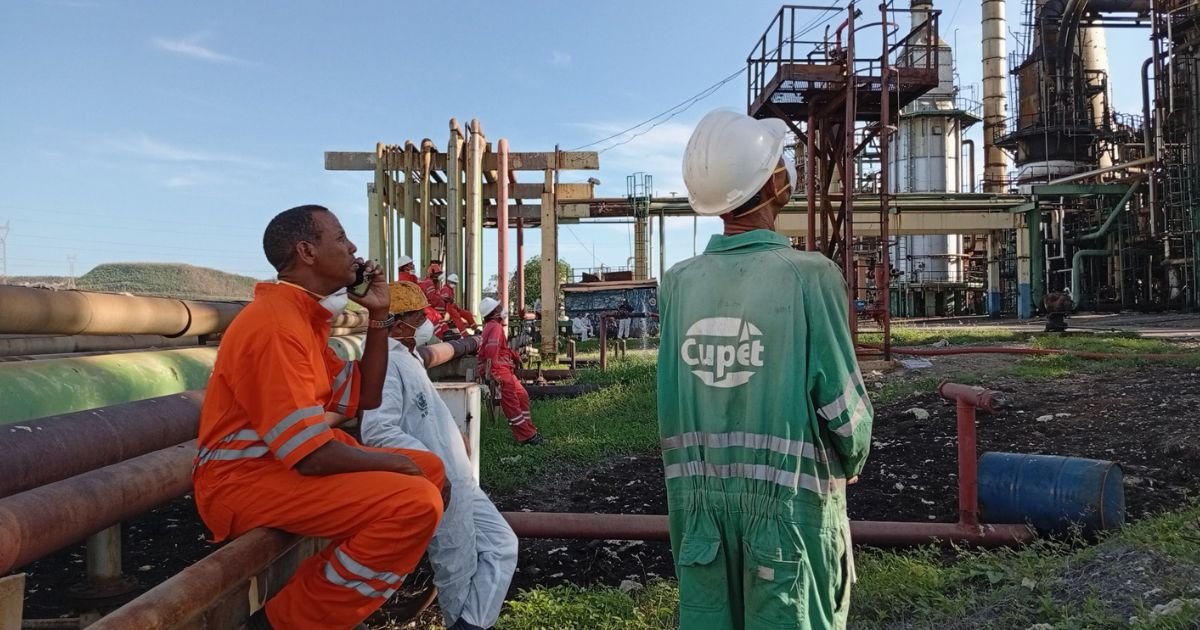
The composition of Cuban oil, predominantly heavy and high in sulfur, has significant implications for the island's ongoing energy crisis. But what's the scientific explanation behind this phenomenon?
Dr. Rafael Tenreyro Pérez, a former Exploration Chief at the Unión Cuba Petróleo (CUPET), delves into this topic in an analysis for Juventud Técnica. He attributes the unique properties of Cuba's oil to millions of years of geological processes that have shaped the composition of the source rocks in the northern part of the country.
The Geological Roots of Cuban Oil
Cuba is home to approximately fifty oil fields, though only a small portion contains extra-heavy oil. Despite this, the majority of its production comes from heavy, sulfur-laden crude. According to Tenreyro Pérez, the most significant family of crude by volume—Family I—originates from Upper Jurassic carbonate source rocks. These rocks were deposited in highly anoxic environments and contain marine organic matter rich in sulfur compounds.
Situated along the northern coast between Havana and Varadero, these oil fields share similarities with Mexican crudes. A critical factor in their development is the temperature at which the oil migrated from its source rock. As Tenreyro Pérez explains, "The heavy crude escaped from the source rock at low temperatures (immature oil), retaining a high sulfur content."
The Impact of Thermal Maturity
Thermal maturity plays a crucial role in determining the density and sulfur content of oil. Lower thermal maturity results in heavier oil with more sulfur compounds, diminishing its commercial value and complicating its refining process. The API gravities of major northern fields highlight this issue: Varadero registers around 10.5° API; Boca de Jaruco ranges from 11° to 14.7°; Puerto Escondido varies between 11.3° and 13.4°; and Seboruco falls between 8° and 12°. Only Santa Cruz del Norte reaches approximately 19° API. In comparison, light crude exceeds 31° API.
Lighter Oil Families in Lesser Quantities
The island also hosts Families II and III of crudes, which are found in other regions and are lighter with lower sulfur content. However, these account for only a small fraction of total production. In some areas, Family I oils with greater maturity have been discovered, reaching up to 37° API, though they still contain high sulfur levels.
Dr. Tenreyro Pérez remarks on a geological paradox: "The good news is that without this specific type of organic matter, these oil fields wouldn't exist today." It was the sulfur-rich marine organic material, deposited under anoxic conditions, that generated the volume of oil necessary to sustain national production.
A Historical Perspective on Oil Exploration
The journey of Cuban oil production began in 1969 with the discovery of the Guanabo and Vía Blanca fields, both characterized by heavy oil. This marked the start of a new era in exploration. By the early 1970s, around 12 exploratory wells were drilled along the northern coast, leading to the discovery of eight additional fields, including Boca de Jaruco, Puerto Escondido, Yumurí, Camarioca, and Varadero.
Before 1968, Cuba's total production averaged around 500 barrels daily. However, the development of northern coastal fields increased production levels more than a hundredfold, as the author notes. Today, this geological reality directly contributes to the energy crisis. Cuba produces about 40,000 barrels of oil daily—mostly heavy and challenging to refine—compared to an estimated demand of 90,000 to 110,000 barrels daily.
This structural deficit, exacerbated by a significant drop in oil imports and reduced supplies from Venezuela and Russia, has led to widespread power outages impacting the Cuban population.
Understanding Cuban Oil: Key Questions Answered
Why is Cuban oil primarily heavy and sulfur-rich?
Cuban oil is predominantly heavy and sulfur-rich due to the geological composition of its source rocks, which were formed in anoxic environments with marine organic matter rich in sulfur compounds.
What role does thermal maturity play in oil composition?
Thermal maturity affects the density and sulfur content of oil. Lower thermal maturity leads to heavier oil with higher sulfur content, reducing its commercial value and complicating its refining process.
How has Cuban oil production evolved historically?
Cuban oil production began in 1969 with the discovery of heavy oil fields. Exploration in the 1970s led to the identification of additional fields, significantly increasing production levels from an average of 500 barrels daily to much higher figures.