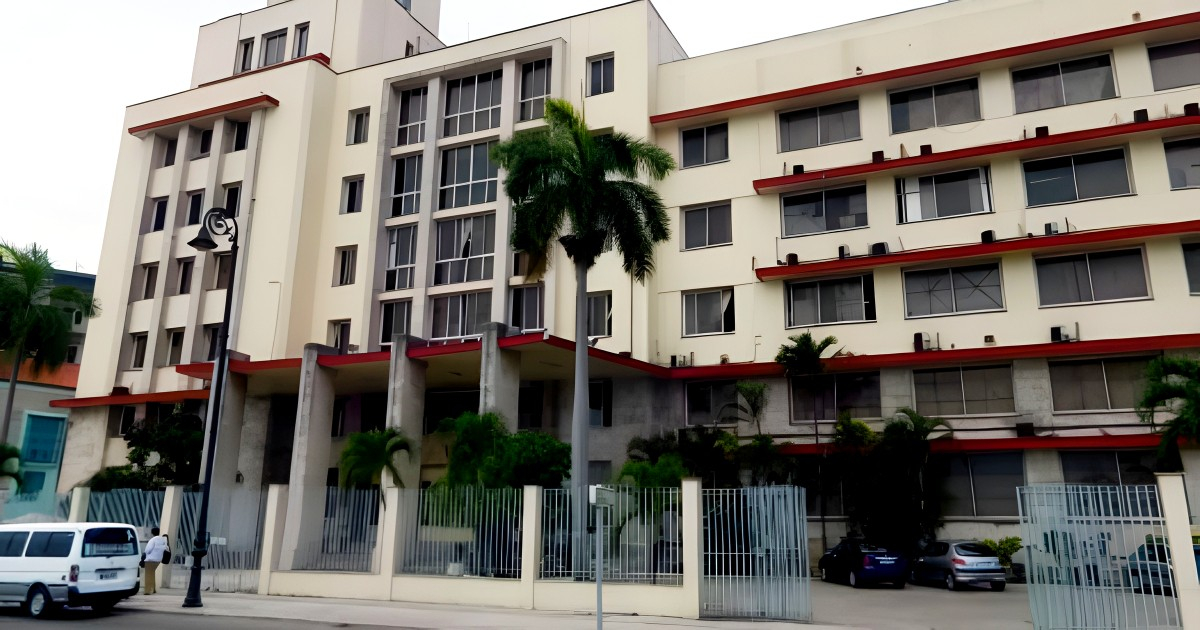
The state-run outlet Cubadebate released a comprehensive analysis this Tuesday, describing the media focus on the Grupo de Administración Empresarial S.A. (GAESA) across social media in May and June 2026 as an "opportunistic digital campaign."
In yet another effort by the regime to safeguard the military conglomerate from Washington's sanctions, the so-called 'Cubadebate Media Observatory' asserts that the digital discourse surrounding GAESA is neither organic nor spontaneous. Instead, it characterizes it as a "political operation initiated from Washington," further amplified by a media ecosystem centered in the United States, particularly Florida.
This analysis surfaces amid an unprecedented surge of pressure from the Trump administration against the conglomerate. On May 1, Trump enacted Executive Order 14404, imposing sanctions against elements of the Cuban state apparatus and paving the way for secondary sanctions on foreign companies engaging with GAESA.
On May 7, Marco Rubio revealed the initial targets: GAESA, its leadership, Brigadier General Ania Guillermina Lastres Morera, and Moa Nickel S.A., all faced restrictions.
The June 5 deadline, requiring foreign businesses to sever ties with GAESA or risk secondary sanctions, led to the withdrawal of several companies from Cuba, intensifying the conglomerate's crisis.
Cubadebate's article represents the third phase in a "damage control" strategy by the regime. On June 2, Granma defended GAESA, rebranding it as "GAE" — dropping the "S.A." designation — in an attempt to refurbish the conglomerate's image. On the same day, Foreign Minister Bruno Rodríguez Parrilla publicly endorsed their "proven efficiency."
Cubadebate's report examines 4,008 posts on platforms such as X, Facebook, Instagram, YouTube, and TikTok between January 1, 2025, and June 14, 2026, concluding that 63.6% of this content appeared solely in May and June 2026, coinciding with the sanctions and Rubio's May 20 video message.
The text argues, "The surge doesn't reflect a gradual evolution of the debate, but a political maneuver aiming to make GAESA the sole emblem of Cuba's problems, thereby justifying further economic, diplomatic, and possibly coercive pressures from the United States."
The document lists this outlet among those it claims are "directly or indirectly funded by federal" U.S. funds, alongside Martí Noticias, Cubanet, and Cubanos por el Mundo — an accusation proven false on multiple occasions.
The regime also attempts to discredit Rubio's May 20 video, where he alleged that GAESA controls 70% of the Cuban economy, holds $18 billion in assets, and pledged a "new relationship" with a "New Cuba" contingent upon free elections and reduced military control over the economy.
Cubadebate maintains that "the campaign against GAESA acts as a communicational extension of the maximum pressure policy: first, the pretext is fabricated, then the sanction is justified, and finally, the idea that more coercion against Cuba is legitimate becomes normalized."
What the regime's analysis neglects to mention is that GAESA serves as the business arm of the Revolutionary Armed Forces, established in the 1990s to generate foreign currency and operates with complete opacity, lacking public transparency. It controls strategic sectors such as tourism, foreign exchange trade, remittances, logistics, and banking, all without the Cuban people's oversight.
Understanding the Implications of GAESA Sanctions
What is GAESA and why is it significant?
GAESA is a military-owned conglomerate in Cuba, crucial for its control over key economic sectors such as tourism, logistics, and banking. It is significant due to its vast influence on Cuba's economy and its ties to the Revolutionary Armed Forces.
Why did the Trump administration impose sanctions on GAESA?
The Trump administration sanctioned GAESA as part of its "maximum pressure" policy, aiming to weaken the Cuban regime's financial resources and compel political reforms by targeting entities with substantial economic power.