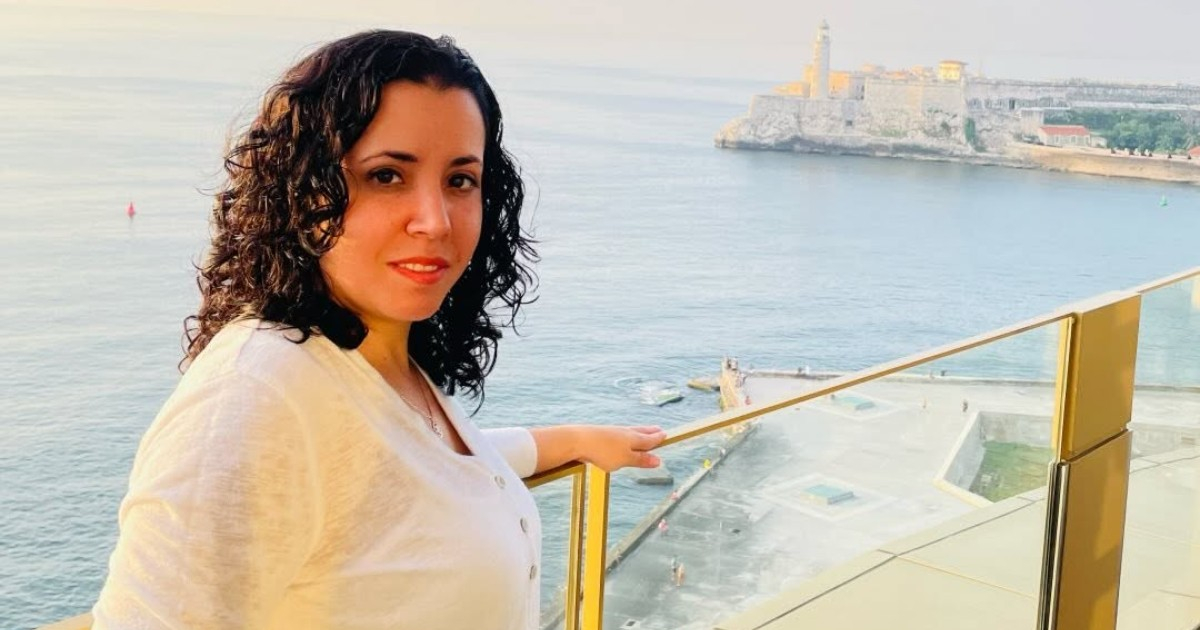
Cuban independent journalist Camila Acosta has been awarded the Manuel Márquez Sterling Non-Fiction Literature Prize 2026 for her work, "Under Siege: Journalism and Resistance in Cuba," as announced by the organizing publishers, Ediciones Memoria and Ediciones Homagno.
The prestigious award followed a rigorous selection process, evaluating 23 valid manuscripts out of the 26 submitted between April 7 and June 1 of this year.
The jury, composed of writer and editor Rafael Almanza, journalist Yoe Suárez—previous winner of the award—and editor Mario Ramírez, praised the work with emphatic remarks in the official statement.
"Camila Acosta presents an invaluable depiction in these journalistic texts, written with clarity and precision, of Cuba under the enduring late-Castro socialism's grind. Yet, this book also portrays Camila herself, the most daring journalist in Cuba today," the verdict states.
The Impact of Acosta’s Work
The statement further highlights how Acosta "coins terms like 'Ley Azote' for the hated Decree-Law 370; covers street protests on July 11th, spends nights in jail, and narrates the physical and emotional fractures of those she accompanied there."
Her awarded book consolidates articles, interviews, reports, and chronicles primarily published in CubaNet News and the Spanish newspaper ABC between 2020 and the early months of 2026, addressing events such as the protests on November 27th, July 11th, and November 15th.
Contributions and Challenges
The work includes testimonies from dissenters like Rosa María Payá and Berta Soler, political prisoners such as Luis Manuel Otero Alcántara and Félix Navarro, and cultural figures like writer Zoé Valdés and singer Haydee Milanés.
Born in Isla de la Juventud in 1993, Acosta is a Journalism graduate from the University of Havana and has been practicing independent journalism since August 2019, contributing to The New York Times, CubaNet, and the Spanish daily ABC, where she serves as a correspondent in Havana.
Perseverance in the Face of Repression
Her career has been marked by systematic oppression. She was arrested on July 12, 2021, while covering the July 11th protests and endured over ten months of house arrest under accusations of "public disorder" and "inciting to commit crimes." Her case concluded in May 2022 with a fine of 1,000 Cuban pesos.
Independent organizations recorded five assaults against her in 2024 and four in the early months of 2025. Days before receiving the award, Acosta released a video publicly exposing a State Security agent surveilling her.
Acosta expressed her thoughts on the award through a social media post, describing her work: "Doing independent journalism in Cuba not only means facing physical and psychological harassment from the dictatorship, it is also an act of resistance and survival."
The award commemorates Manuel Márquez Sterling, one of the foremost Cuban intellectuals and diplomats of the Republic, whose grandson and academic, Manuel Márquez Sterling Jr., passed away in 2022.
Acosta announced that the book will soon be available on Amazon and concluded her message with a reflection on the historical significance of her work: "When the recent history of Cuba is written, referencing independent press reports will be indispensable."
Understanding Camila Acosta's Achievement and Challenges
What is the significance of Camila Acosta winning the Manuel Márquez Sterling Award?
Camila Acosta's recognition with the Manuel Márquez Sterling Award highlights her courage and dedication to independent journalism in Cuba, providing an invaluable perspective on the country's current socio-political landscape.
What challenges has Camila Acosta faced in her journalism career?
Camila Acosta has endured systematic repression, including arrest and house arrest, while covering protests and dissent in Cuba. Her persistence in reporting under such conditions underscores her resilience and commitment to the truth.