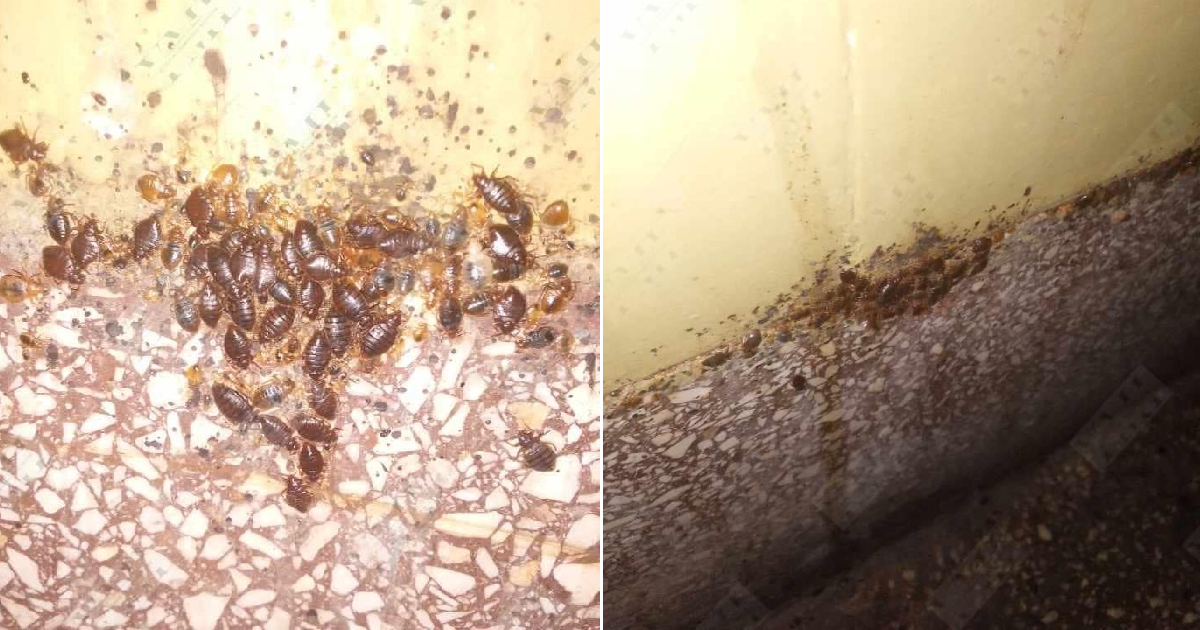
A Facebook post has brought to light a severe bedbug infestation at the José Ramón López Tabrane Teaching Hospital of Gynecology and Obstetrics, commonly known as the Maternity Hospital in Matanzas. This alarming situation exposes pregnant women and newborns to highly unsanitary conditions.
Yobel Vega, the author of the post, used irony to describe the situation: "If bedbugs generated electricity, the current Maternity Hospital in Matanzas would be one of the most efficient power plants."
Vega further commented that the insects "almost lift pregnant women off their feet" and demanded that provincial leaders address these "minor issues."
The post sparked a flood of testimonies from citizens confirming the deplorable state of the facility.
Alarming Reports from Patients and Staff
Yanisleidys Bacallao recounted her experience of giving birth at the hospital five months ago: "The air conditioning was broken, cockroaches roamed over the beds. I had to shout at the orderly to remove one from my foot because I couldn't move it due to the anesthesia. The bathrooms were clogged, without water, the elevator has been broken for years, and there were no cotton or gauze. It's an infection risk for newborns and mothers."
Marlen Vázquez added her voice to the complaints: "That hospital has always been a disgusting mess. When my daughter was admitted, mice ate her breakfast cookies, and cockroaches swarmed the nightstands by the thousands."
Yisel Enseñat, a healthcare worker, warned that the issue extends beyond just this hospital: "It's the same here where I work, and in all the hospitals across the province."
Widespread Infestation in Matanzas
Aleida García Castellanos confirmed that the infestation spills over the hospital's walls: "There is a severe bedbug problem in Matanzas, not only in homes but also in hospital facilities, with no action from the authorities."
The deterioration of the Matanzas maternity hospital is not a new problem. Yanelys Ortiz Hernández noted that "this issue and the elevator problem have been unresolved for years," while Julia E. Page Dávila pointed out that "all four corners of the hospital are surrounded by trash heaps, including the hospital's own."
Back in August 2025, reports already highlighted accumulated trash for almost a month, cockroaches, stagnant urine, and dirty utensils at the same center.
Infestation: A Growing National Crisis
The bedbug infestation has spread to multiple Cuban provinces over the past two years. In July 2025, an infestation was documented at the Gustavo Machín Psychiatric Hospital in Santiago de Cuba; by August of the same year, infested mattresses were found at the Lenin Hospital in Holguín. Recently, a Cuban mother had to burn her belongings to rid herself of the insects. In none of these cases has there been an official response from the Ministry of Public Health.
In April 2026, Matanzas province itself issued a health alert for hepatitis A directly linked to accumulated trash and the spread of vectors like rats, cockroaches, and flies, underscoring the sanitary collapse from which this new complaint arises.
Isela Reyes Aguilar summed up the gravity of the situation: "Many laugh, but they don't realize how dangerous a bedbug bite is. Authorities should take this seriously, especially in a place where children are born."
Understanding the Bedbug Crisis in Cuban Hospitals
What is the current situation at the Maternity Hospital in Matanzas?
The Maternity Hospital in Matanzas is facing a severe bedbug infestation, exposing patients to unsanitary conditions. This has been corroborated by multiple testimonies from citizens and healthcare workers.
Have similar infestations been reported in other Cuban hospitals?
Yes, infestations have been reported in other hospitals across Cuba, including the Gustavo Machín Psychiatric Hospital in Santiago de Cuba and the Lenin Hospital in Holguín, with no official response from the Ministry of Public Health.
What risks do these infestations pose to patients?
The infestations pose significant health risks, including the potential for infections due to unsanitary conditions, particularly affecting newborns and mothers in maternity hospitals.