Hilda Landrove, a prominent Cuban researcher and essayist, shared a critical analysis on Facebook dissecting the latest batch of economic reforms unveiled by President Miguel Díaz-Canel. She dismissed these as empty promises, likening them to lyrics from a Joaquín Sabina song, arriving "poorly and late."
Landrove, currently residing in Mexico and holding a Ph.D. in Mesoamerican Studies from UNAM, directly addressed Díaz-Canel's announcement of an Economic and Social Program targeting 2026. This plan outlines six major pillars: economic management systems, municipal autonomy, business independence, agricultural recovery, foreign trade, and foreign investment.
Among the most notable proposals is the allowance for municipalities to engage in import and export activities without intermediaries. Additionally, state enterprises would have the autonomy to retain foreign currency, small and medium-sized enterprises (MIPYMES) with pending files would finally receive approval, and Cuban expatriates might even manage hotels.
Yet, Landrove remains unconvinced that these announcements alter the underlying issues, asserting, "The system is beyond reform. It cannot be reformed because there can be no economy without politics, and there is no intention to return autonomy and rights to Cuban society."
She highlights a historical pattern that seemingly repeats itself: "They are back at it, changing everything that might sound like change to avoid changing anything." She further explains that "our lives have literally been spent listening to countless versions of 'now we will finally build socialism' or whatever else they've thought to construct or reconstruct."
This accumulation of unfulfilled promises is captured in her poignant metaphor: "When they talk about construction, all we hear is the soundtrack of endless destruction."
Analysts Share Landrove's Skepticism
Landrove's skepticism is echoed by other analysts. Manuel Cuesta Morúa referred to the reforms as "belated Chinese reforms," while Carlos Saladrigas warned that without political changes, serious investment is unlikely, and laws will remain "meaningless." Julio Aliaga Pesant also noted the announcement lacks sufficient legal grounding, having been presented before formal approval by the Political Bureau and the National Assembly, expected in July.
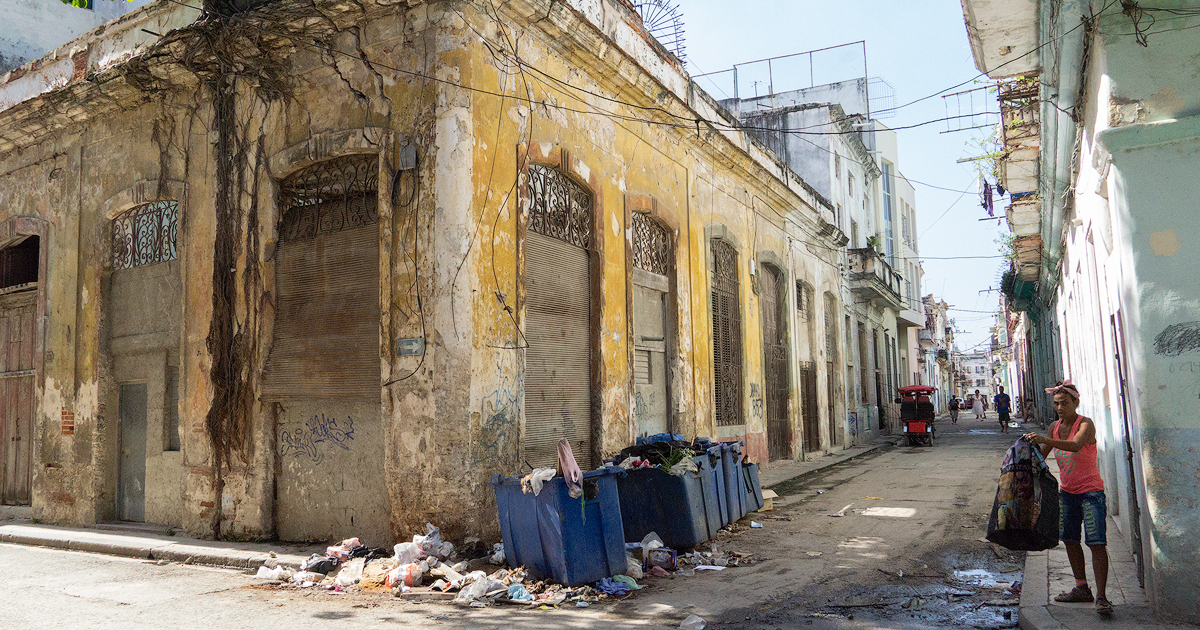
The backdrop for these reforms is Cuba's most severe economic crisis since the Special Period. The country is facing a projected GDP contraction of 7.2% in 2026, with an accumulated decline of nearly 23% since 2019. Power shortages exceed 2,150 MW, leading to outages lasting over 30 to 40 consecutive hours in some areas. Díaz-Canel himself admitted that only one oil tanker arrived in Cuba over the past five months.
Additionally, approximately 2.7 million people lack regular access to potable water, and year-on-year inflation stood at 13.42% in March 2026. The number of MIPYMES, which once surpassed 11,300, saw its first decline in 2025, indicating a deteriorating environment for private businesses.
Landrove's Consistent Critique of the Regime
Landrove has consistently critiqued the regime's narrative. In May, she described the May Day parade as "more akin to staging a corpse" than a genuine display of revolutionary fervor. Her critical voice spans from the 1990s Special Period, through Raúl Castro's guidelines starting in 2008, to the 2021 "Ordering" of the currency, which unleashed rampant inflation without altering the state's political-economic control structure.
She concluded her post with a sentiment capturing the generational fatigue: "Of course, there will be headlines claiming that now it will happen, but we are so tired of those too."
Understanding Cuba's Economic Challenges
What are the main pillars of Cuba's new Economic and Social Program?
The program focuses on economic management systems, municipal autonomy, business independence, agricultural recovery, foreign trade, and foreign investment.
Why does Hilda Landrove criticize these economic reforms?
Landrove believes the reforms are superficial and do not address the core issue, which is the lack of political will to return autonomy and rights to the Cuban people.
What challenges are currently facing Cuba's economy?
Cuba is experiencing a severe economic crisis, with a projected GDP contraction, significant power shortages, inflation, and a decline in private business operations.