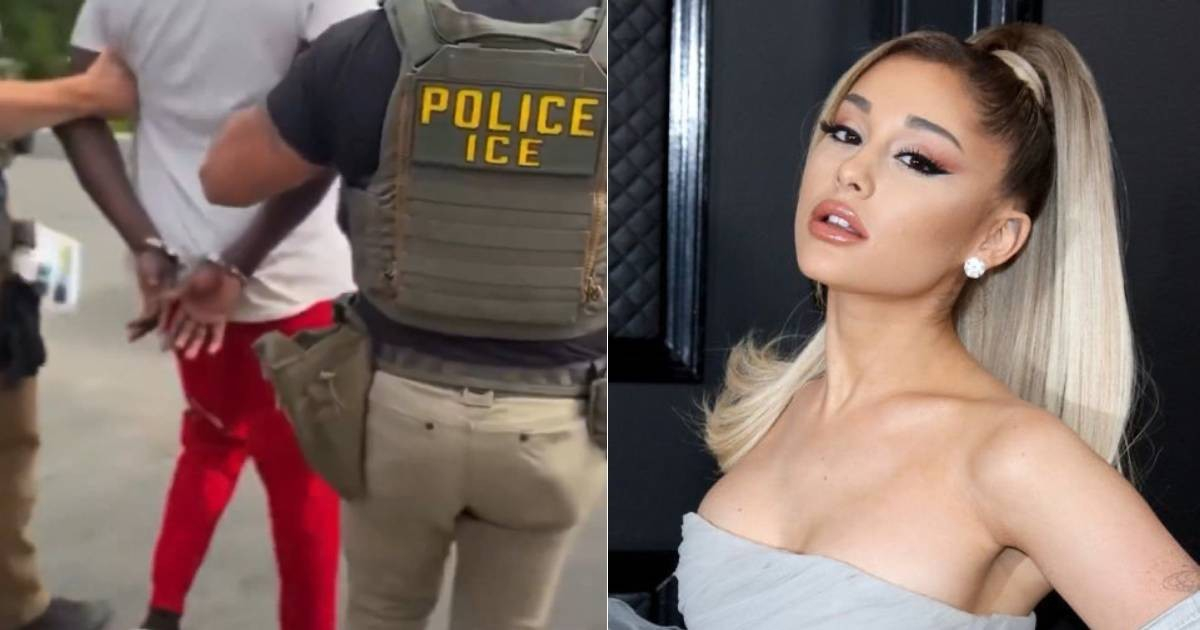
Pop star Ariana Grande has demanded that the White House remove her song "Bye" from a TikTok video showcasing Immigration and Customs Enforcement (ICE) officers handcuffing migrants. Grande delivered a clear and direct message: "Please, do not use my music for this barbarism, inhumanity, and atrocity. Screw ICE."
The video, released on June 11 from the official White House TikTok account, featured the lyrics "Bye Bye, boy bye, bye bye, it's over it's over oh yeah" as the soundtrack to scenes of arrests, accompanied by the caption: "Bye-bye President Trump has achieved the most secure border in history."
From the album Eternal Sunshine, the song reached the 25th position on the Billboard Hot 100 and went viral on social media, making it an appealing target for the administration's communication strategy.
Grande's attempts to voice her objection in the video's comments section led to the removal of her messages by the White House.
Refusing to be silenced, the singer repeatedly posted her comment and shared screenshots as proof of the systematic deletion.
Her team also pursued legal action to enforce copyright, successfully blocking the audio from the video.
Hours later, the video was silenced and eventually taken down from the White House's profile, although many users managed to share it across their social networks.
White House spokesperson Abigail Jackson responded with a statement, as reported by Milenio: "We will say this one last time: what is truly barbaric, inhuman, and atrocious are the criminal illegal aliens who have hurt and murdered innocent American citizens."
This incident is not isolated. In recent months, the Trump administration has systematically used viral songs to accompany immigration operation videos without artists' consent.
Artists like Sabrina Carpenter, Olivia Rodrigo, SZA, Billie Eilish, Lady Gaga, and MGMT have publicly protested against the unauthorized use of their music in ICE or Department of Homeland Security content.
Carpenter described the use of her song "Juno" as "evil and disgusting," while Rodrigo condemned the use of her track "all-american bitch" in a self-deportation video, denouncing ICE's actions as "unthinkable."
This controversy arises amidst a policy of maximum immigration pressure: since January 2025, the Trump administration has conducted over 605,000 deportations and 1.9 million self-deportations, with ICE capable of detaining up to 72,000 individuals.
Even the border czar, Tom Homan, admitted that 35% to 40% of detainees have no criminal record.
The incident occurred just days after Grande kicked off her The Eternal Sunshine Tour on June 6 at the Oakland Arena, drawing over 17,000 fans, which placed her at the height of public visibility. Some analysts speculate that this may have influenced the White House's choice to use her music.
This is not the first time an artist has clashed with the administration: in January 2025, Selena Gomez released a video in tears over ICE raids, to which the White House responded with their own video featuring mothers claiming their children were victims of undocumented immigrants.
Understanding the Conflict Between Artists and the White House
Why did Ariana Grande oppose the use of her song in the ICE video?
Ariana Grande opposed the use of her song in the ICE video because she felt it was being used to support actions she described as barbaric, inhumane, and atrocious.
What steps did Grande's team take to address the issue?
Grande's team took legal action to enforce copyright and successfully blocked the audio from the video, leading to its removal from the White House's TikTok account.
Have other artists experienced similar issues with the administration?
Yes, other artists like Sabrina Carpenter, Olivia Rodrigo, and Billie Eilish have also protested the unauthorized use of their music in ICE and Department of Homeland Security videos.