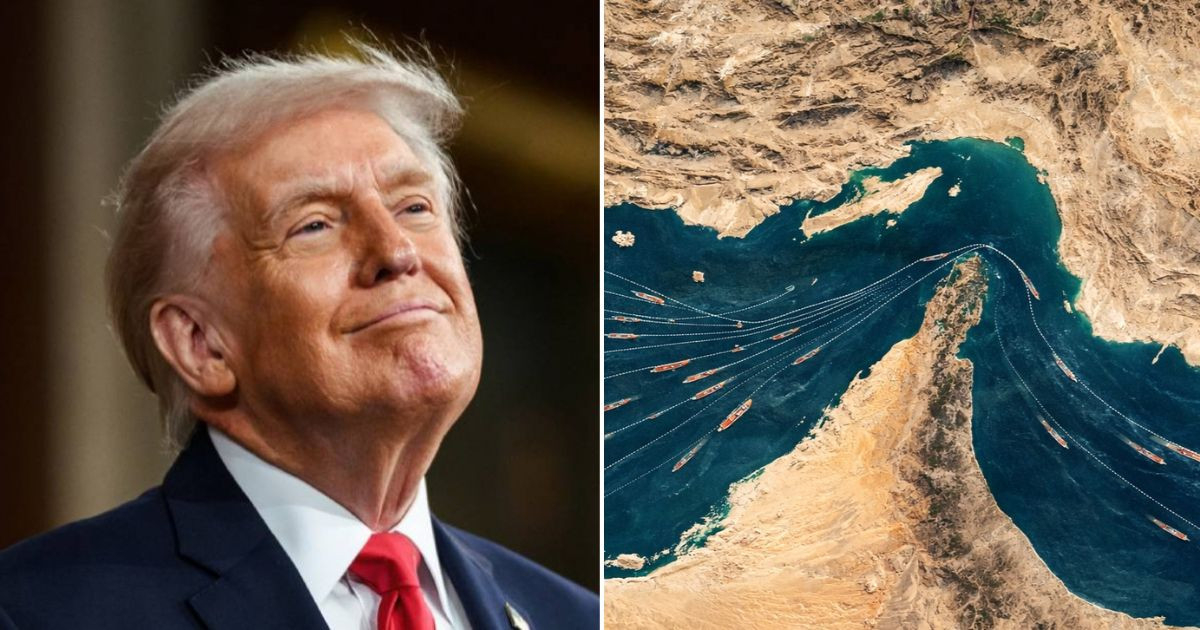
On Sunday, President Donald Trump took to his social media platform, Truth Social, to announce that an agreement with Iran had been finalized. He promptly authorized the unblocking of the Strait of Hormuz and the lifting of the U.S. naval blockade.
"The deal with the Islamic Republic of Iran is now finalized. Congratulations to all involved! I hereby fully authorize the unrestricted reopening of the Strait of Hormuz and the immediate lifting of the United States naval blockade. Ships of the world: start your engines! Let the oil flow!" wrote Trump.
Just moments before Trump's announcement, Pakistan's Prime Minister, Shehbaz Sharif, who served as the official mediator, declared on X that a peace agreement had been "REACHED" with an immediate and permanent halt to military operations on all fronts, including Lebanon.
The official signing ceremony is scheduled for Friday, June 19, in Switzerland, Sharif announced, expressing gratitude for the contributions from Qatar, Saudi Arabia, and Turkey in the negotiation process.
Heightened Tensions Before the Accord
The announcement followed a day marked by intense diplomatic tension. Earlier that day, Israel bombed Dahiyeh, a southern suburb of Beirut, resulting in at least two fatalities and four injuries. The Israeli Defense Forces described the attack as a "precise" strike against a Hezbollah command center.
Iran's chief negotiator, Mohammad Baqer Qalibaf, strongly condemned the bombardment: "You either lack the will to fulfill your commitments or the capability. If you cannot fulfill your obligations, discussing further progress is pointless."
Trump acknowledged in a conversation with Axios that the Israeli attack had complicated the negotiations: "It shook things up and delayed the signing by a few hours. It was supposed to happen now."
The U.S. president publicly called on Israel to stop its strikes in Lebanon and urged Hezbollah to refrain from retaliating, noting that they were "very close to reaching a deal that would bring peace to the region."
Background of the Conflict
This agreement marks the end of a conflict that began on February 28, 2026, with a coordinated aerial offensive by the United States and Israel, dubbed "Operation Epic Fury," targeting Iranian nuclear and military sites.
In response, Iran launched missiles and drones and closed the Strait of Hormuz, a critical passageway for about 20% of the world's oil supply, sparking a global energy crisis. The United States initiated a naval blockade on April 13, 2026.
According to a draft leaked to Reuters, the accord includes the suspension of Iran's nuclear program—pledging not to produce nuclear weapons under the Non-Proliferation Treaty and agreeing to destroy highly enriched materials—in exchange for lifting sanctions on Iranian oil and releasing $24 billion in frozen assets, with a 60-day period to negotiate final terms.
Iran had halted negotiations on June 1 due to Israeli attacks in Lebanon and on June 8 declared a pause in military operations, contingent upon Israel ceasing its activities in Lebanese territory.
As of late Sunday, Tehran had not issued an official confirmation of the agreement, although Iranian President Masoud Pezeshkian mentioned that the Supreme National Security Council concluded that "the path of dialogue must continue."
Frequently Asked Questions about the Iran Deal and Strait of Hormuz
What does the Iran deal involve?
The deal involves the suspension of Iran's nuclear program, with a commitment not to produce nuclear weapons and to destroy highly enriched materials, in exchange for lifting sanctions on Iranian oil and releasing frozen assets.
Why is the Strait of Hormuz significant?
The Strait of Hormuz is a strategic waterway through which about 20% of the world's oil supply passes. Its closure can lead to significant disruptions in global oil markets.
What was Operation Epic Fury?
Operation Epic Fury was a coordinated aerial offensive by the United States and Israel targeting Iranian nuclear and military facilities, marking the beginning of the conflict.
How did Israel's attacks in Lebanon affect the negotiations?
Israel's attacks in Lebanon complicated the negotiations, causing delays and increasing tensions, but ultimately did not prevent the finalization of the agreement.