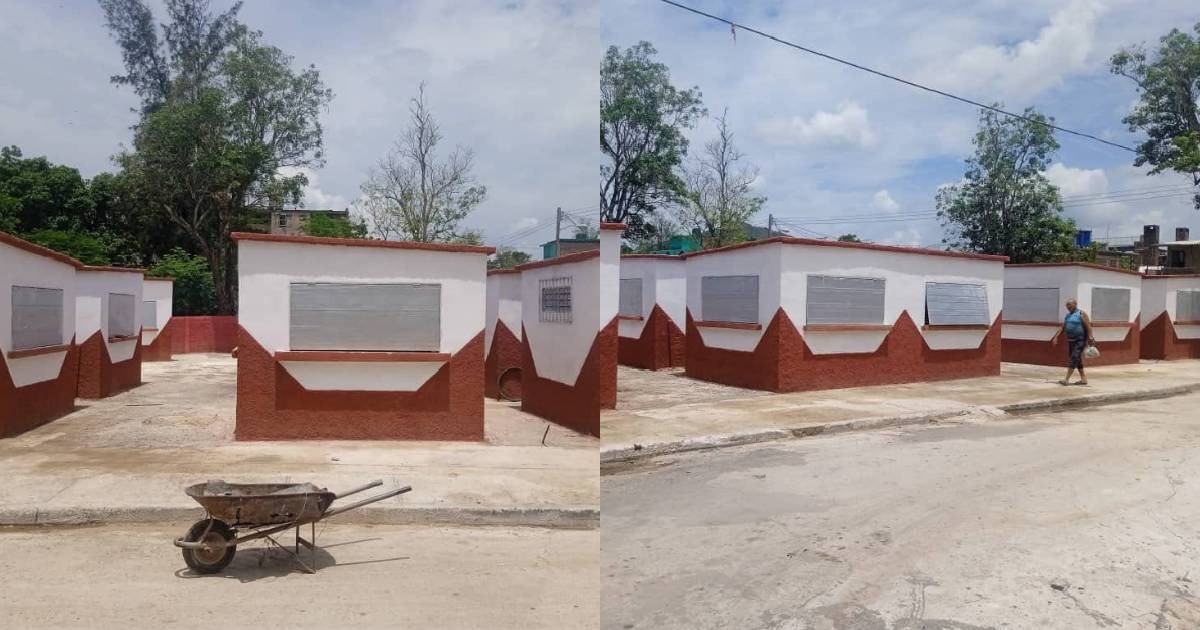
Recent images circulating on social media reveal the new kiosks that are set to replace the informal market known as Los Chinos in the Lenin district of Holguín. This comes after authorities evicted small businesses and street vendors from the area last Thursday.
The Facebook page "Holguín Memories" shared photos of the new structures located on Cuba Street, near the hospital. These units feature flat roofs, white upper walls with a terracotta base adorned with triangular designs, and are equipped with silver metal shutters, all aligned on freshly paved concrete.
Renting one of these kiosks will cost around two million Cuban pesos, yet despite this hefty price, tenants will never own the space, as noted in the post.
A conversation in the comments clarified this misconception. "I thought paying that price meant you owned it," one user expressed.
The reply was clear: "Wrong, my friend. You only get the right to sell. If you stop being self-employed, the state reclaims it."
Mixed Reactions to New Market Structures
The public response to these images has been mixed. Some praise the reorganization, highlighting the aesthetic improvement and removal of the small illegal dump that previously existed there.
"The dump is gone, it enhances the urban look of the area, and solves a service issue for the community," one commenter noted, while suggesting the project should include pedestrian paths, greenery, pergolas, and lighting.
However, others are concerned about the financial impact on consumers. "The people will end up paying for this... brace yourselves for higher prices," one user summarized.
The worry is straightforward: if vendors are shouldering a two-million-peso rent for a space they don't own, they will inevitably pass this cost onto the products they sell.
"Two million is outrageous. Evicting them for misconduct, lack of hygiene, and other issues is one thing, but I can't believe the rent is that high. It's like the saying goes: working for the English," another resident remarked.
Economic and Environmental Concerns
Several comments also criticized the absence of trees in the design. "No room for trees, what were they thinking?" one user questioned.
"Today we complain about the lack of hygiene, rightfully so, but tomorrow we'll be upset about the high food prices and the absence of all those vendors," predicted a neighbor from the Lenin district.
This eviction and market overhaul come at a particularly challenging time in terms of food availability. Los Chinos was the largest food distribution point in the province, and its closure has impacted over 350 vendors who have been unable to conduct business for nearly two weeks due to previous restrictions.
The situation is dire, with about 97% of the Cuban population lacking adequate access to food, according to the Food Monitor Program, and nearly 34% of households reporting that someone went to bed hungry last month.
The Minister of the Food Industry admitted on state television that they had been unable to distribute oil, chicken, or yogurt through the ration book system all year.
FAQs on Holguín's Market Changes
Why are the new kiosks in Holguín so expensive to rent?
The kiosks are priced at two million Cuban pesos due to their new construction and strategic location. However, this cost does not confer ownership, only the right to sell.
What are the public's views on the changes in Holguín's market?
Opinions are divided; some appreciate the improved aesthetics and organization, while others worry about the impact of high rents on consumer prices.
How does the market's closure affect food availability in Holguín?
The closure of Los Chinos, the largest food access point in the province, has left over 350 vendors without a venue, exacerbating food scarcity in a region already struggling with supply issues.