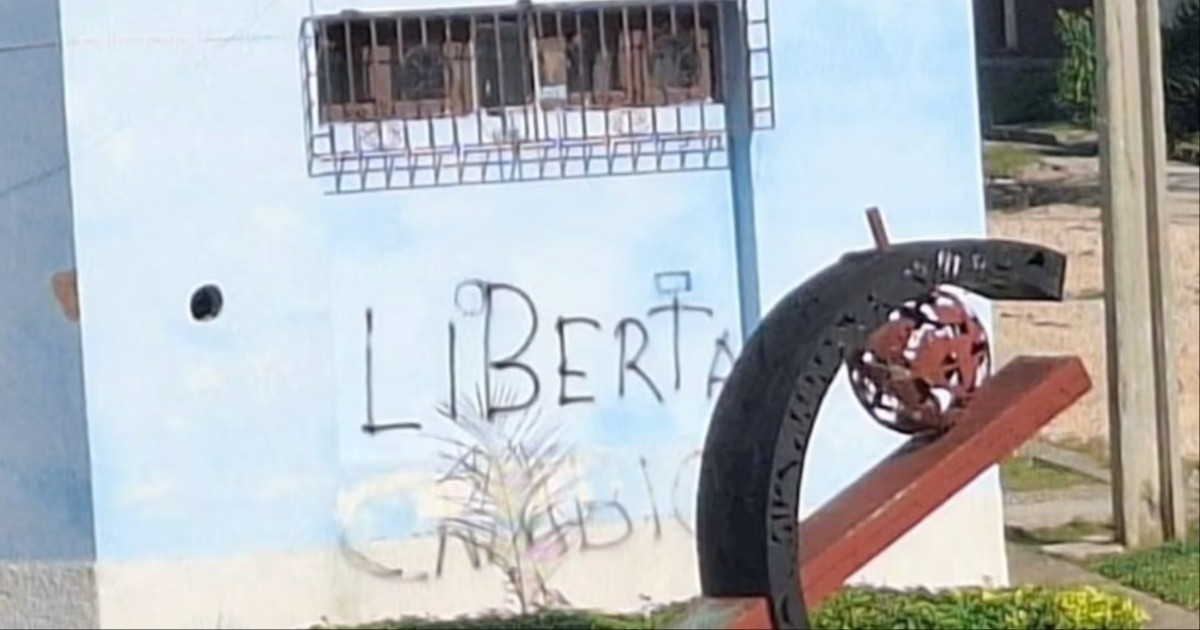
State Security in Cuba has intensified harassment and intimidation against families of political prisoners and activists in Santa Clara and Contramaestre. This crackdown comes after an increase in anti-government posters and graffiti demanding an end to the dictatorship appeared on the streets of these areas.
On Friday, June 12, Margarita Márquez Blanco was unexpectedly summoned to the 5th police unit in Santa Clara. She waited for thirty minutes before being questioned by two State Security officers who mixed false friendliness with direct threats, according to a report by Martí Noticias.
Márquez Blanco cares for two minors and is the wife and stepmother of two political prisoners: Serguey Pozo Tagle and his son Yamislán Pozo Águila. They have been detained since February 2025, accused of "propaganda against the constitutional order" for distributing leaflets with the slogan CubaPrimero on main roads in Santa Clara, calling for a "zero day" of protest.
Márquez Blanco explained the purpose of the interrogation: "They keep threatening me because every now and then, from one end of Santa Clara to the other, the town wakes up covered in little posters and they have no idea who's putting them up. So, they threaten whoever they think might be an activist and summon them to extract information."
The prosecution has requested a seven-year prison sentence for Serguey Pozo Tagle and six years for his son. As of December 15, 2025, the Provincial Court of Villa Clara has concluded the trial but has not yet issued a final verdict.
Despite the arrest of these activists, protest messages continue to flood Santa Clara, evading the heavy police presence and demonstrating that repression has not silenced public dissent.
Unrest Spreads to Contramaestre
In the eastern municipality of Contramaestre, a similar situation has persisted for several weeks, as reported by local sources.
Residents, speaking anonymously due to fear of reprisals, describe a surge of posters and graffiti on private buildings and public roads with slogans demanding the Communist Party's ouster, advocating for political transition, and urging residents to take to the streets.
One resident, wishing to remain anonymous, summarized the situation: "Contramaestre is on fire: Posters everywhere. The roads are covered. In front of my son's house, everything was scribbled on and posters were put up."
Widespread Protests in Santiago de Cuba
This phenomenon is part of growing unrest in Santiago de Cuba. On June 12, residents of the José Martí Urban Center protested for electricity, food, and freedom. Additionally, a mother in Altamira reported police repression with batons against mothers and children during a similar protest over the weekend.
The practice of summoning family members of political prisoners as a pressure tactic is systematic. In April 2026, State Security summoned three ex-prisoners from the July 11th protests a day after they posted a plea for another prisoner's release on social media.
The Cuban Conflict Observatory recorded a record 41 anti-government graffiti and posters in June 2026, the highest monthly count since it began tracking them in September 2020. This occurred amid an energy crisis with blackouts lasting 50-80 hours and 1,311 protests recorded in May across the island.
Understanding the Current Climate in Cuba
What triggered the recent wave of protests in Santa Clara and Contramaestre?
The protests were triggered by widespread discontent with the regime, as evidenced by anti-government posters and graffiti demanding political change and the end of the dictatorship.
How has the Cuban government responded to the protests?
The government has responded with increased harassment and intimidation of activists and their families, as well as a heavy police presence aiming to suppress the dissent.
Why are political prisoners' families being targeted by State Security?
Targeting the families of political prisoners is a pressure tactic used by State Security to extract information and deter further activism by creating fear and uncertainty.