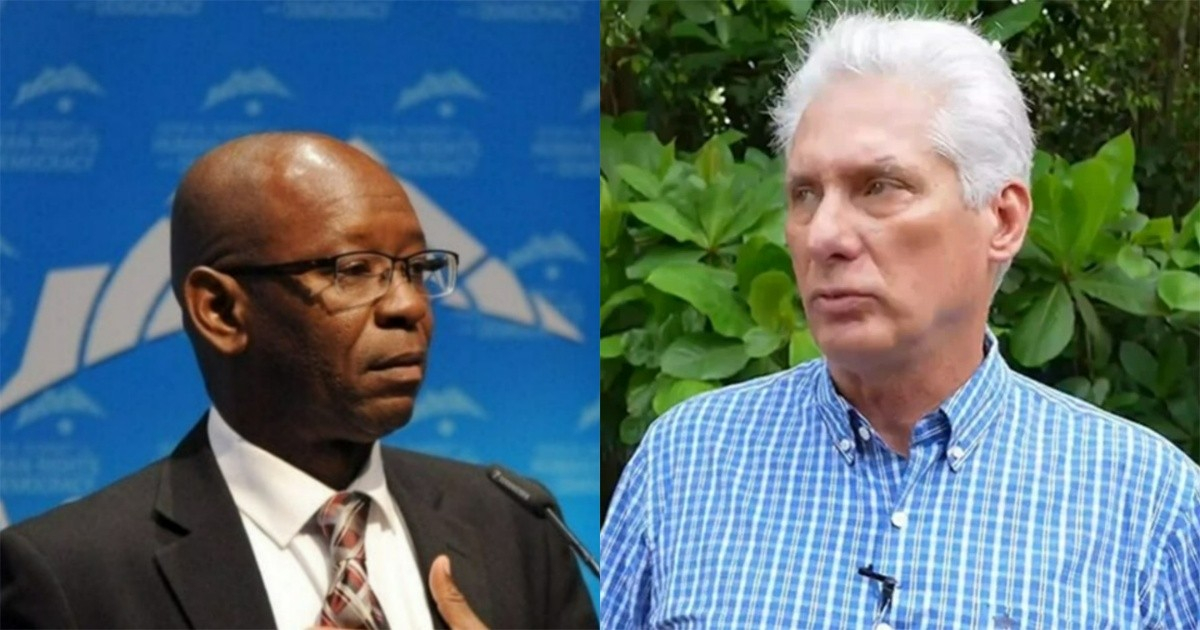
The opposition leader Manuel Cuesta Morúa succinctly captured the sentiment around the economic reform package announced last Friday by Miguel Díaz-Canel: "delayed Chinese reforms." This phrase encapsulates the widespread skepticism with which analysts, opponents, and citizens have received the measures unveiled to the press last Thursday.
The reform package gives municipal governments the authority to manage local enterprises directly, make decisions regarding economic actors within their territories, and attract foreign investment, including from Cuban expatriates. Municipalities will also gain powers to import, export, and manage their own foreign exchange without intermediaries, while state-owned enterprises will operate autonomously. The plan also includes reducing the number of ministries, facilitating land use for farmers, and providing tariff incentives for purchasing productive inputs.
Cuesta Morúa, who leads the Council for Democratic Transition in Cuba, was particularly outspoken in his criticism. "The first step should be to include all Cubans in the process. Secondly, establish an institutional climate of trust through deep legal and constitutional reforms, which are essential for ensuring people's security and prosperity. This is done on the fly. I remain skeptical and cautious unless there are also reforms in civil and political arenas, which the country desperately needs," he remarked to Martí Noticias, which gathered opinions from multiple civil society representatives.
From Havana, analyst and activist Julio Aliaga Pesant highlighted the lack of legal backing for the announcement and questioned the state of the leader presenting it. "He appears unhinged, completely worn out. He's my age, 66. Moreover, the measures he claims to be implementing lack a legal framework to protect and support the investments and openings being discussed. This is poorly executed, late, and shoddily done," Aliaga Pesant stated.
Independent journalist Guillermo del Sol, reporting from Villa Clara, likened the announcement to the unsuccessful Tarea Ordenamiento initiated in 2021 under Marino Murillo's technical direction, which the regime itself acknowledged as a failure by December 2023. "It's the same rhetoric Marino Murillo used during the Tarea Ordenamiento; it's just another farce," Del Sol asserted.
Economist Pedro Monreal had previously warned in May that Cuba "missed the train of reforms seen in China and Vietnam," indicating that conditions no longer support replicating such a model of controlled openness and labeling the package as "belated pragmatism." Cuban-American entrepreneur Carlos Saladrigas was blunt: sustainable investment in Cuba is impossible without political change and an independent judiciary.
These reforms come amid Cuba's most dire economic crisis in decades: the economy has shrunk by approximately 23% since 2019, with a further projected decline of 7.2% by 2026, according to The Economist Intelligence Unit. The country is also grappling with prolonged blackouts, and shortages of food, medicine, and fuel.
The measures are still awaiting formal approval by the Political Bureau and the National Assembly, scheduled for July 2026, meaning they are not yet definitive as Díaz-Canel presented them to the press.
Key Questions on Cuba's Economic Reforms
What are the main changes proposed in Díaz-Canel's economic reform package?
The reform package grants municipal governments the power to manage local businesses, make economic decisions, attract foreign investment, and manage foreign exchange independently. It also includes reducing ministries, facilitating land use for farmers, and providing tariff incentives.
Why are these reforms being met with skepticism?
Critics argue the reforms lack legal backing and are poorly executed. There is also concern that without accompanying civil and political reforms, these economic measures will not effectively address Cuba's deep-rooted issues.
How do these reforms compare to previous efforts like the Tarea Ordenamiento?
The reforms have been compared to the Tarea Ordenamiento, a previous initiative that failed to achieve its goals. Critics see parallels in the rhetoric and execution, fearing similar ineffectiveness.
What is the current economic situation in Cuba?
Cuba is experiencing its worst economic crisis in decades, with a 23% contraction since 2019 and a projected further decline. The country faces severe shortages and infrastructure challenges.