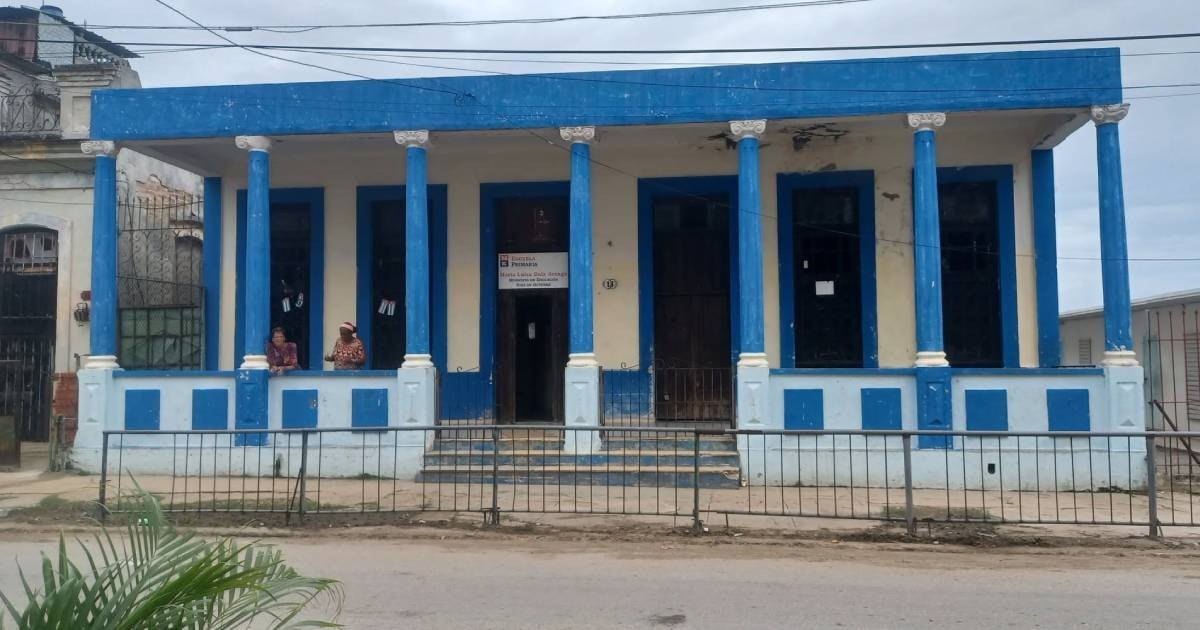
A Cuban mother has publicly voiced her outrage as her seven-year-old daughter is forced to repeat the second grade, a consequence of enduring years of systemic failures in Cuba's education system. Plagued by teacher shortages, lack of educational materials, frequent power outages, and administrative inaction, the system has left students like her daughter struggling.
Leticia Jiménez took to Facebook to share her story, revealing that her daughter attends María Luisa Dolz Elementary School in La Habana's Diez de Octubre municipality. According to Jiménez, the young girl was held back after enduring three years rife with irregularities that severely impacted her learning experience.
In her post, shared on June 12, Jiménez expressed her frustration, questioning, "What did I do wrong, or what did my child do wrong, to bear the consequences in a country where there's never electricity for these kids to sleep?" Her poignant words quickly garnered attention on social media.
A Struggle from the Start
Jiménez's account highlights a progressive decline in educational conditions since preschool. The first teacher left just a month into the school year due to pregnancy. Her replacement was accused by several parents of taking snacks meant for the students. Despite complaints, the school's administration remained inactive until a confrontation with a parent led to the teacher's departure.
Continued Challenges in First Grade
The difficulties persisted into first grade. The class of 26 students went months without a stable teacher until an elderly instructor, nearly 80 years old, was assigned. The school principal justified this choice by noting the teacher's need to work to supplement her income. However, after falling ill with chikungunya, the teacher's physical limitations further hindered her ability to teach.
Second Grade Setbacks
Second grade offered no respite. The young girl never received her appropriate textbooks. When Jiménez raised concerns, the administration promised to source materials from another school and ensure assignments were completed on-site. Yet, these assurances were never fulfilled.
Compounding the educational shortcomings were ongoing power outages, water shortages, and everyday struggles faced by Cuban families trying to provide rest and nourishment for their children.
A Widespread Educational Crisis
Leticia's story shines a light on an educational crisis affecting the entire country. Due to energy shortages, fuel scarcity, and transportation issues, Cuban authorities opted to conclude the 2025-2026 school year prematurely between June 15 and 30.
The education system also grapples with a severe teacher shortage. Official data indicates that Cuba began the 2024-2025 school year with a deficit of 24,000 teachers, accounting for 12.5% of the needed positions. This shortage remains acute in several provinces, with thousands of positions still unfilled, leaving educational coverage far short of actual requirements.
Energy crises have also directly disrupted the academic calendar. Recently, entrance exams for pre-university were suspended in certain provinces, and university entrance exams for the 2026-2027 academic year were replaced with students' cumulative academic averages.
Looking Ahead
Despite the setbacks, Jiménez has decided not to transfer her daughter to another school. Instead, she plans to document the absences, arrival times, and performance of school staff during the upcoming academic year.
Her narrative concludes with a sentiment echoed by many Cuban families facing similar challenges: "There are no teachers like those I had in my childhood, who loved being educators, teaching children, and shaping them for a better future. It saddens me that we have nothing left; everything has been taken from us."
Understanding Cuba's Educational Challenges
What are the primary issues affecting the Cuban education system?
The Cuban education system is currently facing severe challenges, including teacher shortages, lack of educational materials, frequent power outages, and administrative inaction, all of which significantly affect the quality of education.
How are energy shortages impacting Cuban schools?
Energy shortages have led to frequent power outages, which disrupt school activities and the academic calendar. This situation has forced the early closure of the school year and affected the scheduling of crucial exams.
What steps are being taken to address the teacher shortage in Cuba?
Currently, the Cuban government has not effectively addressed the teacher shortage, with thousands of positions still unfilled. The shortage remains a critical issue across various provinces.