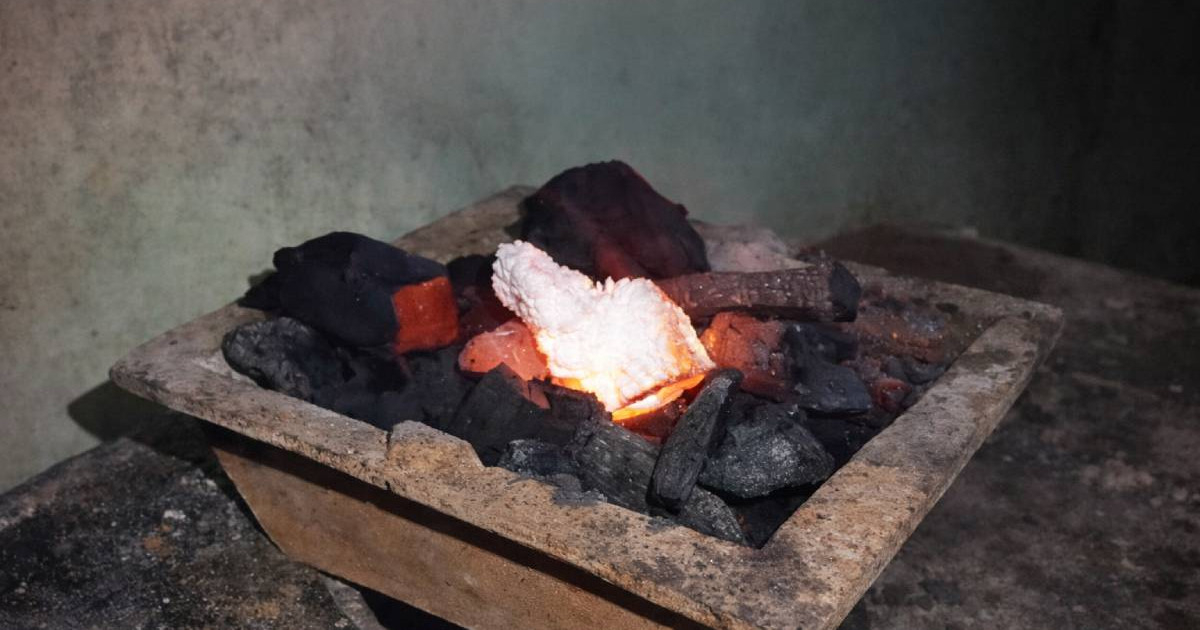
A nine-month-old baby suffered significant burns this past Saturday on Vargas Street, nestled between San Antonio and San Ricardo, in central Santiago de Cuba. The incident occurred as the family was cooking with charcoal during one of the prolonged power outages plaguing the province.
According to accounts gathered by independent journalist Yosmany Mayeta Labrada from local residents, sparks from the makeshift stove reached the chair where the infant was seated.
The adults did not immediately notice, and by the time they reacted, the child had already sustained serious injuries. The baby's grandfather intervened to extinguish the flames.
The child was initially taken to the Sur La Colonia Española Children's Hospital. Unconfirmed reports suggest he was later moved to the Burn Unit at the Juan Bruno Zayas Clinical-Surgical Hospital.
As of the publication of this article, the baby's health status has not been officially verified.
In another post, Mayeta highlighted a worrying issue: the hospital lacked medical supplies, and the family was being pressured to keep the incident under wraps.
"I urge you to contact the father; there's nothing in the hospital, and the family is being pressured not to disclose anything about the incident. It is just a nine-month-old baby," wrote Mayeta Labrada in a subsequent post, where he also shared the father's contact information to rally public support.
This pattern of institutional silence regarding domestic accidents tied to the energy crisis has been documented before in Santiago de Cuba.
Energy Crisis and Domestic Hazards
In May, rescue service officials publicly claimed there were no injuries in a fire that, in reality, severely burned an elderly woman, who was also sent to the Burn Unit at Juan Bruno Zayas.
This accident unfolds against the backdrop of Cuba's most severe energy crisis in decades, with blackouts lasting 20 to 22 hours daily in Havana and up to 45 hours straight in eastern provinces.
Unable to cook with electricity or gas, President Miguel Díaz-Canel's administration directed in March that cooking materials ranging from charcoal to firewood be provided, thereby transferring the risk directly to families.
Public frustration over this situation is evident in social media testimonials. "Hours and hours of blackouts, heat, mosquitoes, desperation, it's unbearable," one Cuban woman shared on Facebook this Saturday.
Another woman, her hands blackened by soot, encapsulated the plight of millions: "Well, my loves, the charcoal does its part, here I sit, waiting for the cooking."
Santiago de Cuba has experienced at least six major fires from February to May, several directly linked to alternative cooking methods during blackouts.
The structural irony lies in a Cuban company exporting over 150 tons of charcoal to Europe in the first quarter of 2026, while more than nine million Cubans rely on the same fuel for cooking.
Understanding Cuba's Energy Crisis and Its Impact
What caused the baby's burns in Santiago de Cuba?
The baby was burned when sparks from a charcoal stove reached the chair he was sitting in during a power outage.
How is the energy crisis affecting Cuban families?
The energy crisis has led to prolonged blackouts, forcing families to resort to dangerous cooking methods, increasing the risk of accidents and fires.
What are the government's actions amid the energy crisis?
The government, under President Miguel Díaz-Canel, has instructed the provision of cooking materials like charcoal and firewood, shifting the risk to individual households.
Has there been an official response to the hospital's lack of supplies?
As of now, there has been no official response regarding the hospital's shortage of medical supplies, as reported by Yosmany Mayeta Labrada.