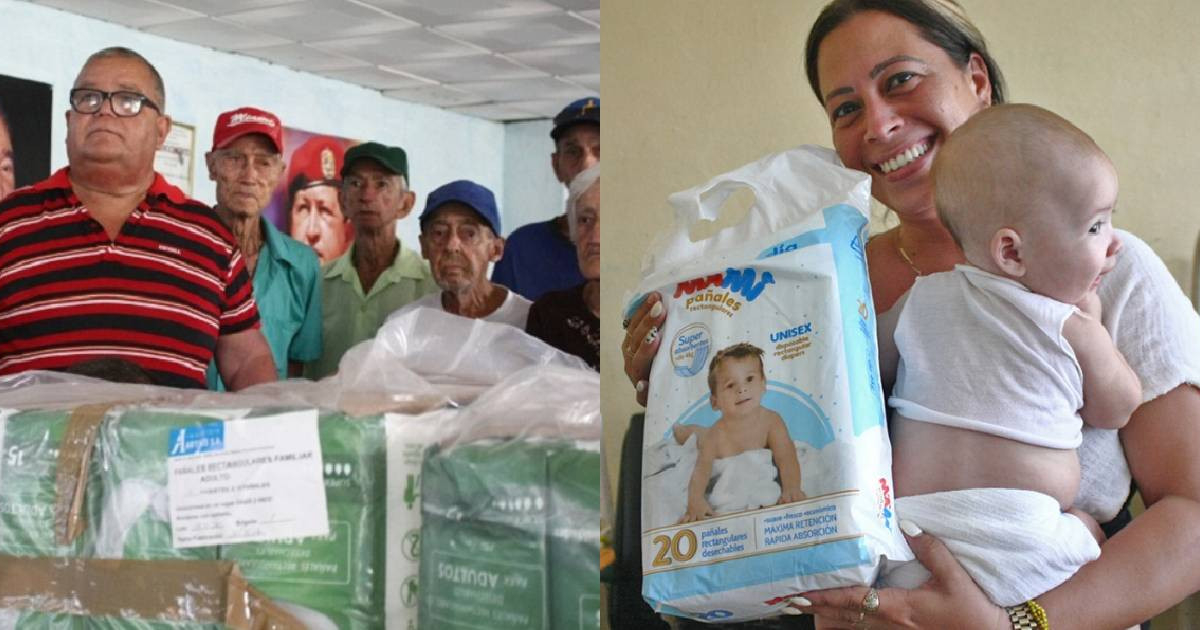
In a significant gesture highlighting the increasing reliance of Cuba's healthcare system on private contributions, the small business Banvarias S.U.R.L. from Sancti Spíritus made a donation of child and adult diapers to four healthcare facilities in the region this past Saturday.
The Provincial Nursing Home, the Municipal Elderly Home in Sancti Spíritus, the Dream Repair Psychopedagogical Center, and the Provincial Pediatric Hospital were the recipients of this contribution, according to the official newspaper Escambray.
Alexis Macías Hernández, the sole proprietor of the company, has committed to continuing such charitable acts and announced plans to lower product prices. "We aim to repeat these donations whenever possible. It's our way of giving back to the community. Additionally, we're working to reduce prices," Macías stated.
Provincial health authorities expressed their gratitude for the donation. Sonia Sañudo Moya, Disability Advisor of the General Health Directorate in Sancti Spíritus, emphasized the value of such partnerships. "We warmly welcome contributions from entities or individuals to health institutions. We are open to any kind of collaboration, with no restrictions," she noted.
Diapers are a critical necessity that remains chronically scarce in Cuba, particularly in facilities serving vulnerable populations like the elderly, children, and individuals with disabilities.
This donation comes amid a breakdown of Cuba's healthcare system. In July 2025, the Minister of Public Health admitted that the country was operating with only 30% of its essential drug inventory, with 461 out of 651 crucial medications unavailable.
The elderly have been hit hardest by this crisis. A 2025 survey revealed that 99% of Cuban retirees cannot meet their basic needs, and eight out of ten people over 61 have had to skip meals due to a lack of resources.
This trend of private donations to the healthcare sector is being observed across the island. Earlier this month, three companies provided food to the El Rampeño senior dining hall in Vedado, which serves over fifty vulnerable elderly individuals.
In November 2025, private entrepreneurs from Holguín delivered humanitarian aid, including clothes, food, and hygiene products, to those affected by Hurricane Melissa in Cacocum, showcasing yet again the void left by the state.
The Cuban government itself acknowledged in March that it lacks sufficient budget to support all vulnerable citizens, admitting that senior dining halls and healthcare centers increasingly rely on private sector contributions due to the island's hospital crisis.
Understanding the Impact of Private Donations in Cuba's Healthcare System
How is the Cuban healthcare system relying on private contributions?
The Cuban healthcare system is increasingly dependent on private contributions due to severe shortages of essential supplies and medications, as well as budget constraints faced by the government. Private donations help fill critical gaps, particularly in supporting vulnerable populations like the elderly and children.
Why are diapers considered a critical necessity in Cuba?
Diapers are considered a critical necessity in Cuba due to their chronic scarcity, especially in institutions that care for vulnerable groups such as infants, the elderly, and people with disabilities. These items are essential for maintaining hygiene and health in these populations.
What challenges do Cuban retirees face in meeting their basic needs?
Cuban retirees face significant challenges in meeting their basic needs, with 99% unable to do so, according to a 2025 survey. Many are forced to skip meals due to lack of resources, highlighting the dire economic situation confronting the elderly in Cuba.