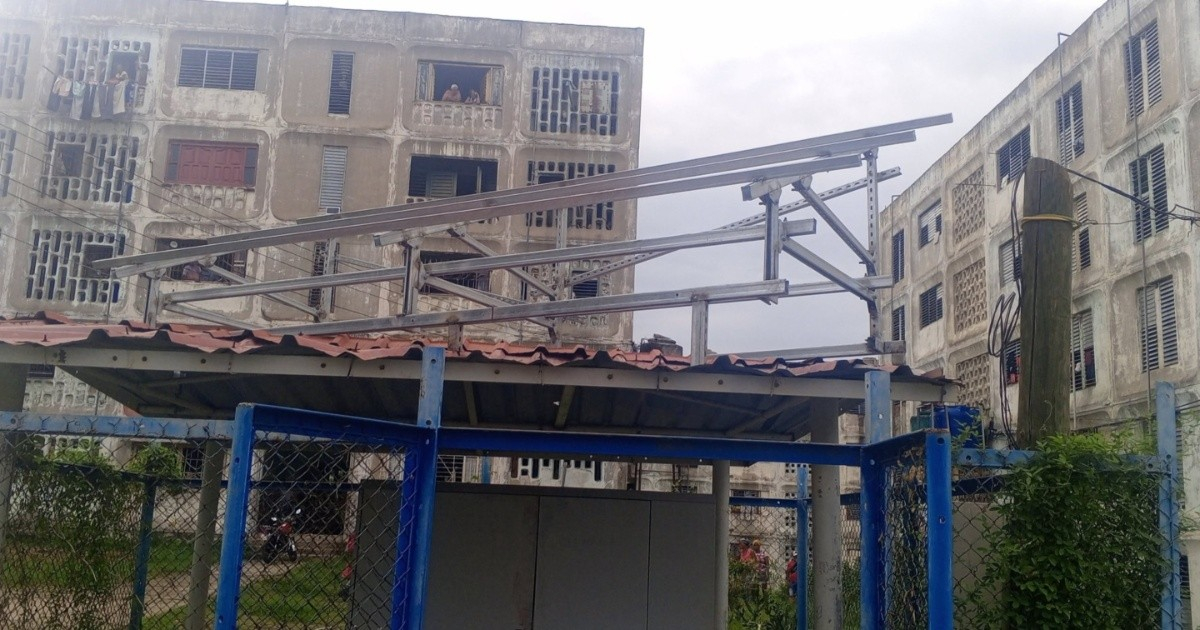
A recent surge in theft and sabotage activities against the infrastructure of ETECSA has rendered three cellular base stations in Santiago de Cuba completely inoperative this week, leaving thousands of users without mobile and internet coverage.
According to a public statement by Luis Enrique Torres Almarales, an engineer with ETECSA in the province, criminals stole two panels from Cabinet 3 in the Micro 9 area in the early hours of last Sunday.
Throughout the week, there were additional incidents where fiber optic cables, power supply cables were cut, and breakers were stolen from three base stations: RBS Micro 4, RBS Ave Los Pinos, and RBS Micro 9.
"In the early hours of Sunday, June 7th, two panels from Cabinet 3 in Micro 9 were stolen. During the week, cables were cut, and breakers were stolen from three cellular base stations: RBS Micro 4, RBS Ave Los Pinos, and RBS Micro 9, leaving them out of service," Torres Almarales shared on Facebook.
The engineer expressed that these incidents reflect more than just vandalism: "These latest acts are more than vandalism; I view them as sabotage and pure counter-revolution. Sometimes it seems there are organized groups being paid to sabotage the little progress we manage with great effort."
Torres Almarales also questioned the rationale behind the theft of cables: "What goal do they achieve by stealing a few meters of fiber optic cable? Who would buy it? It seems like a premeditated and conscious effort to disable the Radio Base."
These incidents are not isolated. On June 6th, four panels were stolen from Cabinet 3 in Micro 7, marking the third attack of this kind in just over a month in the province.
Previously, on May 30th, four solar panels were taken from the cabinet in the Reparto Flores, near a primary school, and on May 1st, a panel was stolen from the Integral Cabinet micro 9-2, leaving over 560 users without service for more than ten hours overnight.
By 2025, Santiago de Cuba had already experienced at least 17 vandalized base stations, involving battery theft, rectifier damage, and cable destruction.
Torres Almarales warned that ETECSA, already constrained by importation issues, must now allocate its limited resources to repair damages instead of expanding services: "Our company faces the same resource limitations and equipment import restrictions that hinder development and the installation of new services requested by the public."
Regarding the institutional response, the engineer was direct: "We've lodged numerous complaints about a significant number of previous incidents, but no official arrests have been confirmed yet."
The public denunciation sparked widespread reaction on social media. "The police are no longer protecting the people against crime... they could even steal the Capitol dome, and they wouldn't care... but if a pot makes noise, they appear immediately," wrote one user.
Others called for harsher penalties: "If there are no exemplary trials with sentences that make people think twice about committing crimes, nothing will change," another commenter noted.
A user recalled measures from the 1990s: "Back then, the State began holding exemplary trials... thefts stopped immediately. They should do the same now."
The Cuban Penal Code categorizes sabotage of infrastructure under Article 125, with sentences ranging from seven to 15 years, and Article 126 for aggravated cases, potentially leading to life imprisonment. In May 2025, Supreme People’s Court Ruling 475 intensified the legal handling of these attacks, classifying them as sabotage. However, the public perception is that while laws exist, they are not enforced, and impunity fosters recurrence.
Understanding the Impact of Sabotage on Cuban Telecom Infrastructure
What recent incidents have affected ETECSA's infrastructure in Santiago de Cuba?
Recently, theft and sabotage activities have left three cellular base stations inoperative, impacting mobile and internet coverage for thousands of users in Santiago de Cuba.
How has ETECSA responded to these acts of sabotage?
ETECSA is reallocating its limited resources to repair the damages instead of expanding services, as it faces constraints due to importation issues.
What has been the public reaction to the lack of arrests?
The public has expressed frustration on social media, criticizing the police's effectiveness and demanding harsher penalties for offenders.